


2026 promises to be an exciting year. CES this year was the scene for announcements of consequence for business IT, mainly illustrating the state of the PC world.
Where at CES 2025 we occasionally had to rest our eyes from rolling, the 2026 edition pleasantly surprised. CES wouldn’t be CES without gimmicks in the form of laptops and screens in all formats that fold in all directions, or PCs disguised as keyboards, but this year the fair in Las Vegas is the setting for more than just faits divers.
Intel is back
MVP this year is Intel, which at least on paper seems to be completely back. The manufacturer is launching Panther Lake during CES and, after years of chasing, is once again receiving the trophy for technological leadership. Panther Lake, or more formally Intel Core Ultra Series 3, rolls off an Intel 18A production line.
Intel 18A is the equivalent of TSMC 2 nm. Only: major competitor AMD does not yet have 2 nm processors on the market. Instead, AMD announced Ryzen AI 400, without any really significant differences from last year’s excellent Ryzen AI 300 chips.
Intel also seems to be serious about Panther Lake. Almost all PC manufacturers announced laptops with the new CPUs inside last week. Moreover, these were very concrete launches, with the first devices effectively for sale before spring. Panther Lake should be ubiquitous by the summer.
Laptops from everyone
Lenovo certainly embraces Intel with great love. The majority of the manufacturer’s business PC announcements relate to so-called ‘Aura Edition’ devices. That is a nice word for ‘Intel-exclusive’. As usual at CES, the initial focus of announcements is on the more premium segment, where we can soon expect new ThinkPads and ThinkBooks.
MSI is also enthusiastically involved in the business laptop debates with the launch of new Prestige and Modern laptops, also built around Intel Core Ultra Series 3. The ‘X’ chips are taking center stage, and may prove that the integrated Arc GPU that Intel builds into the chip is worth it.
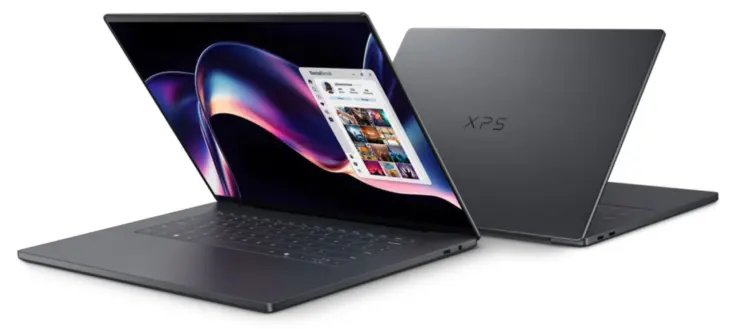
Dell, for its part, surprises with the reintroduction of the XPS brand. That most premium laptop in the company’s B2B segment also gets Intel Panther Lake inside.


Not (or yes) Pro Max
Apparently it wasn’t such a good idea to name the entire portfolio with (a combination of) the terms Pro, Max and Premium. The COO of Dell refreshingly admitted at CES that the restructuring of the brand names has not worked completely, to the surprise of absolutely no one outside of Dell.
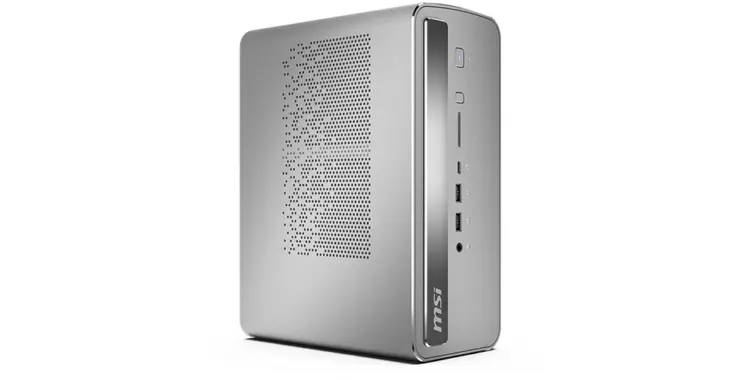
No one, except MSI then, which has drawn all the wrong conclusions from a marketing point of view. We were able to welcome the MSI Pro Max family at CES, including MSI Pro Max AI+ desktops, alongside some other Pro Max-labeled devices and components.
However, you won’t find the AMD Ryzen AI Max+ processor in the MSI desktops, although they share AI, + and Max in their name. However, MSI integrates the powerful Strix Halo AMD chip with CPU, GPU and shared memory into a new desktop, but that is called AI Edge.
All CPUs welcome
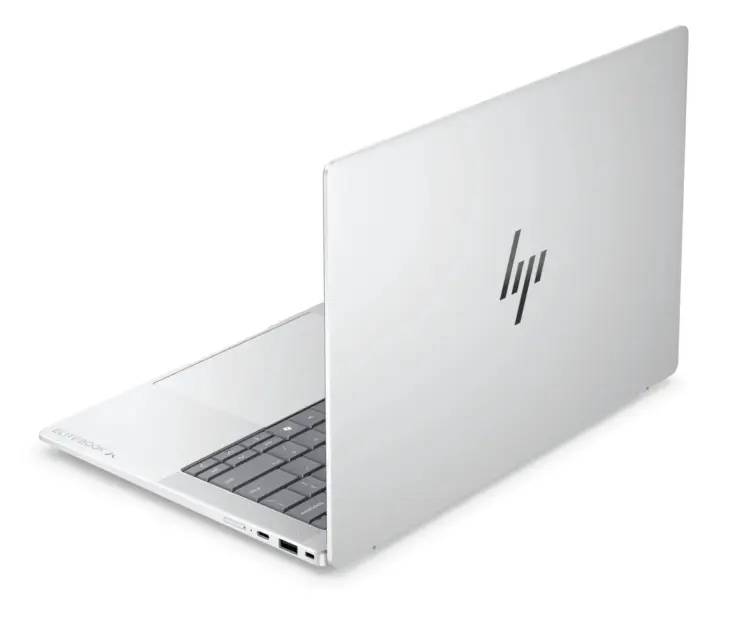
MSI is not the only one that gives AMD love, although it is striking that the enthusiasm for Ryzen AI 400 pales in comparison to Intel Core Ultra Series 3. HP takes a wonderfully agnostic approach with the renewal of its EliteBook X portfolio. The HP EliteBook X G2 is available with both AMD Ryzen AI 400 and Intel Core Ultra Series 3, in the same SKU. In fact, those who want can opt for the ARM architecture with a Qualcomm Snapdragon X2 processor under the hood.
Qualcomm is also using CES to launch new chips, although the premium models of Snapdragon X2 already saw the light of day at the end of last year. Qualcomm is introducing more entry-level Plus variants at the fair.
Whether that will be enough to bring ARM to a Windows laptop to the general public is doubtful. Certainly in the business portfolio, Qualcomm is not making a mark this year. Now that the novelty has worn off, the focus seems to remain on x86.
ARM and AI
ARM is not becoming irrelevant, but that is mainly due to Nvidia. For example, Asus announces the ExpertCenter Pro. That desktop computer has an Nvidia Grace Blackwell Ultra GB300 chip on board. The Grace CPU that supports the Blackwell GPU is an ARM-based processor.
Nvidia is enthusiastically building on that tandem with the introduction of Vera and Rubin. The fact that CES can also offer the stage for this shows how the fair has regained its relevance after Covid and some very car-centric editions. In that context, Lenovo also cannot contain itself from announcing ThinkSystem and ThinkEdge servers.
Nvidia Rubin succeeds Blackwell as the manufacturer’s latest AI accelerator. Nvidia developed its own ARM CPU with Vera that succeeds Grace, using self-built but ARM-compatible cores. In the context of AI and HPC, ARM is therefore succeeding in becoming mature.
A and I
The letters A and I also promise to remain ubiquitous in 2026, even where they do not belong. In that respect, this edition of CES does not differ from the previous one. Almost all announced systems have AI in the name somewhere, even though the role that local AI plays on the computers is minimal in most cases.
Again, Dell seems to be the first to realize that the PC world has embarked on a foolish path. The manufacturer is drastically reducing the number of A’s and I’s in its announcements and is also naming that. “The customer does not buy based on AI,” says product manager Kevin Terwilliger.

Hopefully the other manufacturers will follow quickly: the line-up of announced hardware for 2026 is promising and that has absolutely nothing to do with AI or NPUs (with the exception of Strix Halo- or GB300-based systems).
Waiting for the prices
We conclude with a caveat: although the announcements at CES are very concrete this year, the euro prices for the minimum configurations of announced devices are consistently missing. These could be a damper on the festivities, given the shortages of DDR5 memory and the price increases that go with them. It remains to be seen how much the announced systems at CES will ask of your wallet.