

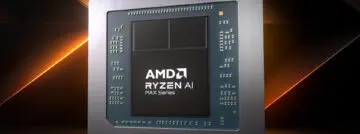
AMD is launching Ryzen AI 400, but based on the specifications, it doesn’t show how the new chips are more than an extension of Ryzen AI 400.
In 2024, AMD launched Ryzen AI 300. This chip series is built around the Zen 5 architecture for the CPU and RDNA 3.5 for the integrated GPU. The top model, Ryzen AI 9 HX 375, has twelve cores, 24 threads, and a maximum clock speed of 5.1 GHz.
AMD Ryzen AI 400
At CES this year, AMD is announcing the Ryzen AI 400 processors. This chip series is built around the Zen5 architecture for the CPU and RDNA 3.5 for the integrated GPU. The top model, Ryzen AI 9 HX 470, has twelve cores, 24 threads, and a maximum clock speed of 5.2 GHz.
The trained eye sees a 100 MHz difference, which illustrates well how AMD is primarily launching a modest evolution here, and certainly not a revolution. Ryzen AI 400 does not contain any major innovations that immediately make Ryzen 300 AI outdated.
| AMD Ryzen AI | Cores/Threads | Max. Freq. | GPU CUs | NPU TOPS | Cache |
| 9 HX 475 | 12 / 24 | 5.2 GHz | 16 | 60 | 36 MB |
| 9 HX 470 | 12/ 24 | 5.2 GHz | 16 | 55 | 36 MB |
| 9 465 | 10 / 20 | 5.0 GHz | 12 | 50 | 34 MB |
| 7 450 | 8 /16 | 5.1 GHz | 8 | 50 | 24 MB |
| 7 445 | 6 / 12 | 4.6 GHz | 4 | 50 | 14 MB |
| 5 435 | 6/ 12 | 4.5 GHz | 4 | 50 | 14 MB |
| 5 430 | 4 / 8 | 4.5 GHz | 4 | 50 | 12 MB |
Graphically, not much changes. In addition to the slightly higher clock speed, AMD does announce that memory speeds will get a boost. That is a small consolation in a year that memory has become considerably more expensive, driven by the demand from AI data centers that have absorbed the supply.
Speaking of AI: those who want can enjoy five extra TOPS, with a maximum of 60 TOPS of NPU computing power for the top models in the series. The NPU is built with the same AMD XDNA 2 architecture as the previous generation. 60 TOPS remains enough to accelerate modest (rare) AI functionality, but the NPU will have little impact on how the average employee uses their office laptop.
AMD Ryzen AI Max+
Do you want an AI PC that is worthy of the name, and can actually run AI models that come close to what you are used to via the cloud? Then you need a laptop with an AMD Ryzen AI Max+ inside. AMD launched that series of chips last year. They combine a powerful CPU with a relatively extensive GPU on one chip, glued together with shared memory. We already tested with the HP Zbook Ultra G1a 14 that this PC architecture is worthy of the name AI PC.
AMD subtly points out that the Ryzen AI Max+ chips are more capable than Nvidia’s DGX Spark and announces two new specimens in the line-up. The Ryzen AI Max + 392, with twelve cores, 42 threads, and 40 GPU CUs, is just below the top model Ryzen AI Max+ 395 (sixteen cores, same number of CUs). The Max+ 388 is then one step above the entry-level model AI Max 385, with also eight cores, sixteen threads, but 40 CUs instead of the 32 of its already introduced little brother.
| AMD Ryzen AI | Cores/Threads | Max. Freq. | GPU CUs | TOPS (NPU + GPU) |
| Max+ 392 | 12 / 24 | 5.0 GHz | 40 | 60 + 60 |
| Max+ 388 | 8 / 16 | 5.0 GHz | 40 | 50 + 60 |
For these chips, AMD rightly chooses not to speak of a generational leap, but to expand the existing range. The AMD Ryzen AI Max+ series is not yet widespread today, but has a lot of potential.
The comparison with the Nvidia DGX Spark is very relevant here. After all, AMD offers similar performance, but in the x86 ecosystem. Only Nvidia has the trump card of CUDA, which AMD has to contend with its still less popular ROCm ecosystem.