

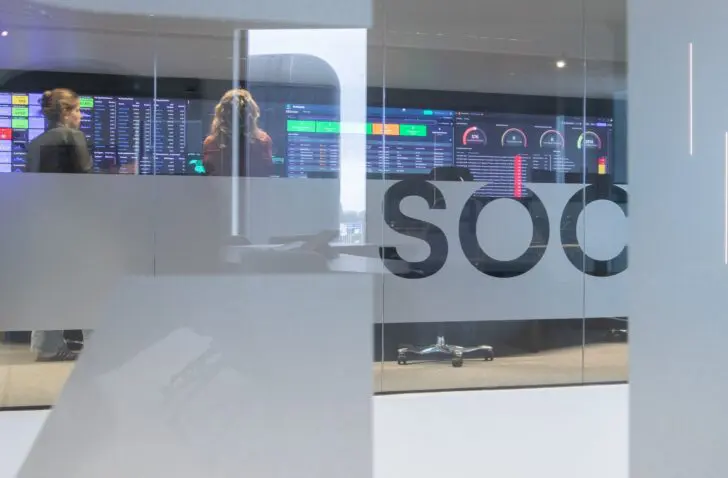
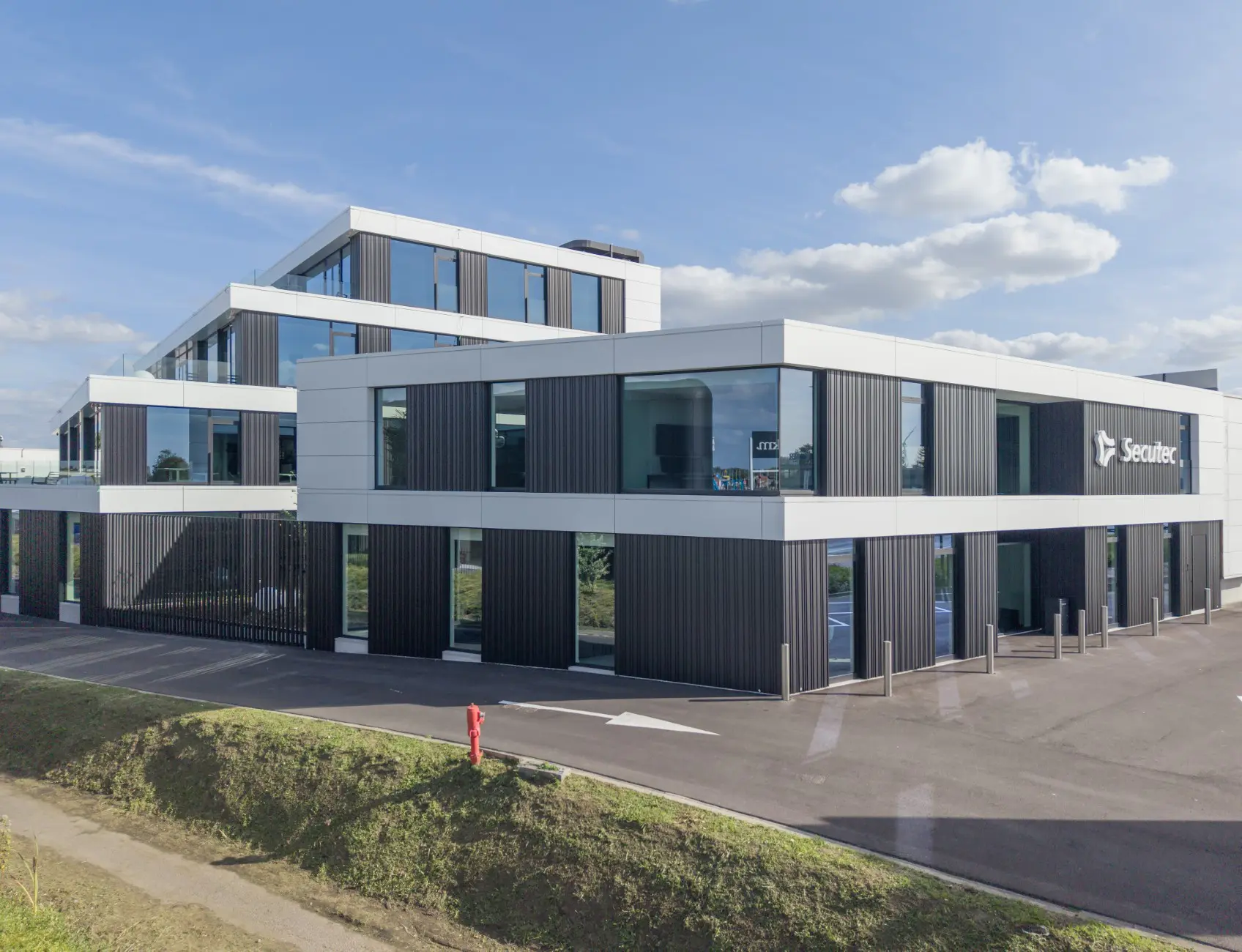
Secutec’s new headquarters in Aartselaar is located just 200 meters from the apartment where it all began, featuring a SOC and War Room.
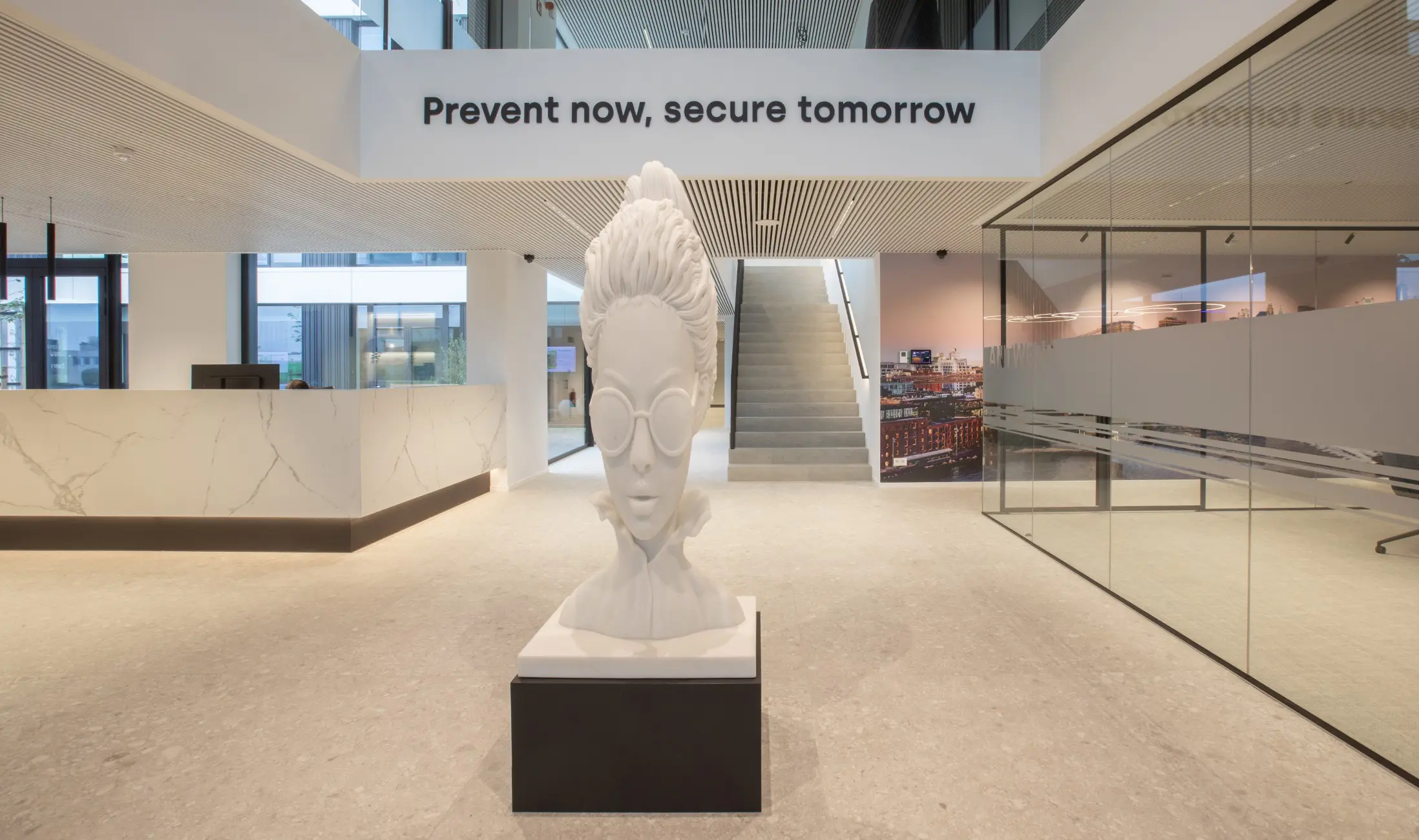
Upon entering Secutec’s new headquarters along the A12 in Aartselaar, we are greeted from behind sunglasses by the large, stark white head of Holly. “That is a statue by Antwerp artist Isabelle Scheltjens,” beams Geert Baudewijns, founder and CEO of the company, during the press presentation of the newly completed building. “I have a smaller version at home as well.”
Coming a long way
In 21 years, Baudewijns and Secutec have come a long way, but only figuratively. Literally, the distance is somewhat smaller: the new office was built right in front of the old one, and from his own desk, Baudewijns can still see the apartment where he started the company. “You won’t get me out of Aartselaar easily,” he laughs.
From that location, easily accessible from both Antwerp and Brussels (traffic jams notwithstanding), Secutec is gradually conquering Europe and the world. Or put another way: the security firm is preventing cybercriminals from conquering the digital world. To that end, the sale and implementation of third-party security tools remains a key pillar.
Baudewijns: “We started as a reseller of antivirus software. The resale and deployment of third-party solutions still accounts for about a third of our turnover.” Profit margins in that part of the sector are relatively limited, but the activity builds brand awareness.
Cyber negotiator
In that regard, Baudewijns himself handles a lot of work. He is one of only about fifty international negotiators who, commissioned by large reinsurers, act as a bridge between cybercriminals who have stolen data and their victims. “It’s an addictive activity,” he admits. “I promised my wife I would retire as a negotiator after releasing my book, but look, I’m still at it.”
I promised my wife I would retire as a negotiator after releasing my book, but look, I’m still at it.
Geert Baudewijns, CEO Secutec
In the Experience Center on the first floor of the new building, Baudewijns mirrors his laptop to the large screen on the wall. He opens qTox. “This is the WhatsApp for criminals,” he laughs. We see several initial negotiation chats for new cases, accompanied by emojis. “I always try to use a few emojis to see how the other party reacts,” the negotiator reveals. “That way I can gauge their professionalism.”
The negotiations give the CEO an almost intimate look into the shadow world of cybercrime, bringing him into contact with organizations large and small that need help. The fact that Secutec then occasionally ends up on the shortlist for additional security is a welcome bonus for Baudewijns.
Unique glue
The second pillar Secutec is building on is SecureSight. SecureSight is an all-in-one security platform. Baudewijns is proud of it. “We link the best-of-breed platforms from security specialists together so they can communicate with each other.” According to him, this helps the company detect threats quickly—reportedly twelve to fifteen percent faster than major international competitors like Cisco.
The platform is resonating, especially in a context where a platform approach is being encouraged by Gartner. Thanks to its relationships with vendors, Secutec can combine the benefits of a platform for customers with the best-of-breed approach they prefer. That SecureSight is a success story—in Belgium, Europe, and even as far as Canada—does not surprise Baudewijns. “Hardly anyone does what we do.”
Bank fraud in the same building
A third pillar relates to bank fraud. “One of the major Belgian banks quickly made the link between fraud and cybersecurity,” Baudewijns explains. “For them, we contact customers when algorithms detect suspicious transactions, so the bank can potentially block them.”
The bank fraud team consists of about 50 employees, for whom there was no room in Secutec’s old offices. They were located elsewhere but are now joining their colleagues in the new premises. About 110 people currently work at Secutec, though the building was built with future growth in mind. There is space for approximately 150 employees. From the Experience Center, we can see their spacious and bright offices.
War room and SOC
Behind the room with the large screen is a smaller space, where Baudewijns lets us in by waving his hand in front of a sensor. His unique palm print, read in a fraction of a second from about ten centimeters away, serves as authentication.
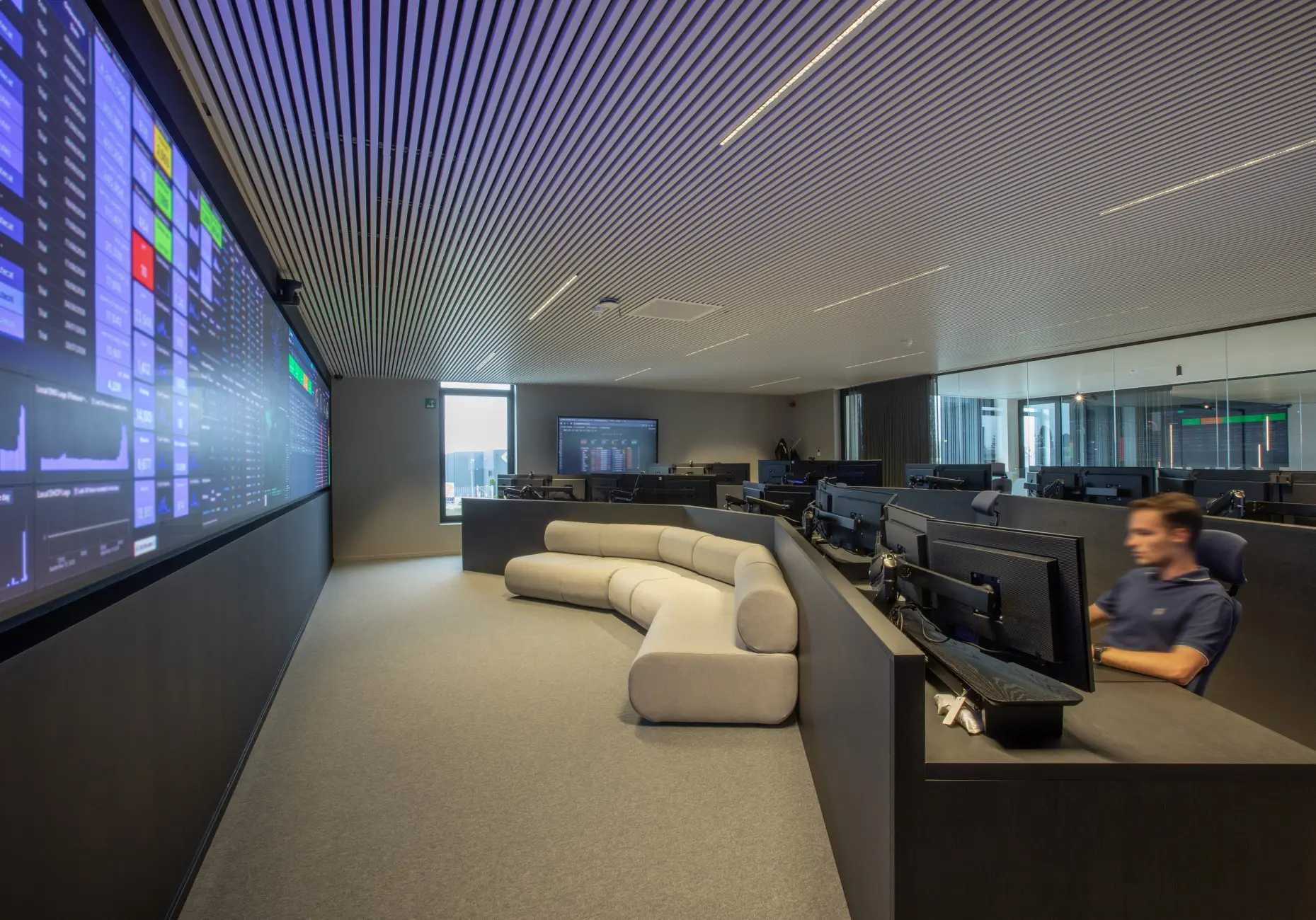
We are now in the War room. Here, security experts work on specific incidents with customers. The room is dominated by screens and is an extension of the Security Operations Center on the other side of the atrium.
“When an incident occurs, I don’t want it handled in the SOC,” Baudewijns explains. “Other customers must still receive the same amount of attention there; an ongoing incident must not be a distraction.”
The SOC would not look out of place as Mission Control at NASA. Here too, we see security experts behind their computers. They sit in two rows, facing a long wall dominated by a continuous LED screen. It displays all sorts of data, though for our visit, care was taken to ensure no sensitive customer data was visible.
This is unique in Flanders; there isn’t another one like it.
Geert Baudewijns, CEO Secutec
Baudewijns is proud of it: “This is unique in Flanders,” he says. “There isn’t another one like it. In Belgium, for that matter, either. There is another firm in Wallonia, but a location as extensively equipped with a War Room, Experience Center, and the SOC—there is no second one in Belgium.”
Shadow AI, live in action
“Here you can see, for example, how many DNS requests there were for ChatGPT in the past day,” Baudewijns points out. With SecureDNS, Secutec offers an alternative and secure DNS service for customers. About a thousand organizations worldwide use it, accounting for more than a billion queries every 24 hours. From there, the security specialist can block dangerous domains themselves, but it also gains insight into which domains are visited most frequently.
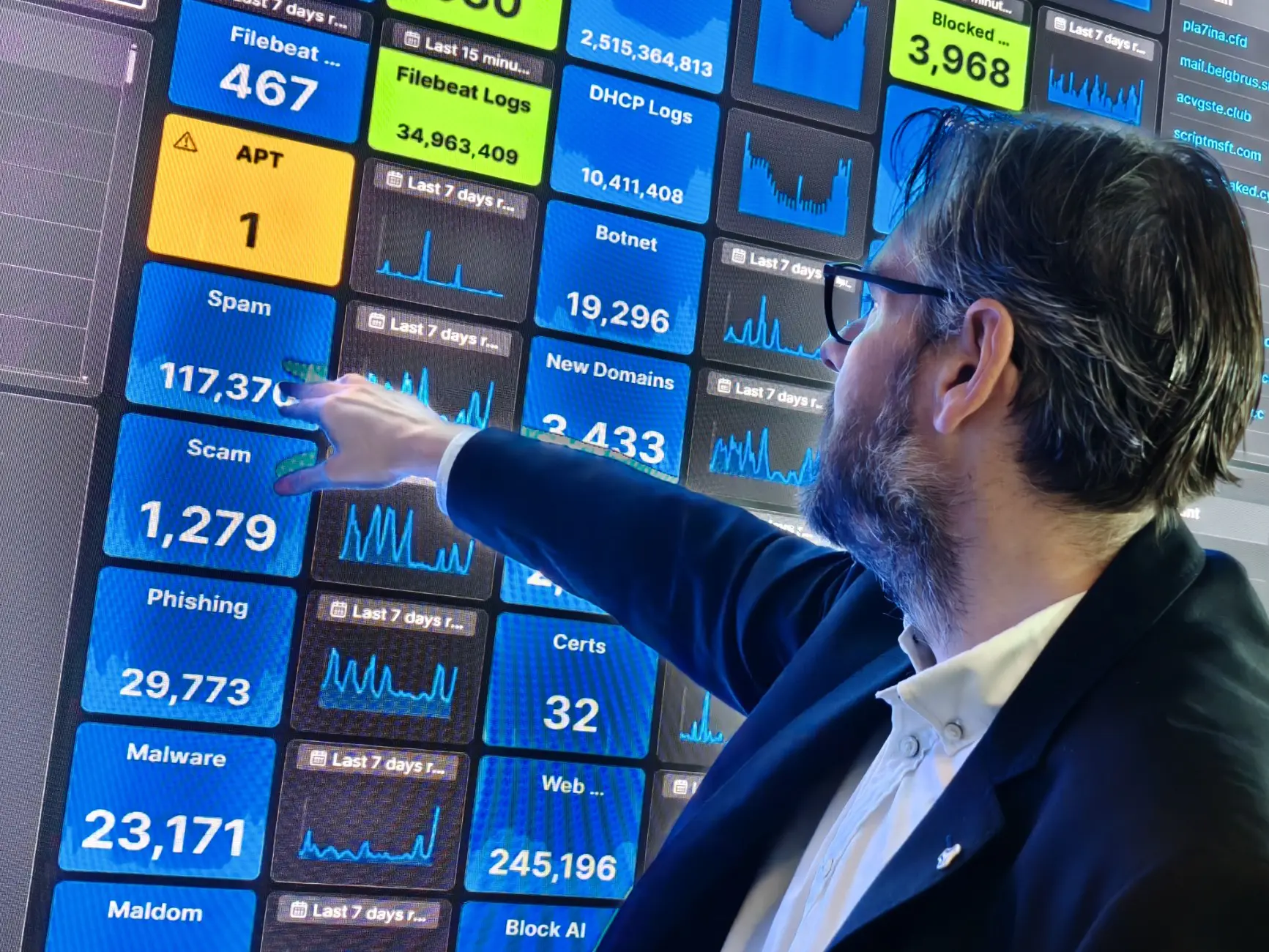
The ubiquity of ChatGPT is remarkable, Baudewijns agrees. “Most of our customers work with Microsoft Copilot,” he explains. The visits to the other AI service therefore suggest the presence of shadow AI: the use of AI tools outside of an organization’s regulated framework.
Own infrastructure
Secutec has offered a 24/7 manned SOC for customers for about five years. With the opening of the new headquarters, the service finally looks visually impressive as well. “Before this, we basically just had a wall and desks with screens, not organized like it is now,” Baudewijns recalls.
At the back of the SOC sit infrastructure specialists. They help maintain Secutec’s own global IT infrastructure. We see this neatly visualized on a massive screen as well. “We have about sixteen DNS servers across the world, including in Australia and even China for Belgian companies with branches there,” Baudewijns explains.
Growth targets
Back in the Experience Center, Baudewijns shares a few more ambitions. He expects Secutec to grow rapidly, though growth itself is not the goal. Secutec currently has a turnover of about 30 million euros. By next year, Baudewijns expects that to be 40 million euros, and the plan is to reach 75 million euros within five years.
That, of course, requires people. The new office not only provides space for new faces but also serves as a showcase for new talent. “The building does inspire people,” Baudewijns thinks. He refers, among other things, to the SOC: “When people come here, they will be impressed.” That is an asset Baudewijns wants to use to distinguish his company from the competition.
From weeks to hours
The extra staff will have their work cut out for them. The fact that Secutec is growing in times of crisis is partly due to increasing threats. Baudewijns shares some data on that as well. The graph showing the time needed to go from a discovered vulnerability to active exploitation is particularly striking.
Today, it actually only takes four hours before a CVE can be exploited.
Geert Baudewijns, CEO Secutec
In 2021, nearly a year would pass between the disclosure of a CVE and active exploitation. By 2025, that was down to just 23 days. The graph ends in 2026 at 1.6 days, but even that is already outdated according to Baudewijns. “Today, it actually only takes four hours before a CVE can be exploited,” he notes.
Baudewijns attributes this evolution entirely to AI. “In the past, you needed a sophisticated technician for sophisticated hacks,” he says. “Today, it’s enough to give an update to an AI model and ask which vulnerabilities were patched.” AI can then develop the necessary code itself to exploit the leak.
Cat-and-mouse game
The consequences are measurable. “In recent months, we have seen a huge increase in incidents,” says Baudewijns. “That is entirely attributable to AI.” He isn’t panicking. “Actually, this situation is as old as time. Cybersecurity is a cat-and-mouse game where attackers and defenders both always use the latest tools.”
Baudewijns and Secutec certainly have plenty to do, and just as well. After more than 20 years, the big boss is still bursting with passion for the profession. From its new headquarters, Secutec can now help protect Belgium, Europe, and the world against ever-faster emerging new threats.