

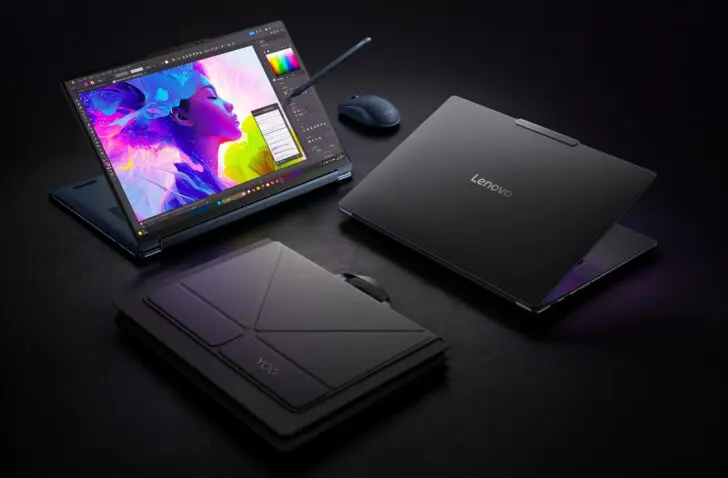
With the Yoga Pro 9n and the Yoga 9n 2-in-1, Lenovo chooses the Nvidia RTX Spark for the first time. Can Nvidia’s PC chip prove itself on a professional device?
PC manufacturer Lenovo never misses a major event. Following earlier PC launches around CES and MWC, it also has new devices on offer on the sidelines of IFA. The manufacturer is refreshing the Yoga portfolio, among others, with two laptops and two Android tablets.
The hardware of the Yoga Pro 9n and 9n 2-in-1 immediately catches the eye, as the two new laptops do not run on Intel, AMD, or Qualcomm, but on Nvidia RTX Spark. Nvidia announced its first PC chipset in June, and Lenovo is giving the RTX Spark its first chance.
Grace and Blackwell in one
The Nvidia RTX Spark pairs a Grace CPU with a Blackwell GPU. According to Nvidia, RTX Spark is set to bring ‘petaflop performance’ to Windows. We previously detailed the chipset extensively.
A processor is only as good as the device that carries it. In the Lenovo Yoga Pro 9n (15″, Gen 11), we see a CPU with up to twenty cores and a GPU with up to 6,144 cores. The 128 GB LPDDR5X memory is shared across both chip components. With a weight of 1.65 kilograms, the Yoga Pro 9n is not a light laptop, but it is still pleasant to carry around.
That shared memory pool makes it possible to run large AI models locally on the device, where a traditional laptop often bottlenecks at the 8 to 16 GB of VRAM of a discrete GPU. 128 GB of unified memory significantly raises that limit, and Nvidia provides the full CUDA stack with it. For the Pro 9n, Lenovo focuses on local AI and software development, content creation, and 3D rendering; for the 2-in-1, the manufacturer is more specific, mentioning Adobe Premiere Pro, ComfyUI, and local models such as FLUX and LTX.
Yoga for professionals
The new Lenovo Yoga Pro 9n, the flagship model of the new Yoga series, is of course more than just an Nvidia processor. Lenovo includes a 15.3-inch OLED panel with 2,560 x 1,600 pixels, featuring a variable refresh rate up to 165 Hz, 1,100 nits peak brightness, and near-perfect screen calibration to attract graphics professionals (DeltaE 0.5). Exact screen specifications may vary by configuration.
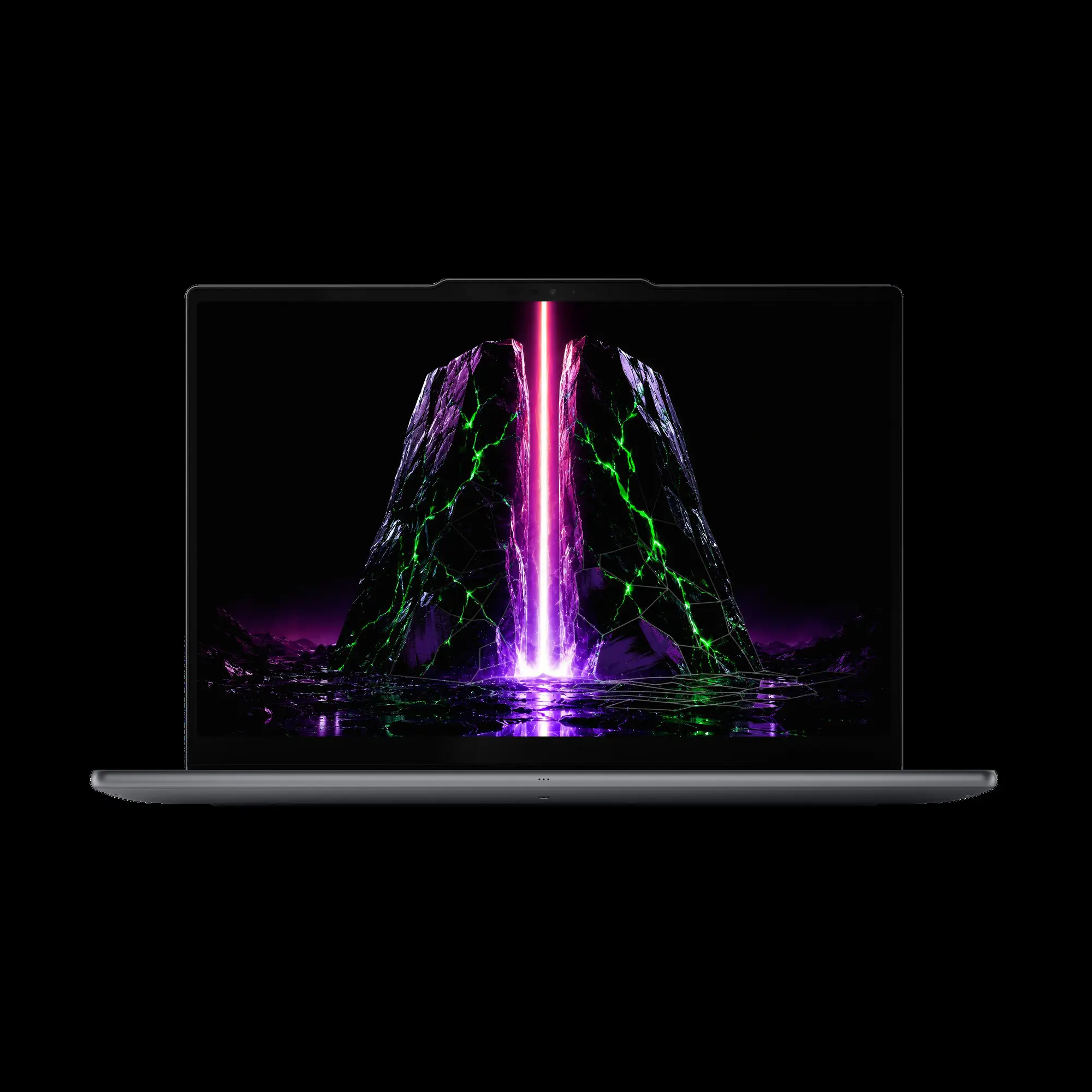
Connectivity has been well-considered: HDMI 2.1, two USB4 ports at 40 Gbps with DisplayPort 2.1, two USB-A ports at 10 Gbps, and a UHS-II SD reader. Since it is not an Intel laptop, you do not have Thunderbolt compatibility, but USB4 essentially covers the same docking scenarios. Two SSD slots together provide up to 4 TB of storage. Finally, you get a generous 92.5 Wh battery with a 140-watt charger, and a 9.2-megapixel IR camera.
Yoga 2-in-1
The Yoga 9n 2-in-1 (16″, Gen 11) runs on the same RTX Spark platform but caps at 64 GB of unified memory and 2 TB of storage. In return, the device features a 360-degree hinge, allowing for flexible use. Like a seasoned yoga instructor, the device effortlessly folds from laptop to tablet, tent, stand, and canvas modes. Lenovo provides a 16-inch 2.8K OLED panel (2,880 x 1,800, up to 120 Hz) and a 99.9 Wh battery. At 1.94 kilograms, it weighs a few dozen grams more than the Yoga Pro 9n.
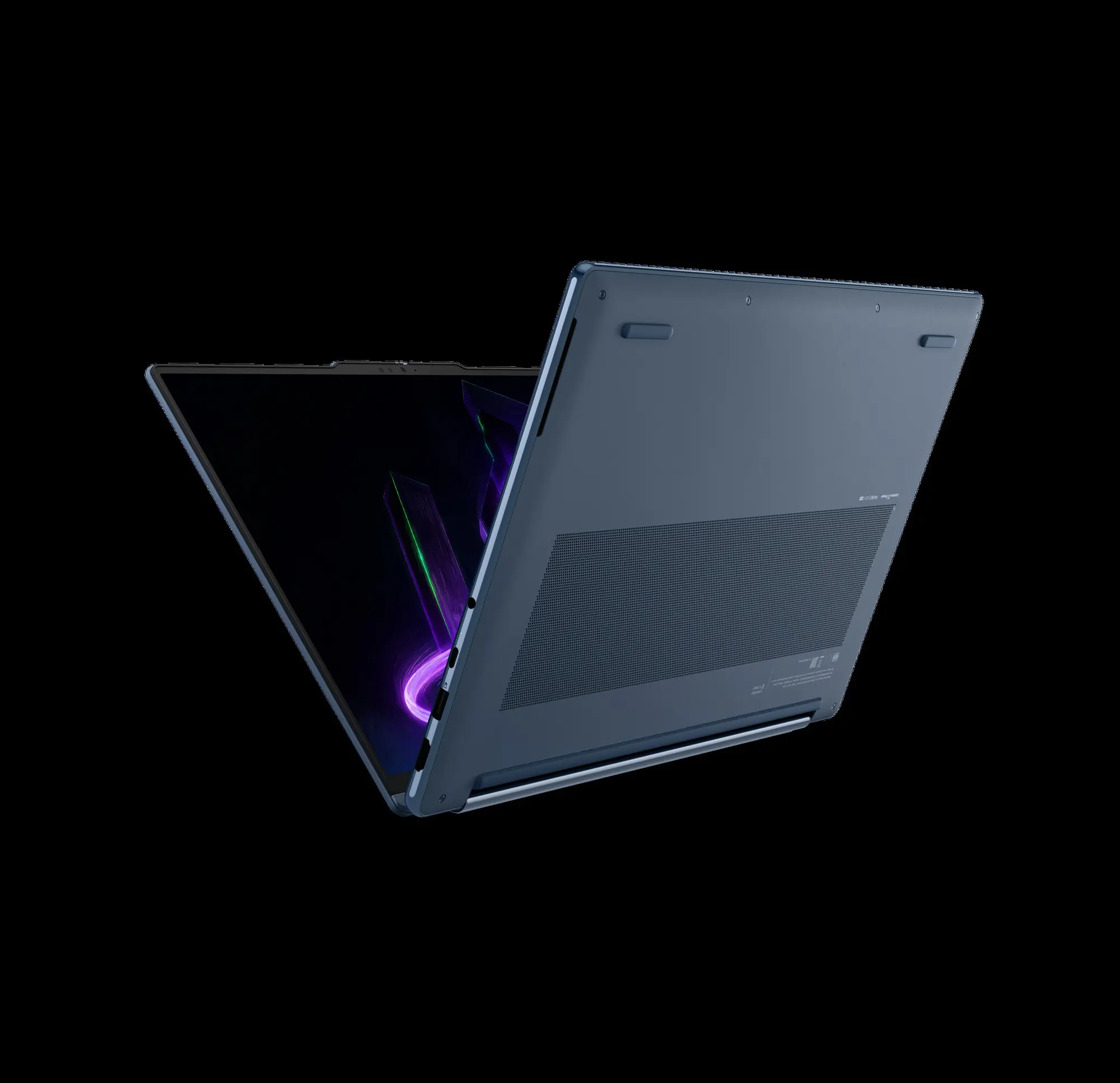
Lenovo highlights the improved stylus experience in particular. Writing is possible both on the screen and on the haptic touchpad. The Yoga Pen offers higher precision than the touchpad. With the pen, you can also trigger AI functions, provided you master the hand gestures.
Lenovo is currently withholding prices and availability for both Yoga laptops. It remains to be seen when the Nvidia RTX Spark will actually make its debut.
Two tablets with seven years of updates
Alongside the laptops, two Android tablets are being released under the Yoga brand name. The Yoga Tab Plus Gen 2 runs on a Snapdragon 8 Elite chipset, features a 13-inch 4K panel (3,840 x 2,560) in 3:2 with 144 Hz and 1,100 nits, up to 16 GB of RAM with 512 GB of storage, a 12,700 mAh battery with 68-watt charging, and six speakers, in a package weighing 605 grams.
The Yoga Tab Gen 2 is the more affordable sibling with a MediaTek Dimensity 9500s, an 11.1-inch 4K screen, up to 12 GB of RAM, and weighing 480 grams. Both tablets come with the updated Yoga Pen.
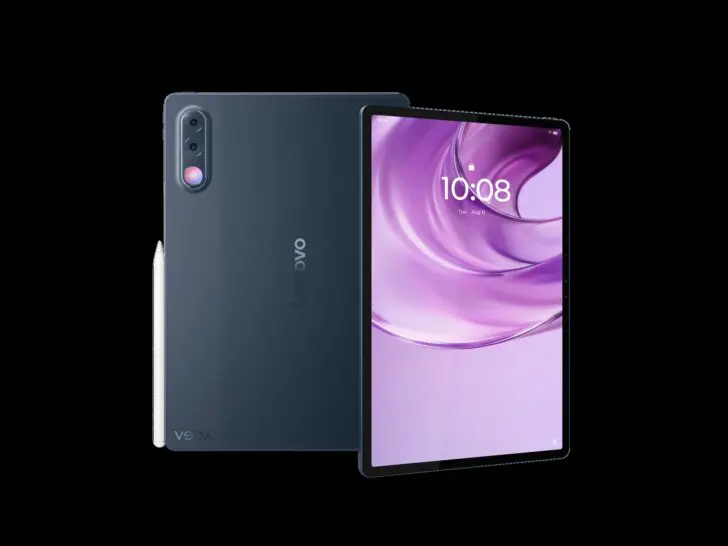
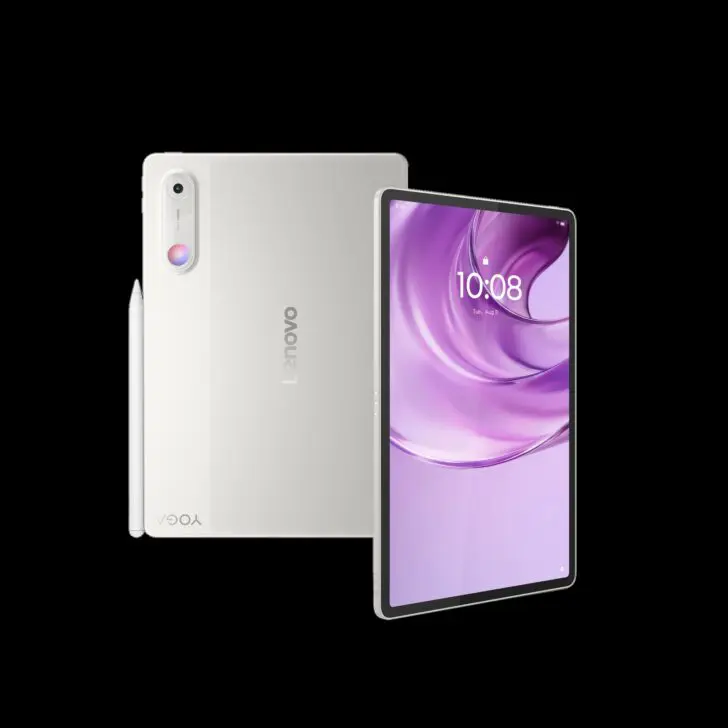
At launch, Android 17 will be the operating system, and the tablets will receive seven OS upgrades up to and including Android 24, plus up to seven years of security updates until 2033. This makes the tablets a long-term investment. Lenovo expects starting prices of 849 euros including VAT for the Plus and 649 euros for the entry-level version, available starting this month.
Qira becomes the connective tissue
Across all devices, Lenovo is promoting Qira, its own AI that it launched during CES earlier this year. Qira will feature integrations with Gmail, Slack, and Outlook, among others. This connection gives Qira access to your mailboxes and chat channels. PCs with 16 GB of memory are now also eligible, whereas this previously only applied to higher-end configurations.
Finally, in Berlin, Lenovo is showcasing the Smart Canvas concept. In theory, this allows you to combine a Yoga all-in-one with a tablet into a shared workspace. It remains explicitly a concept idea.
First dance with Nvidia
The Yoga laptops with Nvidia RTX Spark are an interesting test case for both Lenovo and Nvidia. For Lenovo, it could be an additional architectural option to offer its business customers alongside Intel, AMD, and Qualcomm. As the largest PC manufacturer, it can afford that gamble. Nvidia gains more of a foothold in the PC market. Microsoft previously announced a Surface Ultra with Nvidia RTX Spark, but as a chip manufacturer, you naturally want the market leader on board.
However, the RTX Spark has yet to prove itself in practice. No one doubts the chip’s capabilities, but software is a factor that should not be underestimated. Driven by Qualcomm Snapdragon laptops, the Windows on ARM ecosystem is much more mature than it was a few years ago, but compatibility with drivers and enterprise software can still be an obstacle.