

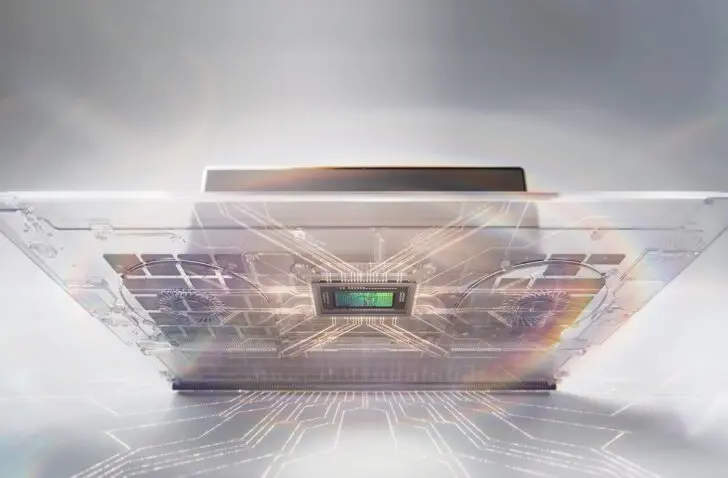
Nvidia’s long-awaited first CPU is a reality. With RTX Spark, Nvidia brings petaflop performance to Windows. Is the chip shaking up the PC market?
Nvidia opens the debates at the Computex trade fair in style. During his keynote, Jensen Huang pulled the RTX Spark out of his hat: a brand-new chip with which Nvidia is setting its sights on the CPU market. Nvidia is not shying away from big words, calling RTX Spark ‘the biggest innovation for the PC in forty years’.
On paper, the chip already sounds impressive. The RTX Spark chip pairs a Grace CPU (20 cores) with a Blackwell GPU (6,144 cores), with up to 128 GB of memory (LPDDR5X) and a TDP between 45 and 80 watts. With those specifications, the processor is equipped to offer up to 1 petaflop of local AI processing power, Nvidia writes in the announcement.
Tailored for AI agents
In addition to gamers and creative professionals to a lesser extent, Nvidia primarily wants to play the AI card with the RTX Spark, as it has been doing successfully for years with its graphics processors. An RTX Spark laptop should be able to run LLMs up to 120 billion parameters—coincidentally the exact number of parameters of Nvidia’s own Nemotron 3 model—and a context window of one million tokens locally.
Graphics professionals can process 12K video and 3D renders up to 90 GB. Such heavy applications would normally drain your battery in no time, but Nvidia states that the RTX Spark is very energy-efficient. An additional advantage is compatibility with the CUDA ecosystem.
Together with Microsoft
The AI promises are music to Microsoft’s ears. The RTX Spark is said to be the result of years of intensive collaboration between Microsoft and Nvidia to optimize AI performance in Windows. Microsoft hopes the processor is the missing puzzle piece to finally bring the ‘AI PC’ to the masses. For graphics applications, Nvidia collaborated with Adobe.
To lead by example, Microsoft is announcing a new Surface laptop with an RTX Spark processor and a 15-inch screen. The word ‘Ultra’ in the name is intended to show that it is the ‘most powerful Surface to date’. We would like to invite Microsoft to prove those claims on our test bench. Other major PC manufacturers such as HP, Lenovo, Dell, Asus, and MSI will very likely follow quickly with new devices.
Formidable opponent for Intel and AMD
RTX Spark is just the starting signal: Nvidia wants to bring a new generation to the market every two years. The second generation based on Vera Rubin will follow in 2028, in line with the renewal cadence of Nvidia’s chip architecture. Along with the RTX Spark, it is also releasing the previously announced DGX Station.
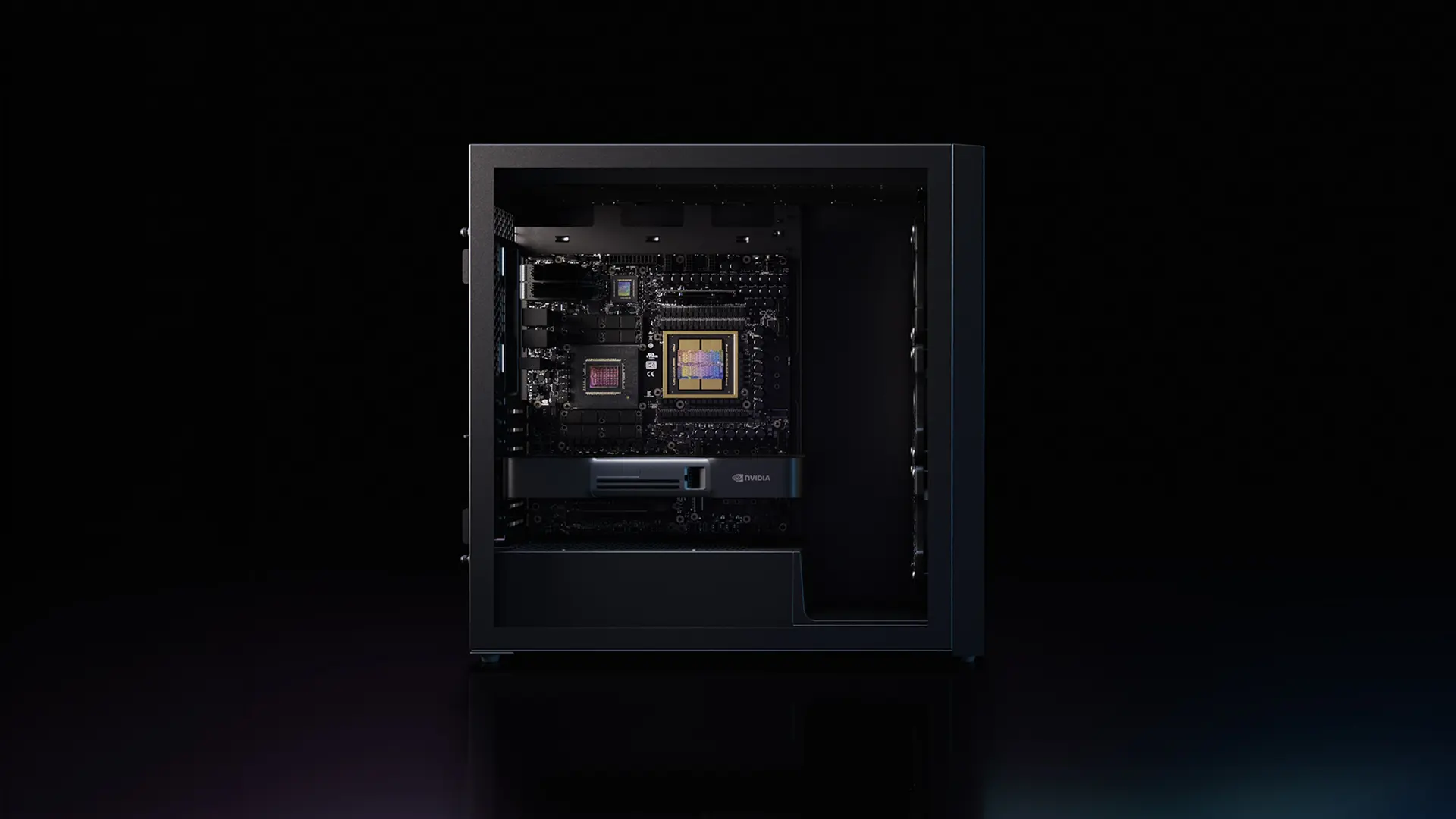
This is essentially a data center in desktop format: DGX Station contains a Blackwell GB300 Ultra chip with 72 CPU cores, 20,000 GPU cores, and 748 GB of memory, good for 20 petaflops of AI computing power. The processor is powerful enough to run LLMs up to one trillion parameters. DGX Station will be available from the fourth quarter.
Now that Nvidia is fully aiming its sights at the CPU market, Intel and AMD have gained a formidable competitor. The ARM ecosystem, in turn, gains an important ambassador. Not that the days of x86 are suddenly numbered, but no one today should doubt that Arm is a full-fledged alternative in Windows.