

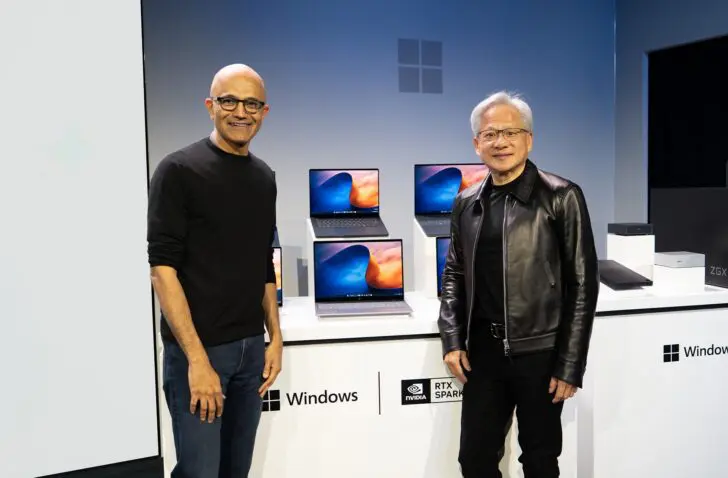
AI agents on Windows will get their own container, their own identity in Entra and, with your permission, access to your files via Copilot. Satya Nadella expects agents to become the primary users of the file system.
“There is no way to build an ecosystem without trust,” says Microsoft CEO Satya Nadella on October 7 in San Francisco at the opening of the first Windows and Surface event in more than two years. Moments later, he gives the PC’s file system a new primary user: “I think agents will become the largest users of the file system.” Therefore, Nadella says, “we had to make the desktop the most secure place to run agents.”
Pavan Davuluri, Executive Vice President for Windows + Devices, calls the AI agents running on PCs today “fundamentally insecure because they have broad access to the system.” With that diagnosis, Microsoft is setting Windows on a new course, and it is once again asking for trust. In 2024, the company postponed Recall following criticism of the feature that saves a screenshot every few seconds. It appeared in 2025 as an opt-in. On the stage in San Francisco, the name Recall is not mentioned.
Containers, identity, and management
The security model Davuluri outlines for AI agents on Windows has three components: containment determines what an agent is allowed to do, identity makes it clear which agent did something, and management links that to Agent 365 and Intune. “Agents don’t work like traditional apps,” he writes in his blog post. “They can run around the clock, use tools, write code, open files, and act across systems, often without anyone following every step.”
The first component has been generally available on Windows 11 since October 7: Microsoft Execution Containers, or MXC for short. Logan Iyer, Corporate Vice President for Windows Platform + Developer, summarizes the principle: “An agent cannot be its own security authority.” A developer or administrator declares which files and network destinations an agent needs, and MXC enforces that boundary during execution. The agent, or the code it generates, cannot grant itself additional access.
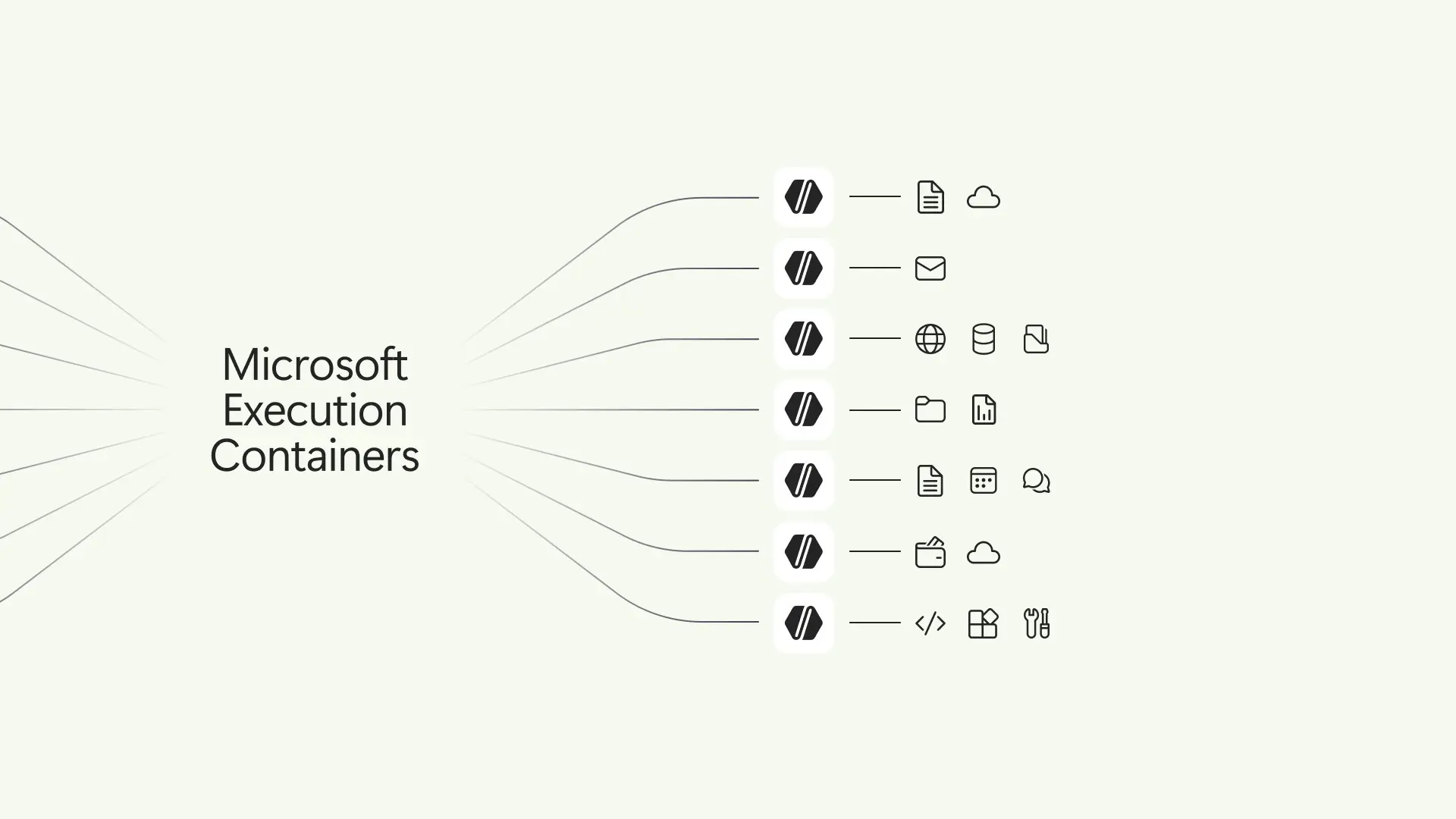
Iyer gives the example of a coding agent tasked with updating a website. It may be allowed to read and write to the repository but only view the server configuration. Without a boundary, the agent might decide that modifying the server is the fastest way to the goal, potentially breaking the production site. In an MXC container, the system blocks that action, regardless of what the model, plugin, or tool decides. Only Windows offers a session container for this, which runs the agent under a separate Windows account with its own desktop, clipboard, and input.
GitHub Copilot, OpenAI Codex, OpenClaw, Replit, LM Studio, Nvidia’s OpenShell, and Unsloth AI already support MXC. Anthropic Claude Code, Perplexity, Raycast, Manus, Box, and Egnyte will follow, as will Muse, Meta’s personal agent, which will appear as a native Windows app. A learning mode records which resources an agent tried to reach in a JSON report; Intune policies for MXC are coming soon.
AI agents on Windows get an identity
The second component is still on the roadmap. Windows will soon allow Microsoft Entra to distinguish between what an agent does and what the user does. If an agent is compromised, the security team can revoke its access without blocking the employee.
Through Agent 365, administrators can see which agents are running, which activity belongs to which agent, and which agents a policy applies to. In a footnote, Davuluri warns that management at scale “may require additional services.” Microsoft will explain this at Ignite, its partner conference, in November.
Copilot reads your files, with permission
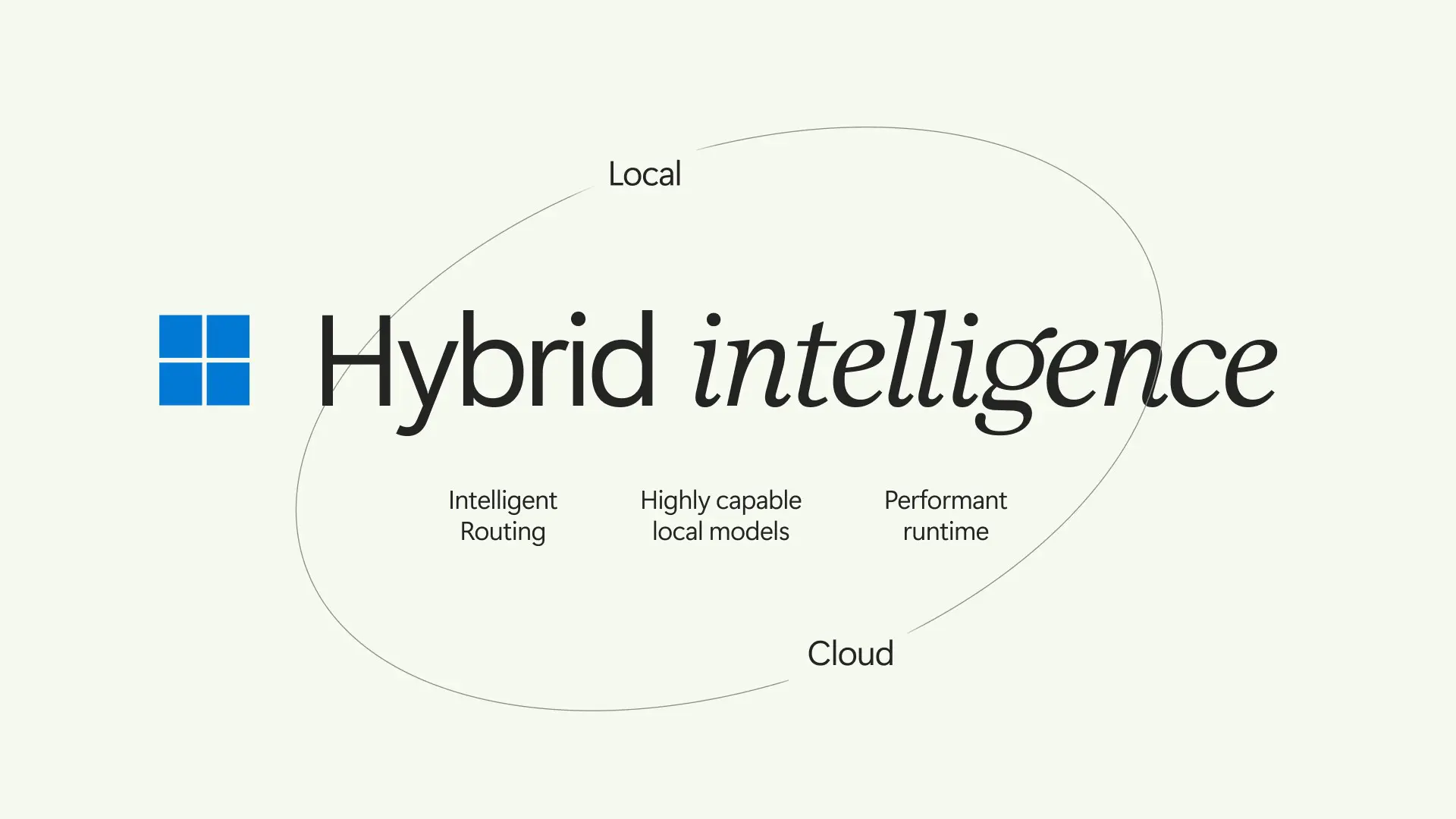
The new Copilot, divided into Home, Code, and Autopilot, will get three local features on Copilot+ PCs: it reads files and recent activity with permission, it performs actions such as organizing files, running diagnostics, and writing code, and it uses models that run on the PC itself. “Copilot now truly understands your PC,” says Jacob Andreou, Executive Vice President for Copilot, on stage.
Andreou demonstrates Autopilot in a pre-recorded demo. The agent gathers tax documents from different folders, renames them, zips them, and prepares a reply email waiting for approval. A “Hybrid Intelligence” toggle turns the entire feature off. The rollout begins “in the coming months,” requires a Windows update, and reportedly varies by device, market, and chip platform. Microsoft has not specified which devices are in the first wave.
The new Copilot features remain reserved for Copilot+ PCs, even though Microsoft buried the label in late September. In his blog, Davuluri provides figures for the category: Copilot+ PCs collectively perform more than 2 trillion inferences per month locally, and more than 40 percent of business laptops in production meet those specifications.
Local models intended to save cloud budgets
The reason Microsoft is moving so much work to the PC is stated in Davuluri’s blog: “Customer needs are growing faster than their cloud budgets can handle.” Every token must count. Therefore, Microsoft is bringing MAI Code 1.1 Flash—the coding model from Build with 137 billion parameters, of which 6.8 billion are active—to the device in 3-bit precision. This makes the model nearly 80 percent smaller, with a context window of 256,000 tokens. Local calls do not cost AI credits.
Nvidia’s Nemotron, with over 70 billion parameters, fits in 2-bit into just over 20 GB of memory, and DeepSeek V4 Flash with 284 billion parameters runs on RTX Spark.
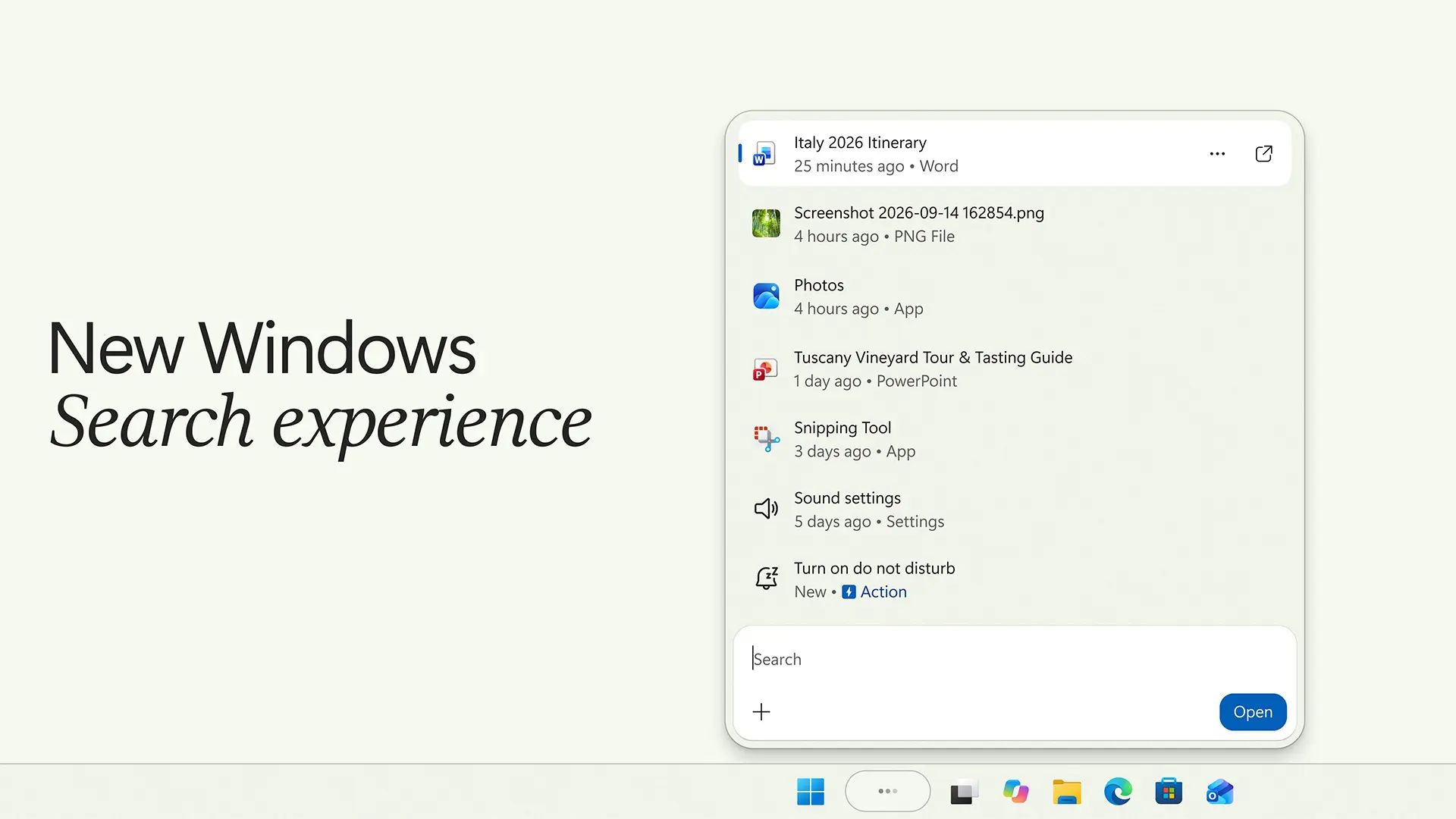
GitHub HydraFusion, which routes every task to the appropriate cloud model, is also learning to access local models on Windows. This will come to the GitHub Copilot app, the CLI, and Visual Studio Code as an experimental preview later in October. Windows ML will get support for llama.cpp. Since October 7, Windows Search on the taskbar has been performing “thousands” of actions for Insiders, from “switch to dark mode” to “message Elisa that I’ll be there soon.” Copilot in the search bar will follow later this year as an opt-in in selected markets.
Nvidia supplies the hardware
The hardware for that local work comes from Nvidia. Microsoft calls PCs with RTX Spark “builder PCs”: the Surface Laptop Ultra ($2,599), laptops from Asus, Dell, HP, Lenovo, and MSI, and the Surface RTX Spark Dev Box for $5,999.
For mini-desktops that run agents around the clock, there will be a one-click installation with a Windows gateway for OpenClaw. At the top is the DGX Station for Windows with Nvidia’s GB300 chip, 748 GB of memory, and 20 petaflops, suitable for models with a trillion parameters and acting as a “token factory” for 32 or more agents simultaneously. Dell and HP will release such a workstation later this year.
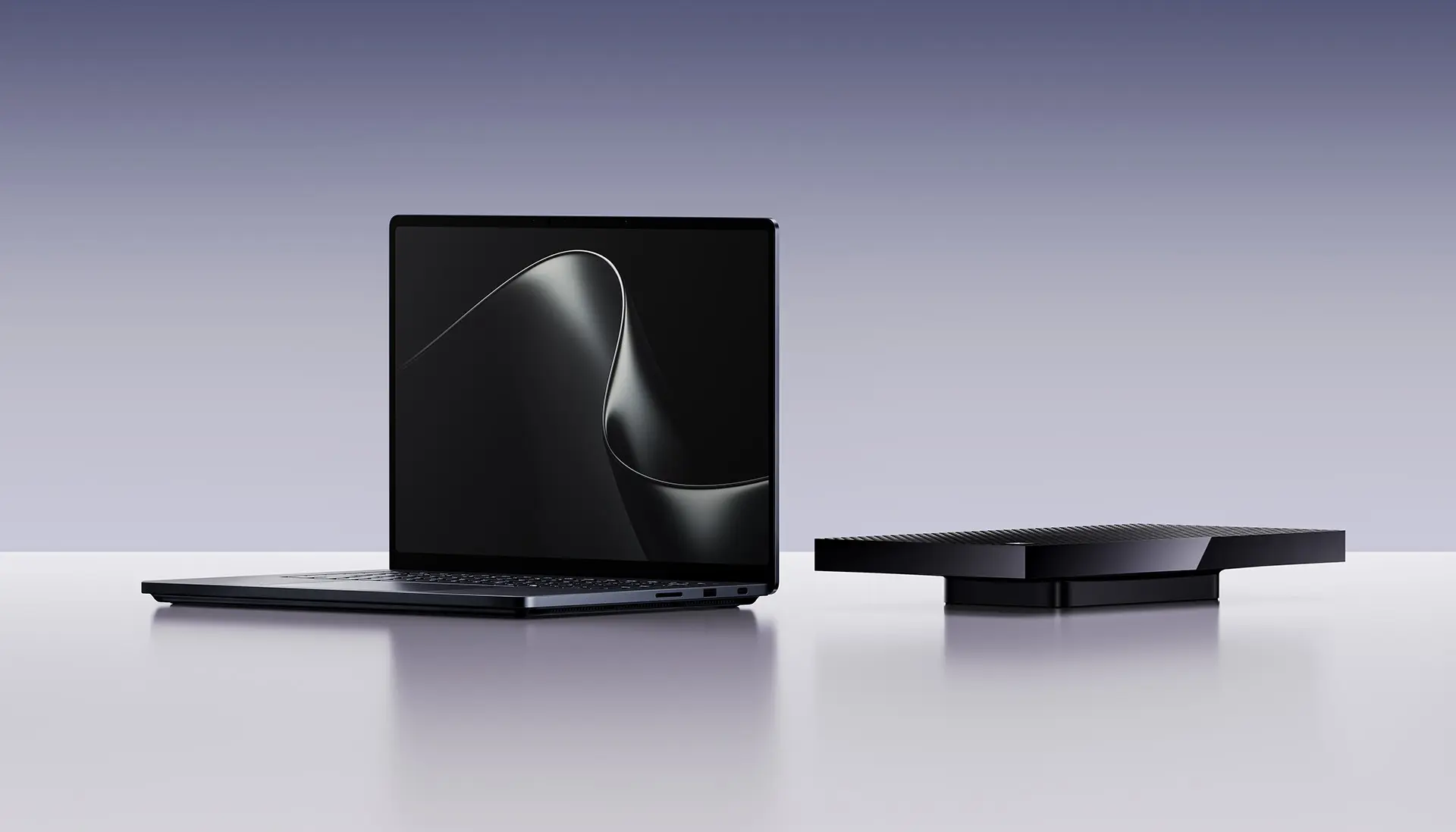
Nvidia CEO Jensen Huang joins Nadella after the announcements. According to him, the chip cost more than 4,000 engineering years and began four years earlier with a conversation with Nadella. At Computex in June, he already described the PC of the future as an agent that stays at home and with which you exchange messages. “Windows has been with me for 34 years, and it looks like it will be with me for another 34 years.”
For Windows on Arm, which TrendForce predicts will capture 3.2 percent of the laptop market this year, Nvidia is the catalyst that Qualcomm was still waiting for at the end of September.
Phased rollout
MXC is available today for developers, with an SDK and examples on GitHub. Agent identity in Entra, Intune rules, and Copilot features will follow “soon” and “in the coming months,” at a pace that varies by market.
At Ignite in November, Microsoft will explain how organizations can deploy hybrid intelligence. The AI agents running on Windows today will continue to do so outside of any container until that rollout, with the broad system access that Davuluri called insecure on October 7.