

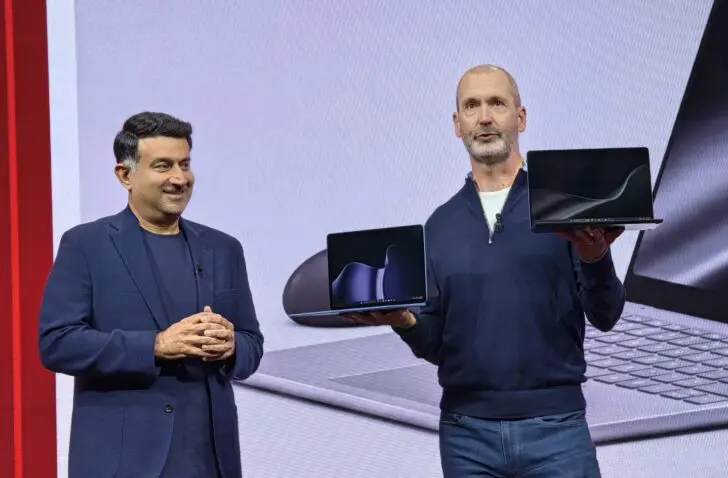
At the Snapdragon Summit, Qualcomm bet everything on the AI smartphone and ‘personal AI’, but it did not introduce a new chip for the PC. Windows on Arm works better today than ever, yet Qualcomm seems to be waiting for Google, Microsoft, or even Nvidia to ignite the market.
Anyone who followed the three-day Snapdragon Summit 2026 saw two companies. One proclaimed that “the AI smartphone is here, now,” runs a 30-billion parameter model on the Snapdragon 8 Elite Gen 6, and showcases an AI pin and an app store for earbuds.
The other opens its PC keynote with a warning. “Today is not about new chips,” says Kedar Kondap, who leads the PC and gaming division at Qualcomm. “It is about what is being built on them.” In the opening keynote by Qualcomm CEO Cristiano Amon, the PC appeared exactly once: as a laptop being raffled off to the audience.
That contrast is no coincidence. Smartphone chips arrive annually, while a new generation of the X-series (for now) comes every two years. Asked if that rhythm is sufficient now that Apple releases a new M-chip every year and Nvidia enters the market, Kondap replies that “the cadence does not have to be what the industry is used to.” Qualcomm only launches “when we see that the current platform is no longer sufficient.”
One word: priorities
Why is Linux only officially arriving now, and only for the X2? “Prioritization.” Why not for the first generation? “Prioritization. We are starting with the X2.” Kondap calls it a “surgical” approach: first Windows, then the X Plus, then the second generation, then Snapdragon C for 300-euro laptops, and now other operating systems.
For a newcomer, that is defensible, but Qualcomm is no newcomer. The first X Elite was introduced in October 2023, and in May 2024, Qualcomm already promised Linux patches “within days.” Those who bought such a device remain dependent on the community. Even today, manufacturers are still launching new models based on the first-generation X-chips.
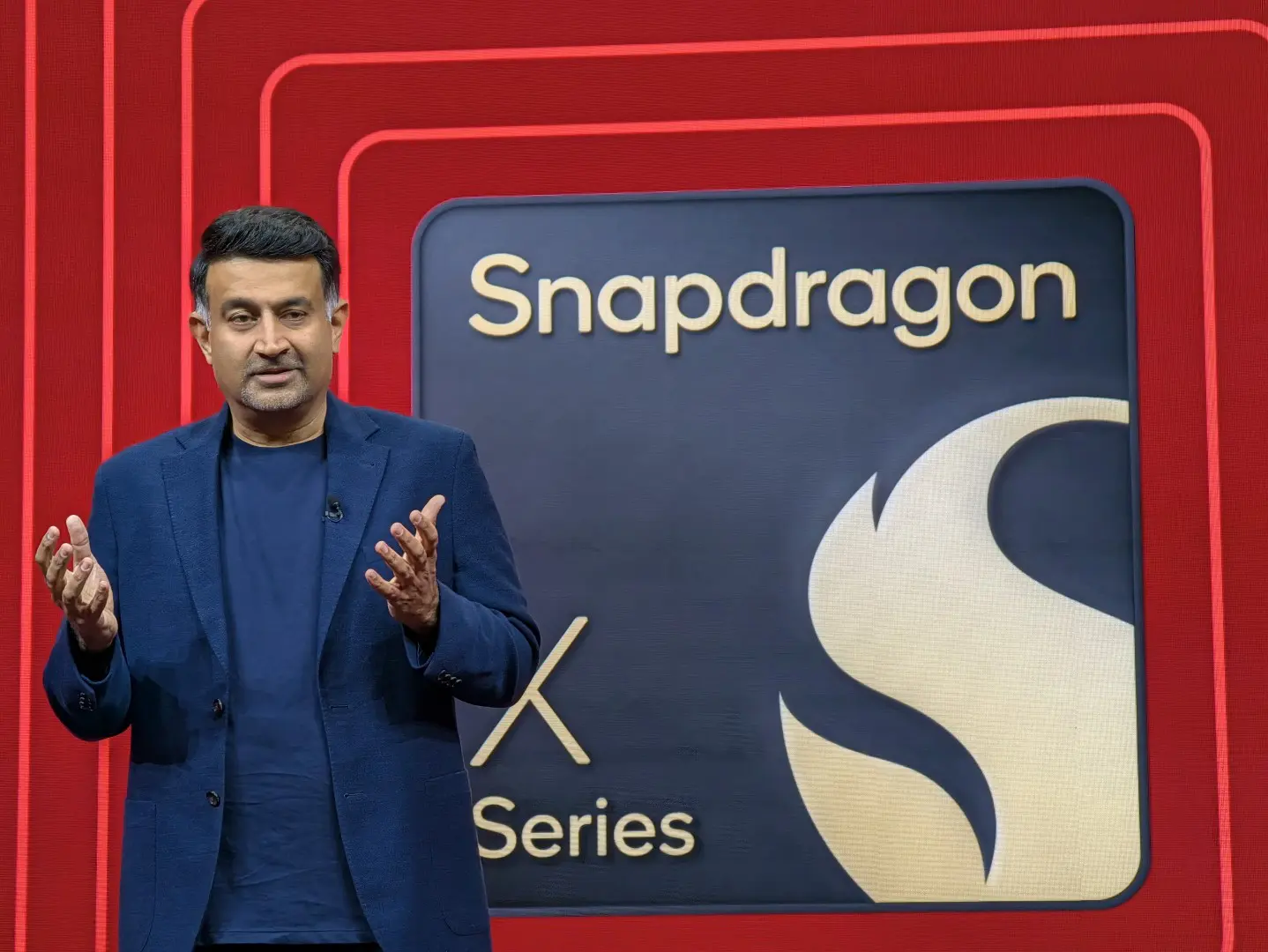
The same applies to everything pointing forward. Will the Element Accelerator, the new AI block of the smartphone chip, ever come to the PC? “To be honest, I don’t know enough about it yet.” And HBC, the technology that places computing power next to the memory and which Amon explicitly promised “to your laptop” on day one? “We are committed to the PC and have a long-term plan.” An X3? A smile.
Compatibility is solved, the demand is not
When we first tested Windows on Arm, we called it an unfinished experience. Today, according to Kondap, more than 7,300 apps run natively on Snapdragon, there are 170 designs across all major manufacturers, and the devices are in 12,000 stores. “It’s no longer a problem,” he says. Our own tests confirm that the chips in native software keep up with or beat Intel and AMD, with better battery life.
Yet the fire isn’t catching. TrendForce estimates the share of Windows on Arm in the laptop market at 1.2 percent in 2025 and 3.2 percent this year. Qualcomm’s best figure remains a claim from early 2025: more than ten percent of Windows laptops above 800 dollars in the US. And the AI narrative that was supposed to carry the category has fizzled out.
Limited business vision
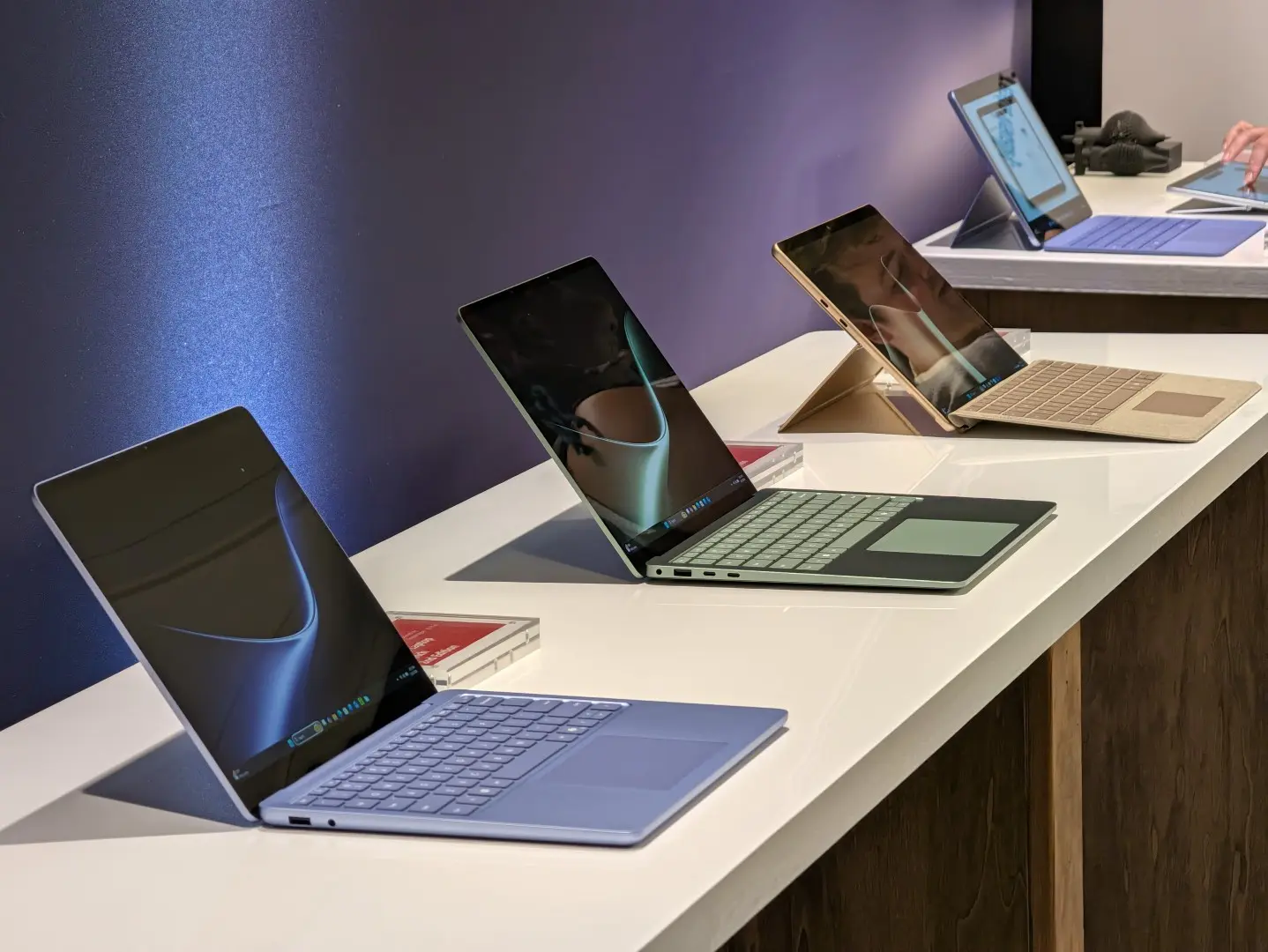
The business market is the real test, and there the stage remains remarkably quiet. What was on display: a Lenovo IdeaPad Vibe in Pantone colors, a Manchester United shirt with Snapdragon and Surface on the back, and two Googlebooks for consumers.
A figure only emerged during the Q&A session: more than seventy companies have deployed Snapdragon PCs, with Qualcomm and Microsoft themselves doing so on a large scale. “We knew that companies would always take longer.” According to Kondap, Intune, management, and security are no longer questions. He says customers are now asking for help moving AI models from the cloud to the laptop because their token bills are spiraling out of control. That sounds promising, but the majority of customers are not yet that far into the AI funnel.
Does Windows on Arm need an Nvidia spark?
At the end of May, Nvidia and Microsoft introduced the RTX Spark: a Grace processor with twenty Arm cores, co-designed by MediaTek, a Blackwell GPU with 6,144 CUDA cores, up to 128 GB of RAM, and a petaflop of AI computing power. Asus, Dell, HP, Lenovo, MSI, and Microsoft are on board; the first devices will be in stores starting in October.
Tellingly: Microsoft is putting the Nvidia chip in its new flagship, the Surface Laptop Ultra, and gave Qualcomm the entry-level models in Hawaii during the Snapdragon Summit.
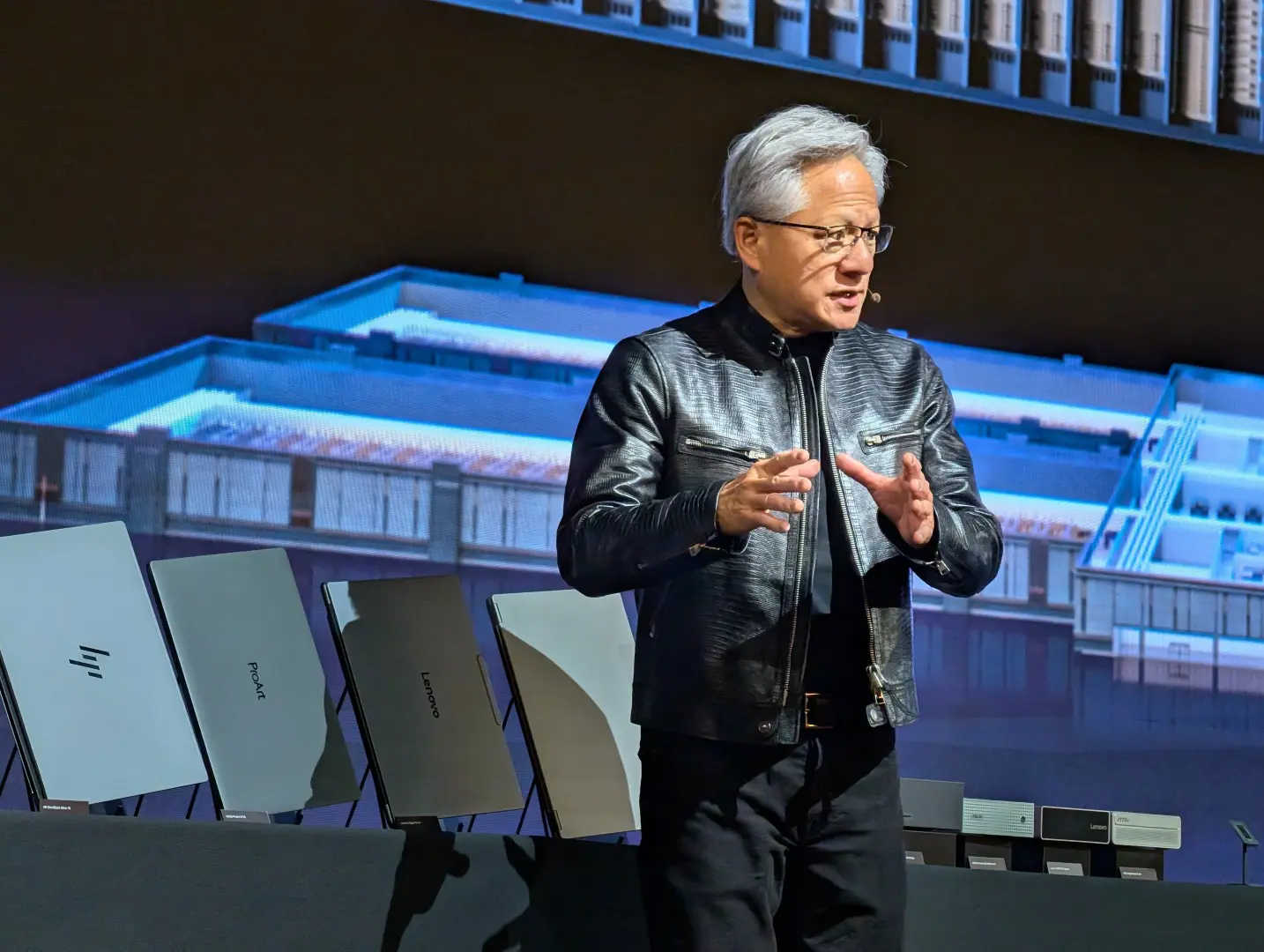
Kondap does not see it as a threat. “Everyone who enters this ecosystem only confirms that we were on the right path two years ago.” He is partly right, and Nvidia can truly help Qualcomm. Every creative tool and development environment that moves to Arm for the Spark also runs on Snapdragon, and Nvidia has the appeal among creative professionals and developers that Qualcomm lacks. TrendForce expects Windows on Arm to grow to 11.5 percent by 2029 thanks to both players.
But the Spark is not a volume product. Nvidia is still silent on pricing; we expect minimum prices to exceed 2,000 euros. A spark for creative professionals and AI developers, not a forest fire.
Cautious or lost?
In November 2024, Qualcomm promised investors four billion dollars in PC revenue by 2029. At the Investor Day in June 2026, the PC was no longer a separate line, but part of ‘Personal AI and Compute’: six billion dollars, together with glasses, wearables, and earbuds. That explains the tone of the Snapdragon Summit in Hawaii.
Qualcomm no longer sees the PC as a market it must take away from Intel and AMD.
Qualcomm no longer sees the PC as a market it must take away from Intel and AMD, but as an ‘anchor point’ in a network around your phone: the device with the most cooling and memory, where the agent does the heavy thinking for your earbuds and glasses. That sounds like a logical story for a smartphone company, but it won’t convince an IT manager to overhaul their fleet.
The potential, however, is immense. Apple proved six years ago that Arm works on laptops. The compatibility is there, the battery life too, and with Linux, Googlebook, and Nvidia, the ecosystem is growing almost by itself. Until then, Windows on Arm waits for a spark from someone else. The risk is that that someone also keeps the flame.