

Microsoft is phasing out the Copilot+ label. The limited functionality associated with it will remain.
Two years after the unnecessary launch of Copilot+, Microsoft is already scrapping the label. This does not change the limited local AI capabilities of systems carrying the stamp. It does mean, however, that new computers meeting Microsoft’s arbitrary minimum requirements will no longer receive the marketing label.
A label tailored to Qualcomm
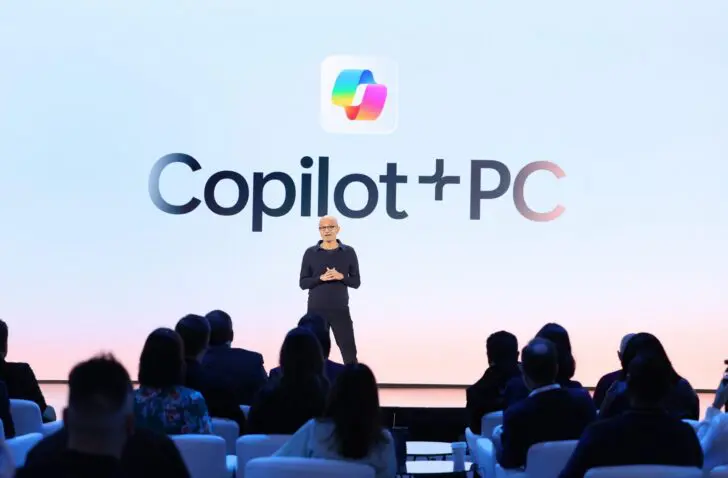
Microsoft introduced Copilot+ in mid-2024 to support the launch of the Microsoft Surface Laptop 7, in collaboration with Qualcomm. To earn a Copilot+ badge, systems had to meet several minimum requirements. The most important of these was an integrated AI processing power of 40 TOPS. Furthermore, Microsoft required a robust battery life, allowing a system to last a full day without a power outlet.
The label’s specifications were tailored to Qualcomm and its Snapdragon X CPUs. In 2024, the manufacturer was the first with an integrated 40 TOPS NPU, and the ARM-based CPU ensured longer battery life. Two years later, most premium computers meet the Copilot+ standard, whether they have a Qualcomm, AMD, or Intel chip on board.
Empty shell
For the consumer, Copilot+ actually meant nothing. The label was supposed to relate to the presence of certain local AI capabilities in Windows, but in practice, these amounted to little or nothing. The primary use for 40 TOPS of processing power was support for the controversial and widely reviled Windows Recall feature, which no one was asking for.
The Copilot+ label supporting so-called ‘AI PCs’ was otherwise fairly worthless. An NPU with around ten TOPS can accelerate specific local functions but is incapable of processing large AI workloads. For local AI that even comes close to the AI capabilities users are accustomed to in the cloud, you need a workstation system with dozens of gigabytes of (GPU) memory.
Part of an unsolicited AI strategy
Copilot+ has therefore never been more than a transparent marketing label, as we already analyzed at launch. It was part of several other unsolicited introductions with which Microsoft wanted to persuade users to use AI anyway. Consider the Copilot button, where your PC was suddenly equipped with a dedicated key for an AI service you didn’t ask for—similar to a Netflix or Prime Video button on your TV remote, but even less useful.
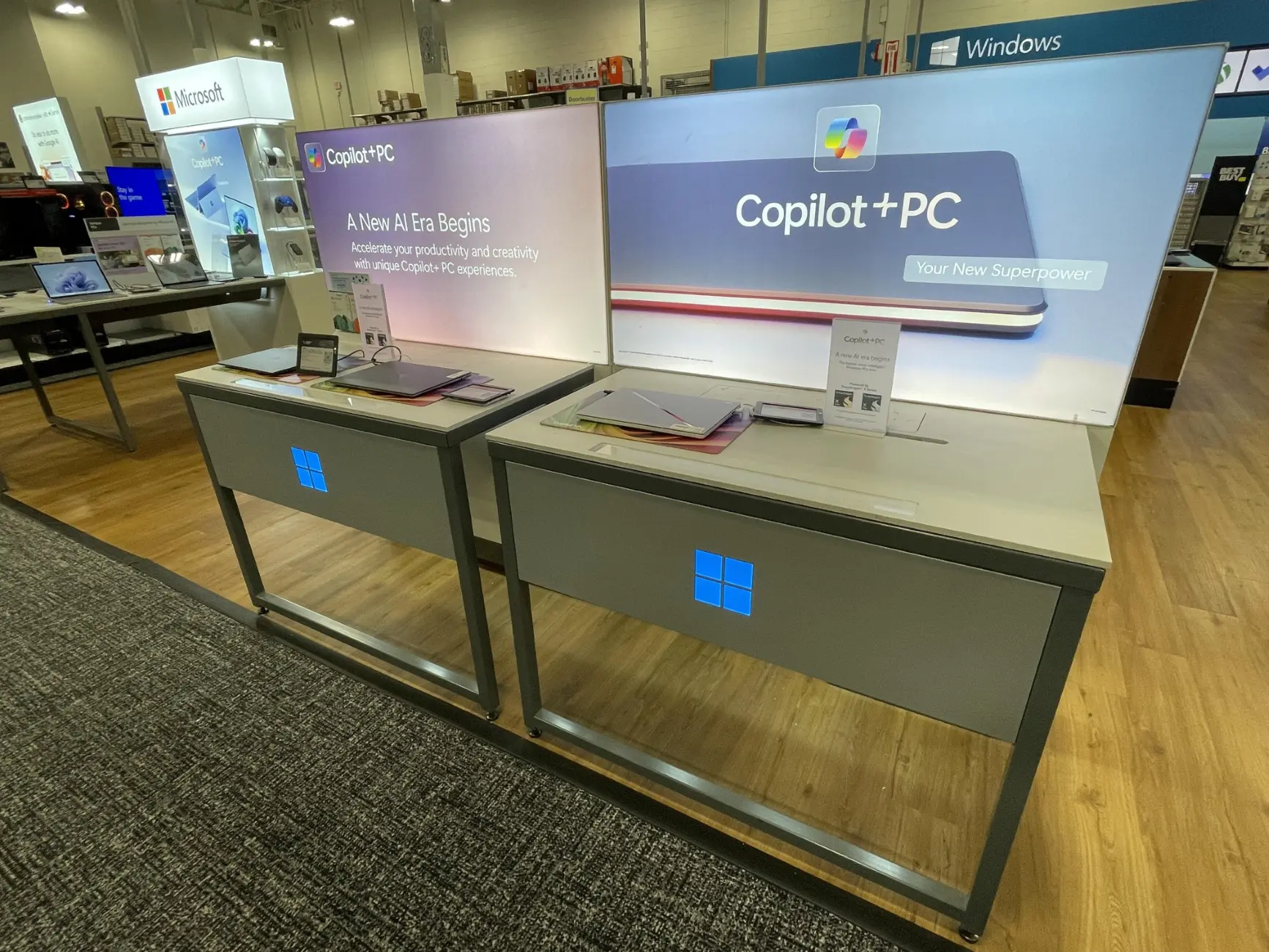
Microsoft is generally scaling back its aggressive pushing of AI. For instance, you can now assign the Copilot button to another function, Recall has become optional, and other overly conspicuous and redundant AI features are also fading into the background.
In this context, scrapping Copilot+ is no surprise, especially since the label now applies to almost all new computers. This explains why the recently announced Microsoft Surface Pro 12 and Laptop 13 are theoretically Copilot+ systems but did not receive the associated branding at launch.
Not compatible with Nvidia RTX Spark
There is likely another important reason. Microsoft is partnering with Nvidia. Later this year, the first systems will appear with Nvidia RTX Spark under the hood. These computers will feature a significantly more powerful GPU, with configurations up to 128 GB of memory shared between CPU and GPU. Think of an AMD Ryzen Pro Max, but from Nvidia and ARM-based.
For such systems, one could argue they are true AI PCs. They play in a completely different category than the late Copilot+ computers. Since the announcement, Nvidia has wisely stayed away from Copilot+ as a label for RTX Spark PCs.
Microsoft will support the arrival of Nvidia RTX Spark with the launch of a Surface Laptop with the chip on board. Marketing that laptop while simultaneously promoting Copilot+ as a label for AI PCs is an untenable position. Microsoft has clearly realized this as well.
No loss
Finally, there is the reality that Copilot simply isn’t a strong brand. Microsoft launched its version of AI too early, implemented it too sloppily, and promised too much.
All this explains why Microsoft has now formally acknowledged that Copilot+ is in the bin. This evolution is little more than the chronicle of a death foretold. The label could never shake the scent of pure marketing and serves as an illustration of Microsoft’s hasty and ill-conceived AI-related strategy.