

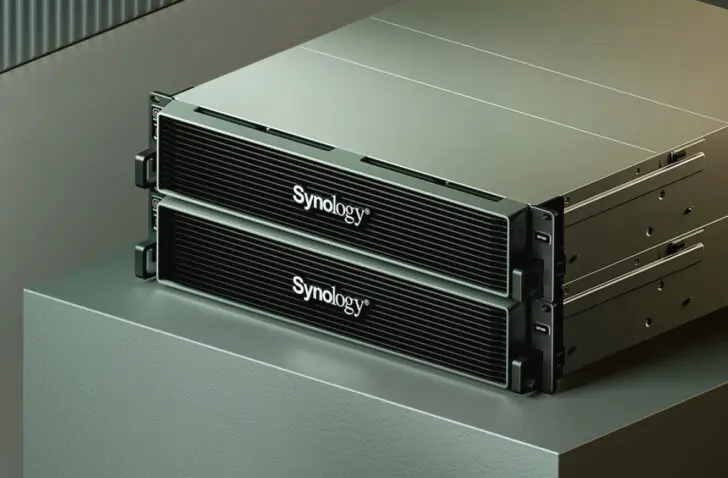
With ActiveProtect Manager 2.0, Synology is adding AI-driven anomaly detection, malware scanning, and support for additional cloud and virtualization platforms to its backup appliances. The release is scheduled for the third quarter of 2026, with a virtual variant to follow later.
In early 2025, Synology launched a new series of NAS devices featuring a different operating system than the traditional DiskStation Manager (DSM). New hardware was also brought to market under the ActiveProtect banner.
Why was there a need for a pure backup solution? We previously dissected ActiveProtect in full to provide an answer. You can read the results here.
Eighteen months after the launch, ActiveProtect Manager 2.0 has arrived. The upgrade extends support to Azure VM, Amazon EC2, Nutanix AHV, Proxmox VE, and Google Workspace. Cross-platform restore allows VMs to be moved between VMware, Proxmox, and Nutanix, among others. With this, the company continues to position the ActiveProtect line in the market.
Also new is Azure Blob Storage as a destination for backup copies and tiering. Those already copying data to the cloud can now perform a direct cloud-to-cloud restore instead of pulling everything back over the network. This reduces both data traffic and costs.
AI against AI
At Computex, Synology framed the update within a world where AI is used for attacks, referencing models that independently detect zero-days. The answer is anomaly detection during the backup process itself. A machine learning model trains on the last thirty backup versions and looks for deviations in areas such as change rate, file updates, mass deletions, and entropy, always measured against user behavior.
The model continues to train itself, and administrators can mark false positives. Suspicious versions are quarantined, with role-based permissions determining who is allowed to restore them. For the restoration itself, ActiveProtect integrates with third-party antivirus software such as Bitdefender, ESET, and Windows Defender, potentially in an air-gapped environment. An Auto Fallback feature automatically reverts to the most recent clean version.
An important side note: the AI and ML anomaly detection is proprietary to Synology, as it uses deduplication metadata as a training source. It will not be coming to the broader Active Backup for Business (within DSM) and is not currently being opened up to partners. Third parties can only interact with it via notifications and alerts.
Virtual version
Additionally, development of the Virtual ActiveProtect Appliance—for those who want to run the software on existing hardware—will only begin after the release of version 2.0. The update itself is expected in the third quarter of 2026.
With the arrival of this virtual variant, Synology is breaking away from the traditional model where ActiveProtect software is strictly tied to the brand’s own specific hardware appliances. The Virtual ActiveProtect Appliance enables enterprise customers to run advanced backup and recovery features directly as a virtual machine (VM) within their existing hypervisor environments.
This means large organizations do not need to purchase new, dedicated hardware. They can seamlessly integrate ActiveProtect into their existing compute and storage infrastructure.
Details regarding the virtual approach remain scarce. More information is expected toward the end of the year.