

Google Translate is integrating Gemini to improve text translations. This update ensures more natural and accurate translations, with a special focus on idioms. Additionally, a beta version of real-time speech-to-speech translation is being launched for use with headphones.
Google announces a series of innovations for its popular translation service, Translate. By integrating its in-house AI model Gemini, the company promises a leap forward in translation quality. These improvements target both textual translations and live conversations, aiming to make communication between different languages more fluid and natural.
The new features are designed to better understand the subtleties of human language, ensuring that idioms and local expressions are no longer translated literally word-for-word.
Gemini update
Google Translate is now utilizing Gemini’s linguistic capabilities to enhance translation quality. This means that sentences with more nuanced meanings, such as idioms and local expressions, are now translated much more naturally and accurately. Google gives the example of the English idiom “stealing my thunder”: while this used to be translated literally, Translate now understands that it means taking the attention away from someone.
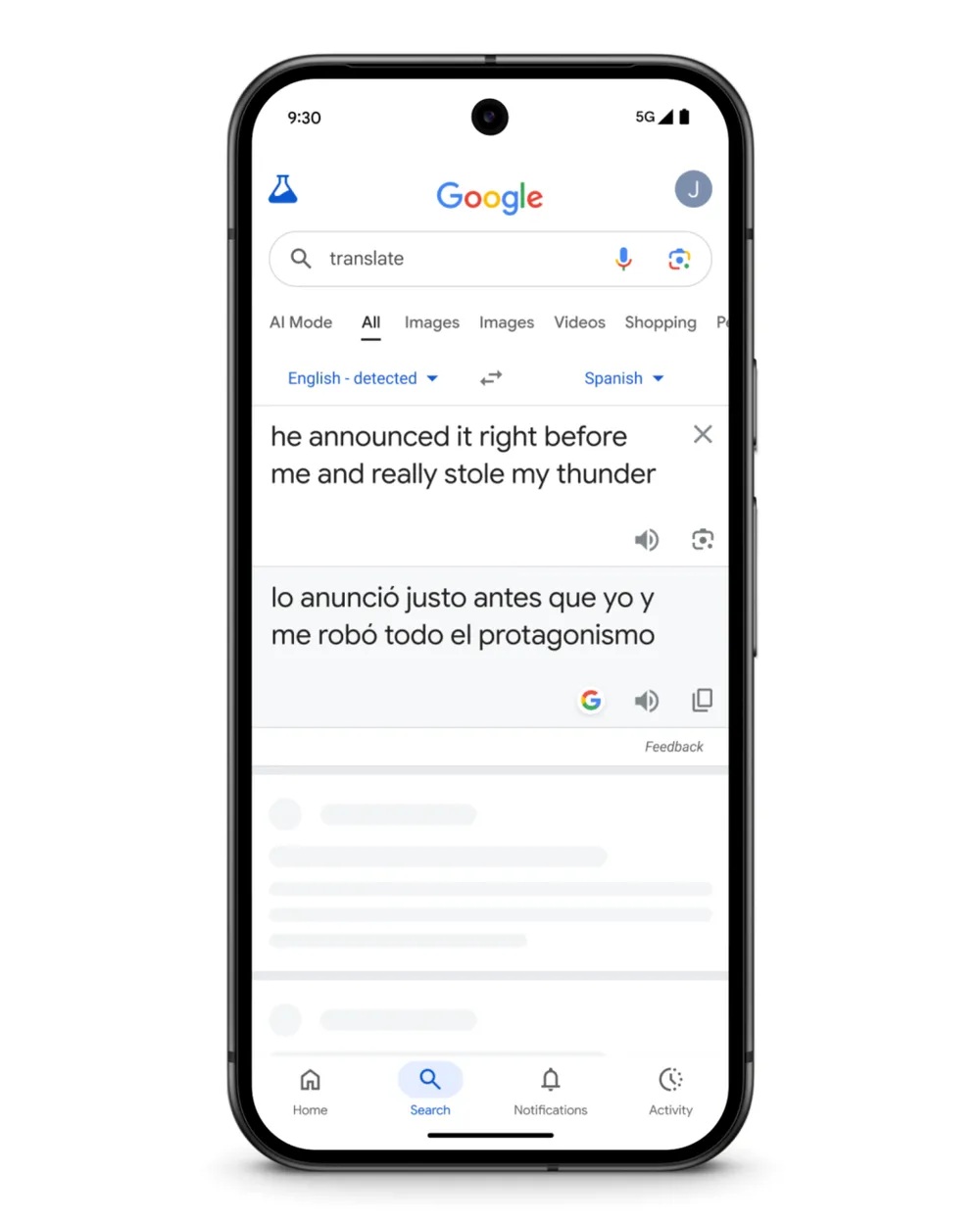
These improved text translations are first being rolled out in the United States and India. They support translation between English and nearly twenty languages, including Spanish, Hindi, Chinese, Japanese, and German. The update is available in the Translate app for Android and iOS, as well as on the web. Users will immediately notice how the translations feel smoother and more human.
Real-time speech translations
Google is launching a beta version of the real-time speech-to-speech translations via headphones announced in December. This new feature attempts to preserve the speaker’s tone, emphasis, and cadence, resulting in more natural translations and making it easier to follow conversations. Whether it’s a conversation in a foreign language, attending a lecture abroad, or watching a movie in another language, the app can now provide translations that closely match the original speaking style.
The beta version is currently available for Android users in the US, Mexico, and India and works with any pair of headphones. More than seventy languages are supported. Google plans to expand this functionality to iOS and more countries in 2026.