

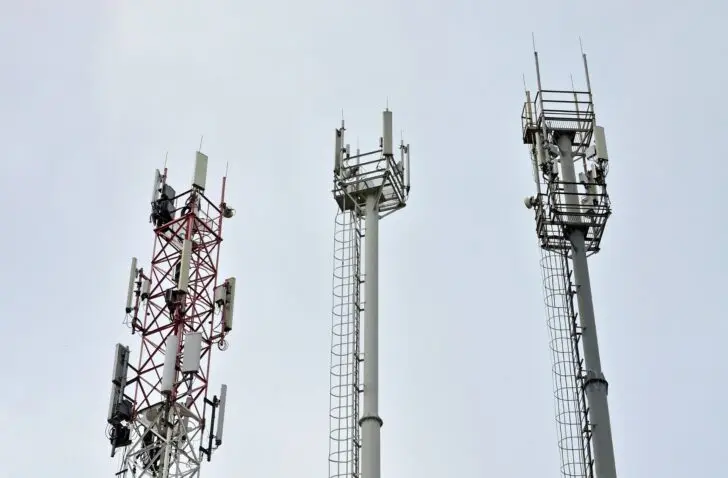
The Belgian mobile operators Orange, Proximus and Telenet have confirmed their plans to switch off their 2G networks completely between 2028 and 2029. The BIPT supports the decision in order to speed up the rollout of 4G and 5G.
The shutdown of the outdated 2G technology marks a new phase in the evolution of the Belgian mobile landscape. After the earlier shutdown of the 3G networks, the oldest generations are now also making way for the more modern 4G and 5G standards.
This transition is necessary to use the available frequencies more efficiently, says telecom regulator BIPT. The freed-up bands will allow operators to offer faster and more reliable services via 4G and 5G, which also use less energy than the technology that has been on the market for more than 30 years.
Impact on devices and communication
Although most modern users will not notice any problems, certain groups will be affected by the measure. These are mainly users of very old mobile phones that can only work on 2G. After the switch-off, they will no longer be able to make calls or send text messages via the mobile network.
The BIPT warns that more recent 4G or 5G devices can also run into problems if they still depend on 2G for voice or emergency calls. Enabling Voice over LTE (VoLTE) in the device settings is in many cases the solution to ensure communication via the 4G network.
Besides phones, a broader range of equipment may depend on this old standard. Examples include alarm systems, smart meters, passenger lifts and even some personal alarms. The emergency call systems in vehicles, known as eCall, also still use 2G in some models.
Preparation and communication
The BIPT stresses that operators are responsible for informing their customers in good time and in clear terms. The aim is to prevent users from being faced with unexpected limitations, especially when it comes to contacting the emergency services. Proximus, Telenet and Orange share information about the phase-out of 2G on their websites.
Companies that use an MVNO, a virtual operator without its own network, need to be extra alert. They are advised to keep a close eye on the information pages of the underlying network operator for the exact schedule.
Over the coming months, the operators will make extra resources available to help customers check their equipment. The BIPT will continue to monitor the progress of the process and the quality of the communication to make the transition as smooth as possible.