


Do you want to break ties with American tools like Microsoft Teams? Our editorial team tests three worthy European alternatives.
A good communication tool is indispensable in most (hybrid) organizations. The first reflex is often to reach for the well-known Microsoft Teams, Zoom, or Slack. However, there are several tools with a similar offering, but of European origin. Our editorial team examined three alternatives: Mattermost, Proton Meet, and Element. Based on user-friendliness, privacy, security, and European roots, we chose one winner.
Recognizable interface
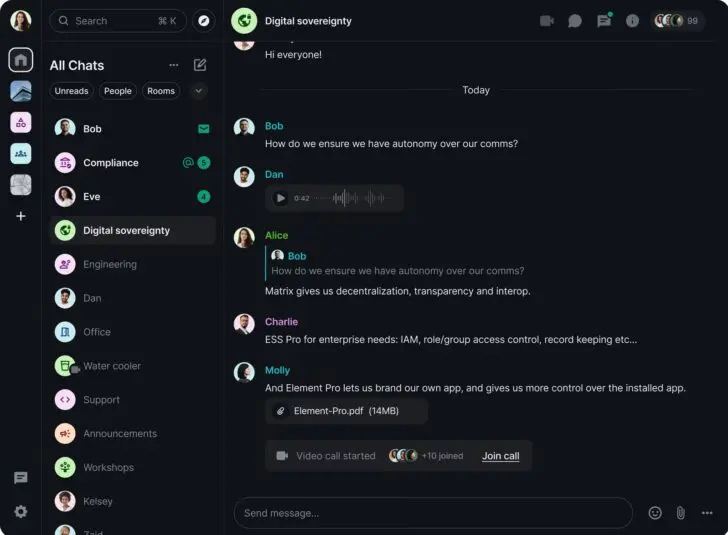
There is no need to reinvent the wheel. The interfaces of Proton, Mattermost, and Element are very similar to each other, but also to that of Microsoft Teams. This does not have to be a disadvantage; on the contrary. We immediately feel at home in these tools due to the familiar environment.
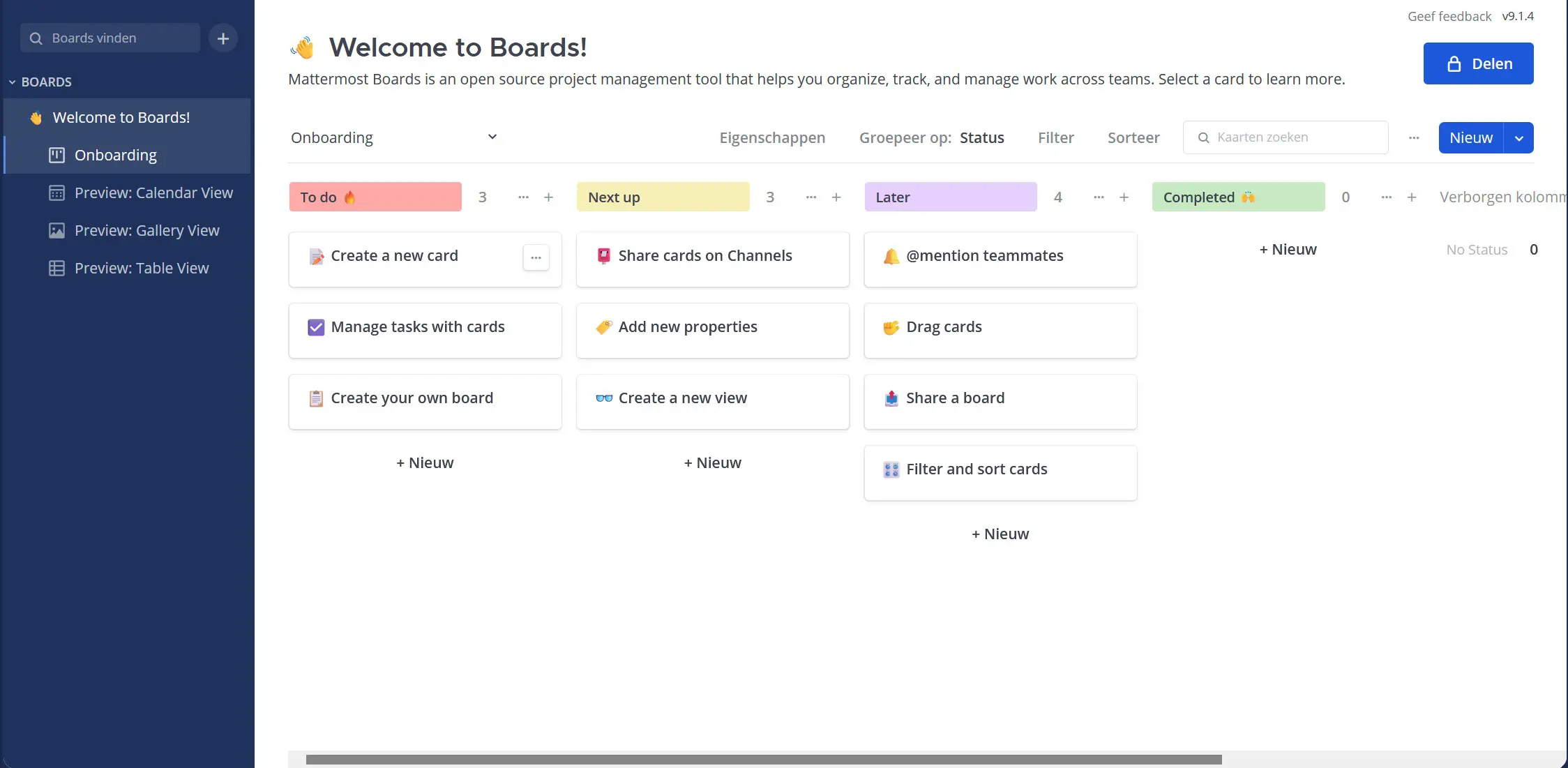
Mattermost, however, goes a step further and adds a few extras on top of the recognizable tools. For instance, there is a section reminiscent of Trello or Asana for organizing projects. Those who like to have project planning and communication in one platform will feel at home in Mattermost.
Meetings
Video calling and conferencing is perhaps one of the most important features of a communication tool. Online meetings should be easy to start, run smoothly, and include essential tools such as screen sharing or reactions, sending chat messages, or transcription.
In Mattermost, we already encounter one crucial limitation during our testing period: calling with video is not possible. Element does offer this option, but only as an ad hoc conversation. Furthermore, there is no possibility to schedule video meetings. Apps like Google Calendar can be integrated into Element via plug-ins, but that takes us too far afield again.
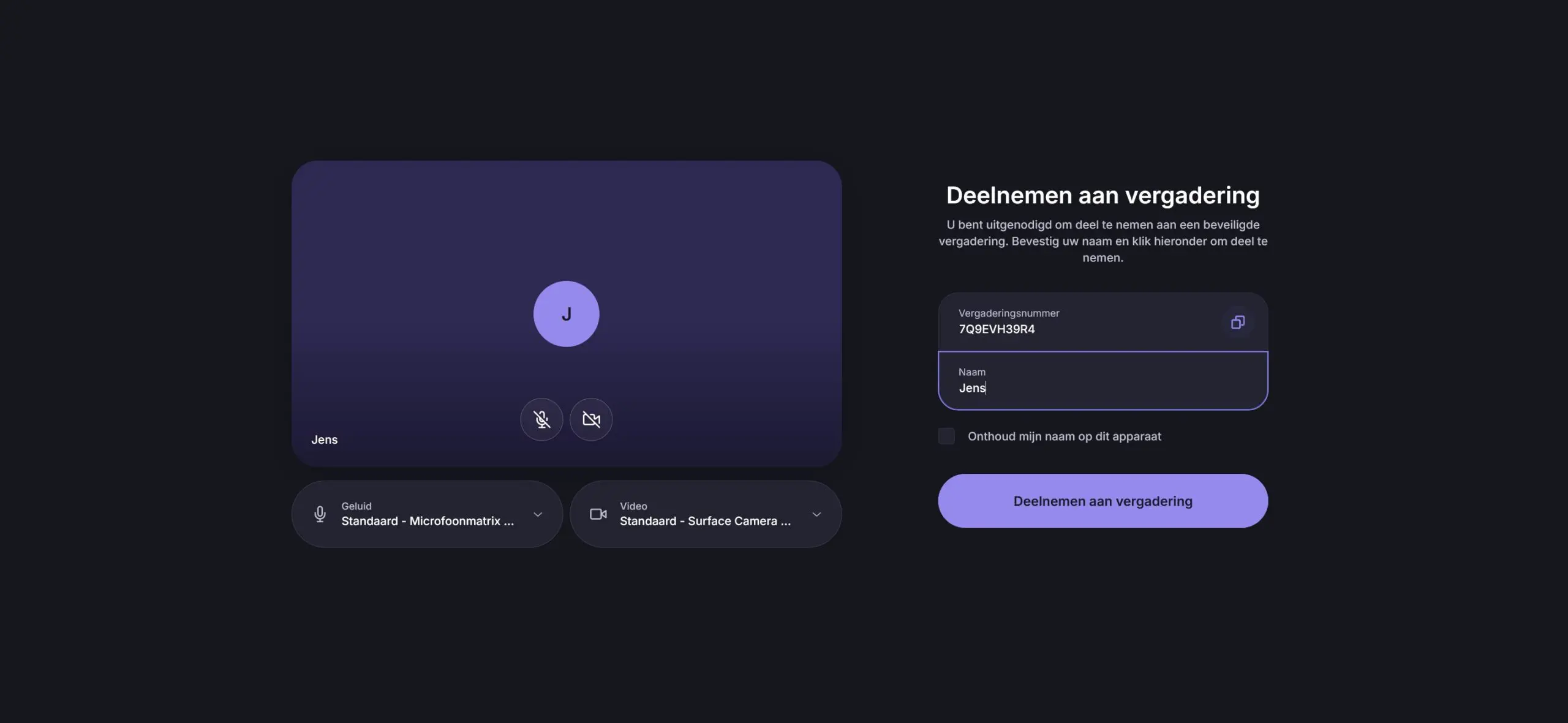
In terms of video conferencing, Proton Meet stands out significantly and makes video calling child’s play. For a free video platform, you get everything you need for an efficient meeting. The fact that you do not need to create a Proton account is an additional plus.
Self-hosting
Hosting is the sharpest dividing line between the three. Mattermost is available as a web version and as an app for Windows, Mac, and Linux, but to date, the company has no data centers in Europe, meaning the cloud version falls under US law. Those who want to circumvent this must self-host: the software is then free, but hardware and maintenance are at your own expense, and installation requires technical knowledge of PostgreSQL and S3 storage. Outsourcing to a European managed service provider is the alternative for those who do not have that expertise in-house.
Element is built on the Matrix protocol, which is decentralized by nature: organizations can place the platform entirely and for free on their own infrastructure, thus maintaining full control over their data, although this again requires technical knowledge and investment. The Synapse server component runs on-premises or in a private cloud. For those lacking this expertise, Element does offer managed variants such as Element Server Suite and Element Cloud.
Proton Meet takes the opposite approach and offers no self-hosting option: the service is entirely in Swiss hands, with all content protected by MLS encryption and even the shareable URLs being hashed so they remain invisible to Proton. You are therefore dependent on the cloud, but you can assume that your data remains on European infrastructure.
Price difference?
Each platform comes with a different price tag. Proton Meet (for now) opts for a blank price tag. You can go a long way with the free version with an account: scheduling meetings with up to 50 participants and creating meeting rooms. Furthermore, the video platform is part of an ecosystem. The Proton Workspace suite is paid but offers a total package of office software that forms a worthy competitor to Microsoft 365.
Mattermost offers two plans: Professional for ten dollars per user per month and an Enterprise subscription that customers negotiate themselves. There is no free version. During our demo period, we were only given one hour of access to get to know the platform.
Element does not publish rates: self-hosting is free, but for the managed variants Element Server Suite and Element Cloud, pricing is available upon request.
Final verdict: Proton (Meet) has it all
The three tools each have their strengths. The look and feel are almost identical, but Mattermost and Element lack some crucial functionalities for smooth video conferencing. With the self-hosting option, these two offer many possibilities to run the tool locally, although you need technical expertise for that.
For those who do not have the resources or knowledge to host such tools themselves, Proton Meet offers a ready-to-use, simple, and free European alternative to online meeting tools. So, do you want an easy way to get a taste of European software? With the entire Proton bundle, you immediately have an alternative to Microsoft 365.
ITdaily tests European and open-source alternatives to popular American software tools that we use daily. Want to discover more European software? You can find all reviews here.