

Meta introduces Muse Wonder and Muse Wonder Full, which the company claims are its most powerful models to date. This further expands the lineup of American frontier models from major tech giants.
“Anyone who still speaks of artificial intelligence instead of superintelligence is the enemy,” said U.S. President Trump, and so Meta announces two new AI models as “a major step toward personal superintelligence.” These are Muse Wonder and its larger sibling, Muse Wonder Full.
The new series consists of two LLMs and builds on Muse Spark, which Meta introduced in April. The Muse ‘superintelligence’ models were trained in Prometheus. This is Meta’s own massive gigawatt data center, which went online this year.
No details on parameters
The company remains surprisingly vague about what Muse actually is. For instance, Meta has not disclosed the parameter count for the models. According to the model card, they process text, images, video, and audio, with text as output and a context window of one million tokens. With Active Memory, the models remember what is important to the user across conversations. Active Focus allows them to keep working when a task becomes difficult, and they request confirmation for critical steps.
Muse Wonder is now available via the Meta Model API and Muse Code, at four dollars per million input tokens and twenty dollars per million output tokens. Muse Wonder Full, the most powerful variant, is only available with a Muse Code subscription. Soon, Muse Wonder will also power applications within Muse, initially for subscribers.
Equivalent to or better than other American LLMs
According to Meta, the models achieve top results on benchmarks for personal and professional agents, memory, and coding, including Harvey’s Legal Agent Benchmark. Meta compares Muse Wonder and Wonder Full with GPT-6 Astra, Claude Fable 5.1, and Claude Opus 5.5.
Meta is targeting everyday tasks such as handling an insurance claim, understanding a rental contract, or sorting out personal finances. It also mentions law, finance, health, and programming, ranging from games to apps for new businesses. According to Meta, the launch is a major technical step toward “personal superintelligence for everyone.” This fits into Meta’s vision for AI, in which it wants everyone to rely on an in-house AI agent.
Safety
Meta trained the models not to share private information without permission and to refuse requests for harmful actions. According to Meta, Muse Wonder offers the strongest protection the company has built to date against misuse for chemical, biological, radiological, and nuclear weapons.
Without additional measures, Meta stated it could not rule out Muse Wonder Full reaching the threshold for high risk in chemical and biological areas. Following safety training and system-level classifiers, it now estimates all risks as moderate or lower.
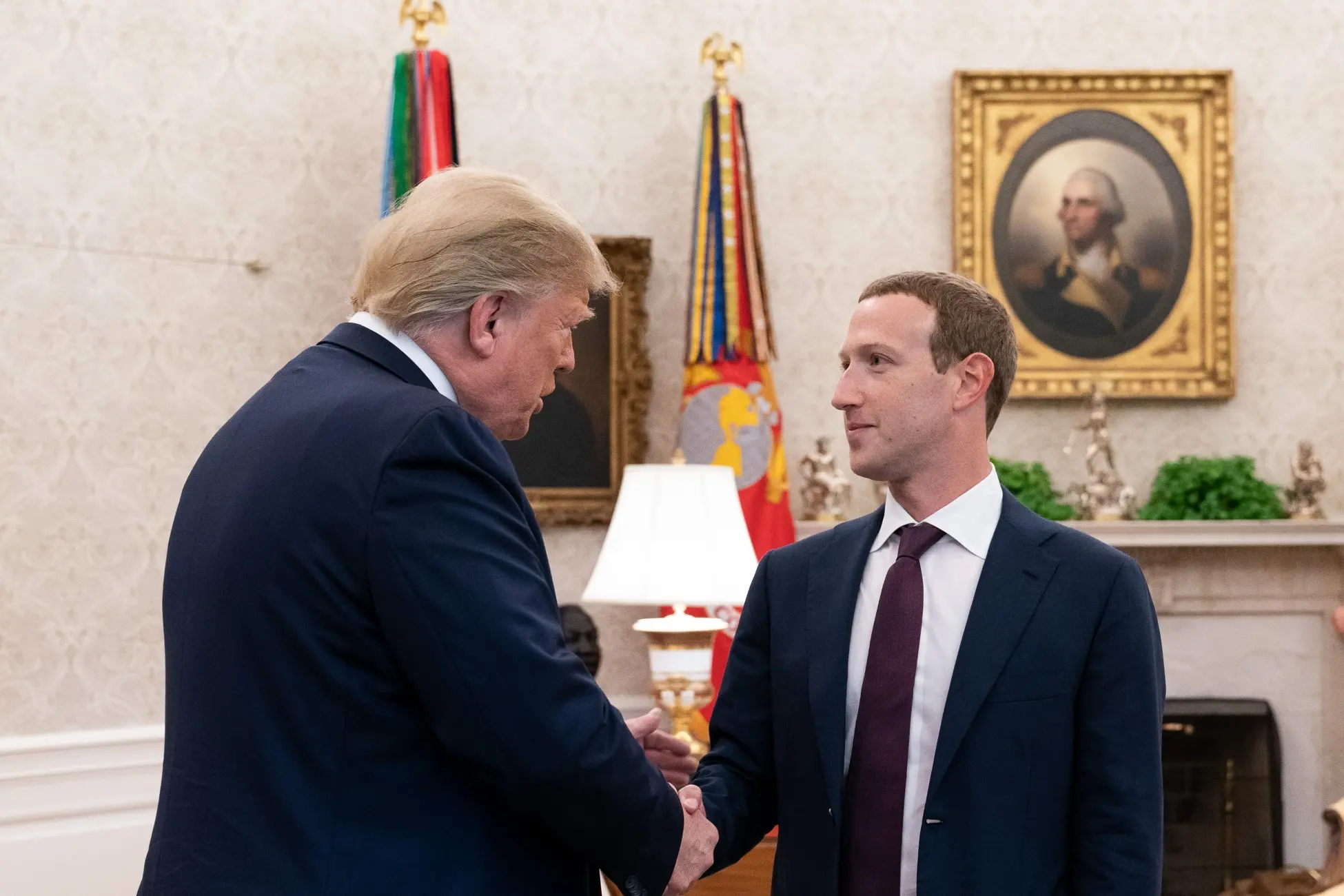
Given that the major AI players and the U.S. President recently formalized in a one-page agreement that independent oversight of AI models is unnecessary, you can decide for yourself whether to believe that claim or not.
Advanced cyber capabilities remain available for defensive use, allowing developers and security teams to use the model to find vulnerabilities in their own code. Whether it is possible to have the models perform hacks to verify leaks—as is possible with Mistral’s new model but not with most American models—remains unclear.
No open weights announced
Meta remained completely silent about open weights during the announcement. Although Meta championed the cause of open AI for its earlier, less powerful LLMs, it is now staying quiet on the matter. It is therefore currently unclear whether organizations will be able to download and run the LLMs themselves.
With Muse Wonder and Muse Wonder Full, Meta is moving squarely into the territory of so-called ‘frontier’ LLMs. These are the primarily American models at the forefront of what AI can achieve today. Until now, these models came from OpenAI, Anthropic, and Google. Meta is now demonstrating that, after billions in investment, it intends to compete at the highest technical level.
Race without a clear finish line
The models are part of a technical but also financial race, where model makers assume that whoever builds the most powerful models will generate the most revenue and attract the most investment. With IPOs for Anthropic and OpenAI on the horizon, the battle for increasingly powerful LLMs in the U.S. is intensifying.
President Trump encourages this approach, despite warnings from almost everyone—including the CEOs of the AI companies themselves—that there are significant risks associated with the overly rapid development of such models. With Muse Wonder and Muse Wonder Full, the world has another major AI model controlled by an American tech company that is all too eager to stay in the U.S. President’s good graces.
Competition from Europe remains limited, although Mistral introduced its long-awaited new large model last week: Le Chonk. It also competes at a high level, but the unique characteristics of this LLM are not just technical. Like other Mistral models, Le Chonk is European, trained in European data centers, and available within a fully European context. This is something Meta, Anthropic, OpenAI, Google, and SpaceX currently cannot match.