

The shortage of memory chips is jeopardizing the launch of the iPhone 18. Apple is therefore turning to a Chinese manufacturer.
Memory chip shortages are starting to weigh heavily on Apple. After we previously reported that the company has insufficient MacBook Airs in stock to deliver before the school year begins, the launch of the iPhone 18 now also appears to be under pressure.
$1 billion in chips
Apple has gathered almost all the components to assemble the new phones, including the advanced CPUs rolling off TSMC’s most modern production lines. Meanwhile, nearly one billion dollars worth of chip wafers, containing the processors, are reportedly ready at TSMC.
However, to prepare them for use in iPhones, they must be packaged together with DRAM, which is currently not available in sufficient quantities. TSMC is the world’s largest manufacturer of processors, including accelerators such as GPUs, but not of memory. For that, Apple—like the rest of the world—is dependent on SK Hynix, Samsung, and Micron.
Chinese memory
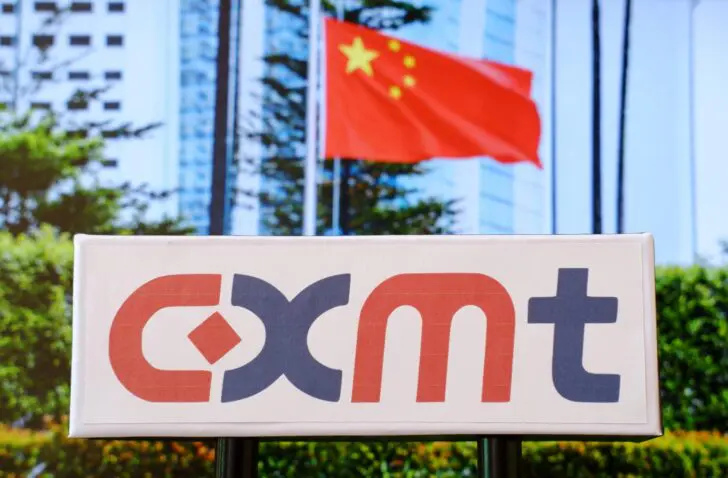
Apple is therefore diligently searching for alternative sources of memory. This search has led the company to China. After all, when the memory market is discussed, Chinese manufacturers are usually left out of the conversation. However, China does have its own production capacity, including at CXMT.
ChangXin Memory Technologies is a relatively young company that has specialized in DRAM since 2016. Initially, production was limited to older DDR4 memory, but since 2025, CXMT has also been producing DDR5 RAM. LPDDR5 and LPDDR5X are also part of the portfolio. Meanwhile, CXMT has become the largest RAM manufacturer after the three aforementioned companies.
Good for non-US devices
Apple is reportedly in talks with CXMT to test memory for use in the iPhone. CXMT could also offer a solution for MacBook production, according to the Wall Street Journal. The memory would then primarily find its way into Apple devices sold in China.

A collaboration between CXMT and an American manufacturer would not be new. HP has reportedly already approached the company for memory, exclusively intended for non-US devices. The same applies to the Taiwanese company Acer.
If the collaboration gets off the ground, Apple will still face significant challenges in building up the necessary stock by the planned September launch. Partners including Foxconn must wait for the finished chip packages from TSMC, including DRAM, before they can assemble.
Politically charged
The agreement, which to be clear has not yet been finalized, is reportedly politically sensitive. After all, the US government views CXMT as a company linked to the Chinese military-industrial complex. Government agencies are prohibited from doing business with the company. Should Apple partner with CXMT to diversify its supply chain and eliminate shortages, you can be sure there will be some grumbling from the Trump administration.
Yet it is the US government itself that is partly at the root of the problems Apple is facing. In the US, the expansion of AI data centers is heavily supported. The proliferation of these data centers, and the associated AI chips that must be housed in them, is directly responsible for memory shortages worldwide.
AI chips and servers require large amounts of (HBM) memory. Manufacturers of such chips are buying up a large portion of the production capacity of Samsung, SK Hynix, and Micron. All balance in the market has been lost, causing traditional PC and smartphone manufacturers, in particular, to miss out.
Cautious stabilization
In the world of (standard) servers, some improvement is now in sight. Prices are stabilizing there, albeit at a high level. This is due to long-term deals between hardware builders and memory manufacturers. They have signed up for a minimum stock at a (high) minimum price for the coming years, creating certainty. It appears that Apple has not managed to secure such an agreement, at least for the coming months, or at least not for enough chips.