

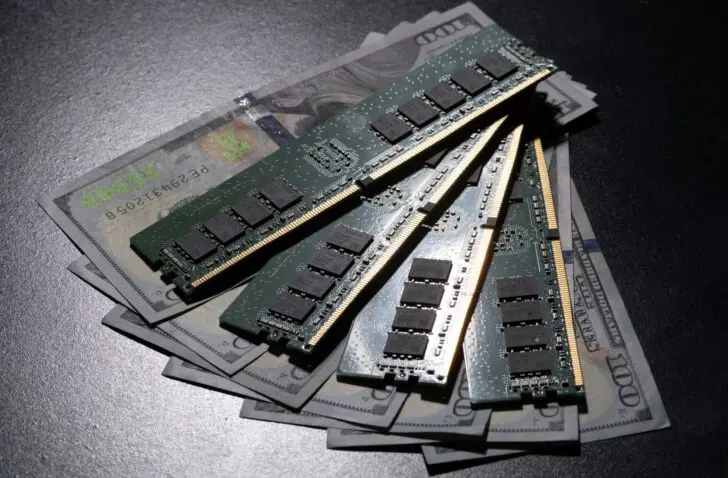
After months of manufacturers being unwilling to pin down prices for more than a few weeks, HPE now dares to issue quotes that are valid for several months. This suggests that a certain calm is returning to the server market, despite the disruptions caused by AI.
HPE has a new policy: price quotes are now valid from the moment they are issued until the moment the hardware leaves the factory. In other words, anyone who places an order based on an agreed price can once again be sure that the price is final. That might sound like the absolute bare minimum, but driven by AI, hardware manufacturers felt forced to stipulate less customer-friendly terms in their contracts.
No real price guarantee
The cost of server components, especially RAM, was so volatile that it was difficult for HP, Lenovo, Dell, Cisco, and others to guarantee a price for more than a few weeks. For HPE, fourteen days was the norm for a long time; Cisco sometimes used barely seven days. This stands in contrast to increasing lead times. Anyone wanting to buy hardware over the past year could easily expect to wait five months or more.
For customers, this meant that the price they signed up for when ordering could, in practice, still increase before the actual delivery. Such volatility was and is disastrous for large projects, which can suddenly become unfeasible when an entire server order becomes ten percent more expensive.
Still AI’s fault
The culprit is always the same: the AI sector. Hyperscalers and AI builders are buying up as much hardware as they can. They need it on the one hand to train new models, and on the other to offer inference with those models at scale. In their so far futile search for profit, they must ensure that sufficient computing power is available to let customers actually use the LLMs they have trained at such great expense.
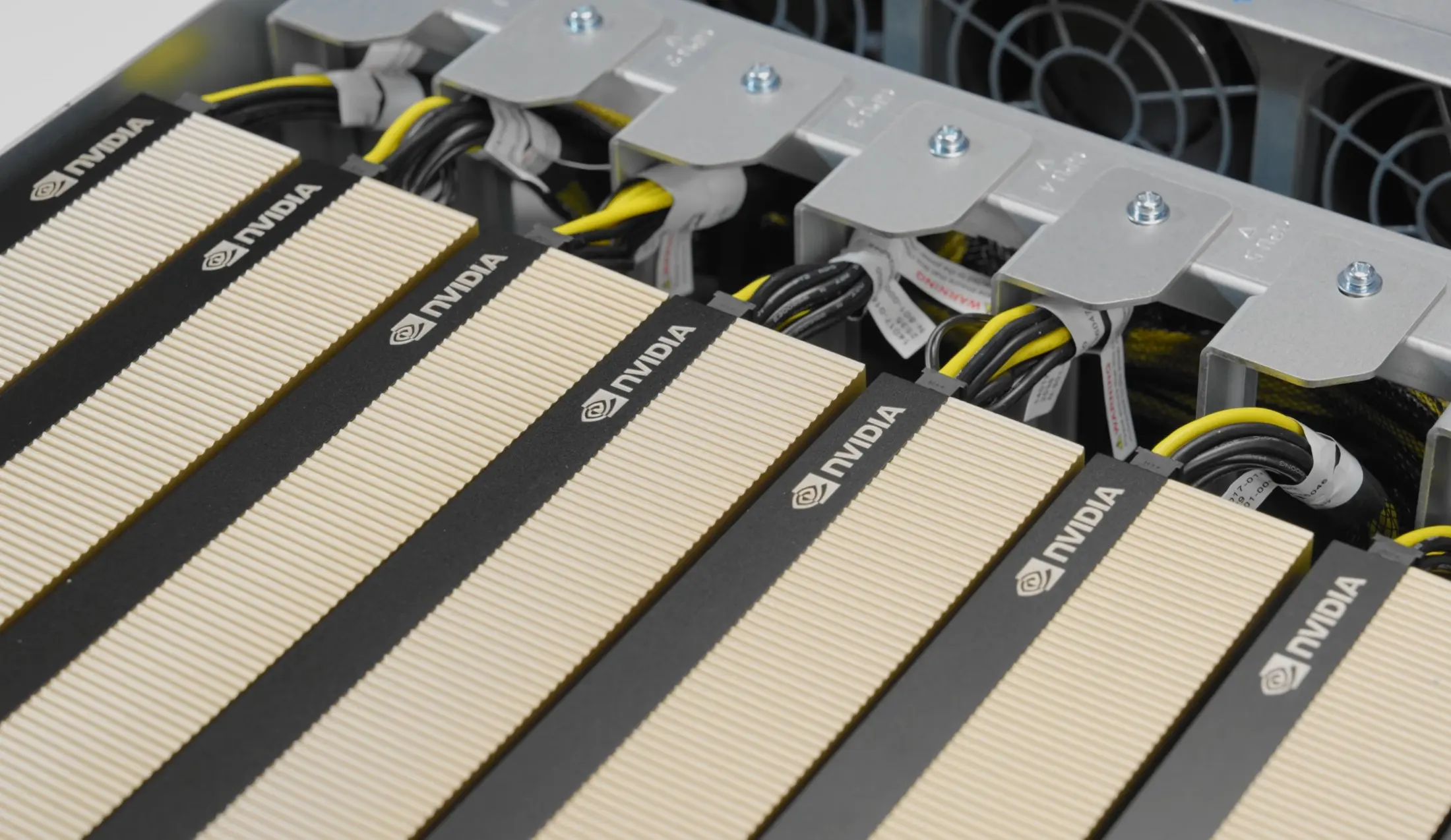
However, AI accelerators consist of a lot of memory. This isn’t DRAM, but HBM, which comes off the same production line at memory manufacturers. HBM, however, has higher margins. Moreover, demand far exceeds supply from Samsung, Micron, and SK Hynix. The three memory builders dominate the market and choose to prioritize lucrative HBM memory for AI customers. Expanding production capacity takes years and costs billions, so it can offer no relief in the short term.
In this context, even the major server builders had to scramble for RAM. For a long time, the only certainty was that prices would rise, sometimes even week after week. The pace of the increase was so high but also so unpredictable that it was too risky for manufacturers to use fixed prices. It could easily happen that large orders suddenly became loss-making.
Stabilization
The fact that HPE suddenly chooses to hold prices for a long time in this context suggests that the market is stabilizing. That is not the same as normalizing: just like laptops, servers are still much more expensive than they would have been without AI. There is no reason to assume that will change anytime soon.
HPE is playing it safe, though. Price guarantees only apply to quotes worth a maximum of $1 million within the manufacturer’s compute, storage, or GreenLake Flex range.
Strategic agreement
HPE does not say how it can offer these guarantees, but we have suspicions. At the end of June, we reported that SK Hynix had secured high memory prices and margins for the next five years through sixteen strategic agreements.
These agreements offer customers guaranteed access to the necessary memory, with a corresponding maximum price. In return, the minimum price is also on the high side. The unnamed strategic partners can thus buy certainty. Think of it as an expensive fixed contract versus a variable contract with uncertainty and a real risk of further increases.
Certainty with a price tag
Presumably, HPE is one of those strategic partners, and that now makes it possible to hold quote prices for longer. Prices are still very high, but uncertainty is worse than high prices when massive IT investments are at stake.
Do not interpret this evolution as the start of a long climb out of the valley of high prices and low availability. It is better to see HPE’s move as the way the manufacturer is learning to deal with the new normal. After all, there is no relief in sight for the DRAM crisis until the end of 2027 at the earliest, when new production capacity can come online. Unless AI companies stop buying up all the components.