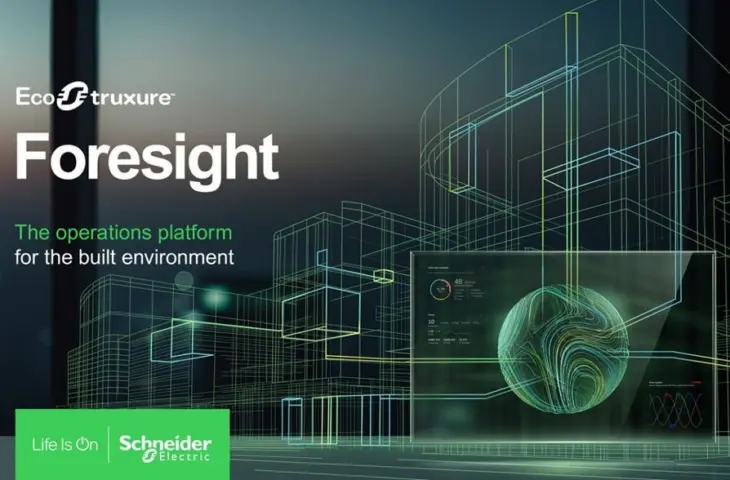
With EcoStruxure Foresight Operation, Schneider Electric brings together energy, power, and building systems in a single AI-driven operational platform.
Schneider Electric introduces EcoStruxure Foresight Operation, an operational platform that combines energy management, power distribution, and building systems into a single environment. The platform focuses on monitoring, analysis, and predictive insights across multiple domains. This should alleviate the fragmentation between systems.
“EcoStruxure Foresight Operation enables teams to act faster, decide smarter, and make an impact where it matters most. It increases operational efficiency and unites diverse systems in one intuitive, integrated interface,” says Manish Kumar, EVP Digital Energy at Schneider Electric.
The company will start beta testing in the coming months and is aiming for broader availability for early adopters in the third quarter of 2026.
Systems speak one language
Most operations run on isolated systems, leaving operators with insufficient insight into mutual dependencies. In environments such as data centers and hospitals, small interruptions can have a major impact. The consequences vary, such as an unbalanced voltage that causes damage to equipment, solar energy that remains unused, or peak loads that increase.
read also
Schneider Electric launches new Motivair CDUs for AI and HPC
EcoStruxure Foresight Operation brings the energy, power, and building domains together for greater insight and control. “This means that systems finally speak one language,” says Hans Smid, VP Digital Energy at Schneider Electric Belgium and the Netherlands.
AI bridges the gap
EcoStruxure Foresight Operation uses AI to collect and correlate data in real time. The platform supports multi-domain applications and works with an open architecture.
According to the company, the turnaround time of engineering workflows could be reduced by up to 40 percent. According to Schneider Electric, operational efficiency can increase by up to 50 percent. In the event of failures affecting multiple systems, the company speaks of 90 percent faster troubleshooting. For large installations, it also mentions a saving of more than 500 hours, thanks to pre-integrated domains and AI-driven engineering.
Organizations that want to participate in the beta test can register in the coming months. Broader availability for early adopters is planned for the third quarter of 2026.