

Helion is now a foundation-hosted project within the PyTorch Foundation. The project, contributed by Meta, aims to simplify the development of AI kernels and improve portability across different hardware platforms.
Helion joins the PyTorch Foundation as a new project alongside the likes of PyTorch, DeepSpeed, Ray, and vLLM. The foundation announced this during the PyTorch Conference in Paris. The news centers on a layer in the AI stack that is usually less visible but helps determine how efficiently models run.
Greater efficiency
Helion is a Python-embedded domain-specific language for writing machine learning kernels. The project compiles to multiple backends, including Triton and TileIR. It is designed to help developers work at a higher level of abstraction, reducing the need for manual code.
The PyTorch Foundation sees this as a way to make kernel development more accessible within the open AI ecosystem. This is significant, as it allows developers to achieve greater efficiency.
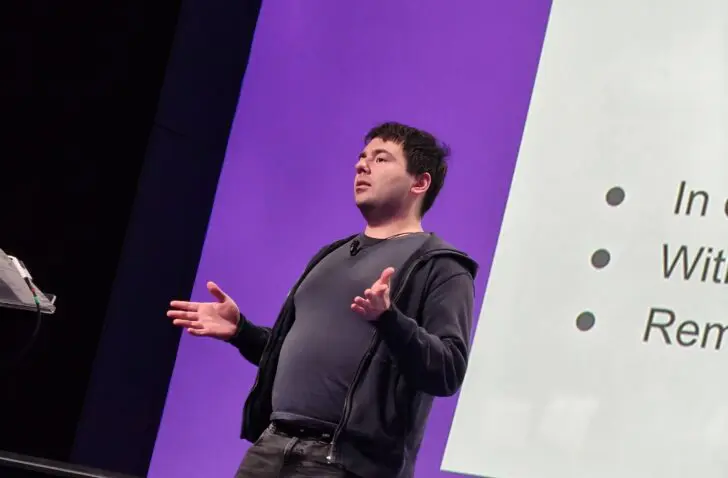
Helion is also intended to enable automatic ahead-of-time autotuning. “The software then tests different implementations to find the best option for a specific kernel,” says Oguz Ulgen, software engineer at Meta Superintelligence Labs. “Autotuning now only takes five to ten minutes, but it still needs to happen before the production phase.”
Originating from Meta
Meta submitted Helion as a contribution to the foundation. Its inclusion as a foundation-hosted project means that further evolution will take place within an open-source framework, together with the broader community around PyTorch and other AI projects under the Linux Foundation.
“This is a big change for Helion,” says Ulgen. “Until now, all maintainers were people from Meta. Now, maintainers from other companies are joining. Someone from Thinking Machines will already be joining the team. A steering committee will also be established to determine priorities.” Furthermore, Ulgen emphasizes that Helion aims to be vendor-neutral.
Ambition for growth
The addition of Helion to the foundation fits within the PyTorch Foundation’s own ambitions. “It’s not only important to add new capabilities to existing projects under the Foundation’s wing,” says Mark Collier, who heads the organization. “But we must also add entirely new projects.”
Helion thus joins vLLM, Ray, and DeepSpeed, which are already managed under the PyTorch Foundation alongside PyTorch. “With this collaboration, we are expanding our capabilities,” Collier adds. ExecuTorch, which also started at Meta, is also becoming part of PyTorch Core. That project focuses on PyTorch models for edge and on-device environments.