

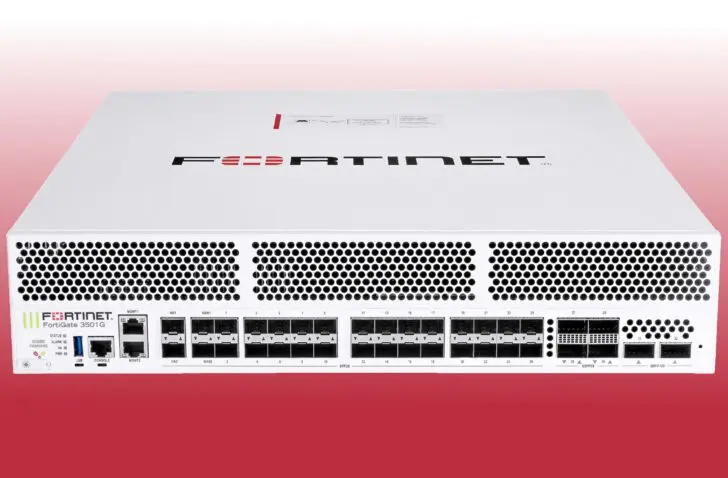
Fortinet introduces two new firewalls in its FortiGate G-series. The FortiGate 3500G and 400G are designed to combine higher performance with extra security for AI applications, encrypted traffic, and distributed environments, from the data center to the network edge.
Fortinet is expanding its G-series with the FortiGate 3500G and FortiGate 400G. The firewalls are built on the company’s NP7 and SP5 processors and run on FortiOS. The chips are ASICs, developed by Fortinet itself. The company aims to differentiate itself from the competition with these unique chips.
Capabilities for AI and encrypted traffic
According to Fortinet, the two new firewalls add extra visibility for AI usage within organizations. For example, they support native detection of shadow AI, making unauthorized use of AI solutions visible in real time. Additionally, the systems can apply control mechanisms to protect sensitive data.
FortiGuard AI Security Services provides threat intelligence that uses machine learning to help identify and prioritize threats. FortiOS 8.0 also supports Model Context Protocol, an open standard that allows large language models and AI agents to communicate securely with external systems. Furthermore, the operating system can perform deep inspection of traffic between AI agents.
Difference between FortiGate 3500G and 400G
The FortiGate 3500G is intended for the data center. The device supports 400Gb connectivity and targets high-density environments where AI workloads and east-west traffic raise the bar for firewall performance. Fortinet also emphasizes hardware controls, secure firmware, and system-level transparency.
The FortiGate 400G brings the same approach to the network edge and the mid-market segment. This firewall is designed to enable network segmentation without extra complexity, featuring hardware-accelerated performance and an upgrade path for existing FortiGate firewalls. According to Fortinet, this allows organizations to modernize their network edge with minimal disruption to existing processes.