

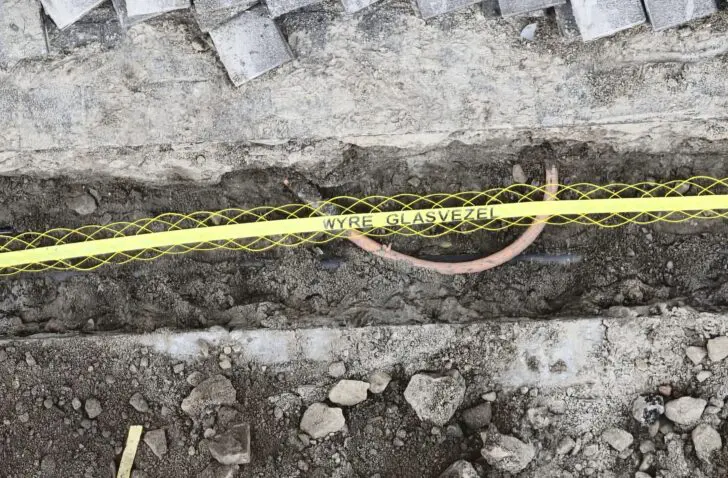
Wyre, Telenet, Proximus and Fiberklaar have signed extensive cooperation agreements for the further rollout of gigabit networks in Flanders. The deal aims to ensure more efficient network construction, fewer duplicate roadworks, and broader access to high-speed connectivity, although implementation remains subject to a green light from regulators.
Wyre, Telenet, Proximus and Fiberklaar have thus taken the next step in a dossier that has been ongoing since July 2024. At that time, the parties concluded a memorandum of understanding to investigate how they could accelerate the rollout of ultra-fast networks for households and businesses.
Since then, the four companies have worked with the Belgian Competition Authority and BIPT to test the plan against regulations. This resulted in a public consultation and now in full cooperation agreements, although these are not yet definitively in force.
How the cooperation in Flanders is structured
The core of the cooperation lies in a geographical division of the network rollout. In areas with medium to low population density, Wyre and Fiberklaar would build fiber-to-the-home networks. Proximus and Wyre will receive mutual access to that infrastructure, as will their respective wholesale customers.
In the most sparsely populated areas, this fiber coverage is supplemented with hybrid fiber-coax. In this way, the parties want to offer gigabit speeds throughout Flanders without building parallel networks next to each other everywhere. In large cities and the most densely populated zones, operators will continue to roll out their own networks separately.
Less nuisance, more access
According to the companies involved, this approach should lead to faster and broader availability of fiber rollout, while also reducing the number of duplicate public works. This is relevant not only for consumers who want faster internet, but also for companies that are increasingly dependent on stable and high-performance connectivity.
An important element in the agreements is that the networks must remain open to other operators. The parties commit to providing access under fair, reasonable, and non-discriminatory terms. This point was essential in the discussions with regulators and is intended to prevent the cooperation from distorting competition.
Regulators have the final say
Although the four parties have now signed formal agreements, the dossier is not yet finalized. Implementation remains subject to approval by the regulatory authorities. Only then can the cooperation effectively come into effect.
With the signing, Wyre, Telenet, Proximus and Fiberklaar show that they want to continue building a framework for gigabit networks in Flanders together. If the regulators agree, the cooperation could noticeably accelerate the rollout of fiber and other gigabit infrastructure in the coming years.