

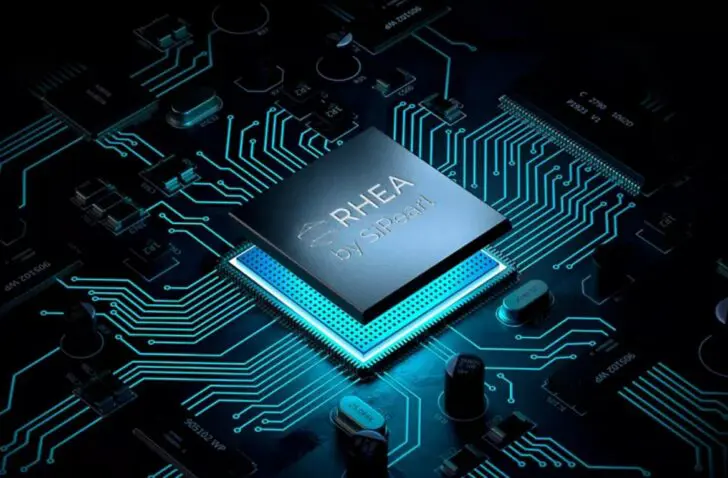
After years of delay, the first units of the European Rhea 1 processor have reached the Jupiter supercomputer, allowing integration to begin.
SiPearl has delivered the first Rhea 1 processors to Bull, which can now start integrating the chips into the Jupiter supercomputer. This is good news for Europe’s ambition to develop independent HPC capacity, were it not for the fact that this important milestone is well overdue.
Originally, Rhea 1 was supposed to be completed in 2023, but that deadline was missed. The chip, built by SiPearl and based on the Neoverse V1 architecture, is therefore already somewhat dated even before its first real-world test. For context: AWS Graviton 5 processors, built on Neoverse V3, have been available in production for some time.
Part of Jupiter
Rhea 1 is intended to power part of the Jupiter exascale system in Germany. The delivery of the chips was delayed for so long that Jupiter has already been live for more than a year and has broken the exascale barrier even without the European component.
The Jupiter system will now be expanded with an additional cluster, built around the Rhea 1 chip integrated into the BullSequana XH300 platform. The computing power provided by the additional CPU component will make Jupiter significantly more powerful.
Integration is now taking place using the first Rhea 1 samples. These are being delivered after the first actual production chips began a series of tests in May. Fortunately, that testing period proceeded smoothly.
It is notable that Bull and SiPearl are communicating about the delivery of the first samples of the chip. This implies that the processor is still not available in high volumes, although the most significant hurdles for this have now been cleared.
European supercomputers
The development of Rhea 1 is part of the EU’s EuroHPC plan, through which the Union aims to address strategic independence regarding chips and ensure that Europe has sufficient powerful supercomputers of its own. The latter objective appears easier to achieve: driven by the project, several systems have already gone live, including the flagship Jupiter, and Lumi in Finland, to which Belgium also contributes. In all cases, however, the internal components remain largely American.
The chance of Rhea 1 becoming a commercial success is now slim. The new but also outdated chip lacks real technological advantages and must rely primarily on its European design. Production, like that of many other advanced chips, is handled by TSMC in Taiwan.
Delayed but not defeated
Just because the first set of hurdles was difficult to clear does not mean the European HPC ambition has ended. SiPearl is already working on Rhea 2. Hopefully, that CPU will move from the drawing board to the factory more quickly. Rhea 2 is intended to power Alice Recoque: a new exascale system to be deployed in France by Eviden.
As with Jupiter, not all eggs for Alice Recoque are in one basket: the core of the system will consist of AMD Venice CPUs with 256 cores, paired with AMD MI430x accelerators. The SiPearl Rhea 2 CPUs will again be placed in a separate partition.