

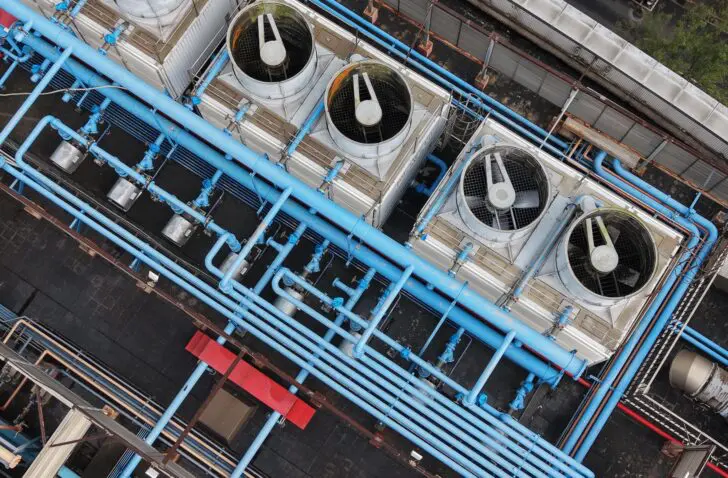
US data centers consumed three times as much water in 2023 compared to 2014, according to recent research. The rising demand for computing power and cooling, primarily driven by AI, is putting pressure on the drinking water supply, while federal regulation is largely absent.
The direct water consumption of US data centers has tripled in nine years, even before the major AI wave fully broke. Data centers in America consumed 17 billion gallons of water in 2023, or 64 billion liters. This is a threefold increase compared to 2014, according to an estimate by the US Congressional Research Service (CRS), reported by The Register. Notably, the increase was measured before the major AI wave.
Two percent of the country
US data centers directly used approximately 17 billion gallons of water in 2023, or roughly 64 billion liters. In 2014, this was still 5.6 billion gallons, about 21 billion liters. A tripling in nine years, and that was before the heaviest AI training clusters were put into use.
Locally, the picture looks different. The International Energy Agency calculated that a 100-megawatt US data center can directly consume about as much water per day as 2,600 households. Add to that the water consumed by the power plants behind that data center, and you reach the equivalent of 6,500 households. For a municipality with its own water production, that is no small detail.
Drinking water
According to Bluefield Research, US data centers obtain as much as 97 percent of their water directly from drinking water utilities. Water from the regulated drinking water network meets the strict standards of the Safe Drinking Water Act and is less likely to cause problems such as corrosion, calcification, or bacterial growth in the installations. In contrast, pumping directly from rivers or groundwater layers requires additional infrastructure, permits, and water treatment.
Data centers therefore usually opt for the fastest and simplest solution by connecting to the existing drinking water network. However, this creates pressure on local water reserves, especially in regions where the water supply is already under strain or where municipalities are responsible for their own water production.
Federal government remains limited
Notably, there are hardly any federal rules in the United States regarding the water consumption of data centers. The distribution of water within a state has been the responsibility of individual states since 1958. Only twenty states had guidelines for industrial water reuse by early 2024. The federal Environmental Protection Agency (EPA) did launch an action plan in April 2026 to remove regulatory hurdles, but it does not impose any mandates.
Federally, rules only exist regarding discharges and construction, not actual consumption. The EPA emphasizes that states know their own water situation best and should therefore determine their own policies. This leads to a patchwork of measures, without central oversight.
Lack of transparency
One of the most striking findings of the report is the lack of a systematic inventory of data center water consumption. The US Geological Survey has not published separate figures since 1995, and water from the drinking water network is included in the total delivery zone, making individual data centers invisible. Furthermore, the prices data centers pay for water are often secret due to contractual agreements with municipalities.
In 2023, a study by the University of California already pointed to the impact of AI on water consumption in data centers. Amazon claims to consume seven times less water than the industry average. Besides water consumption, CO2 emissions are a major climate issue for data centers. For instance, Microsoft recently saw CO2 emissions rise sharply again. Alternatives are increasingly presenting themselves. HPE recently promoted air cooling over water cooling, and Schneider Electric is investigating the possibilities of sea cooling.