

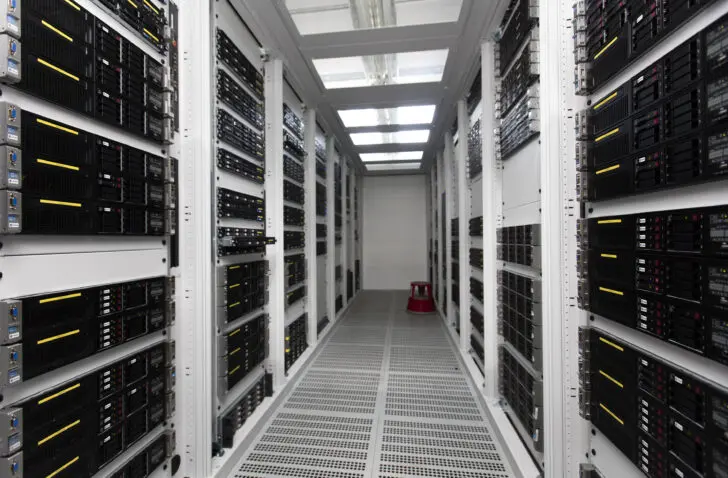
Emissions from Microsoft’s data centers have reportedly risen to 34 million tons of CO2 equivalent.
Microsoft has seen its CO₂ emissions increase again in 2025. According to the 2026 sustainability report, emissions rose by 25 percent, primarily due to the rapid expansion of AI data centers. This makes the goal of becoming carbon negative by 2030 even more difficult to achieve.
Microsoft reports that without specific offsetting measures, emissions would have reached 34 million tons of CO₂ equivalent. The main cause is the construction and expansion of data center infrastructure for AI applications. Additionally, the decision to stop purchasing certain non-additional renewable energy certificates played a role, causing part of the previous compensation to lapse.
AI puts sustainability goals under pressure
A few years ago, Microsoft set a goal to remove more CO₂ from the atmosphere than it emits by 2030. However, the latest figures show that the growth of AI infrastructure is hindering progress.
In the report, Microsoft acknowledges that AI requires increasing amounts of energy, water, raw materials, and construction materials, while sustainable solutions are not scaling up fast enough to meet this additional demand.
Furthermore, this is not the first time Microsoft has reported an increase in its emissions. A significant increase was also noted in the 2024 sustainability report.
Broader problem in the technology sector
Microsoft is not alone. Google also reported a 25 percent increase in emissions across its supply chain in its 2026 sustainability report. Amazon reported an increase of 16 percent.
Amazon also announced that its data centers consumed approximately 2.5 billion gallons of water in 2025. According to the company, this water consumption is still lower than that of Microsoft. The figures illustrate how the global AI race is having increasingly significant consequences for the energy and water consumption of the technology sector.