

The Chinese government is partially lifting restrictions on Nvidia H200 chips so that Chinese companies can step up their game in the global AI race.
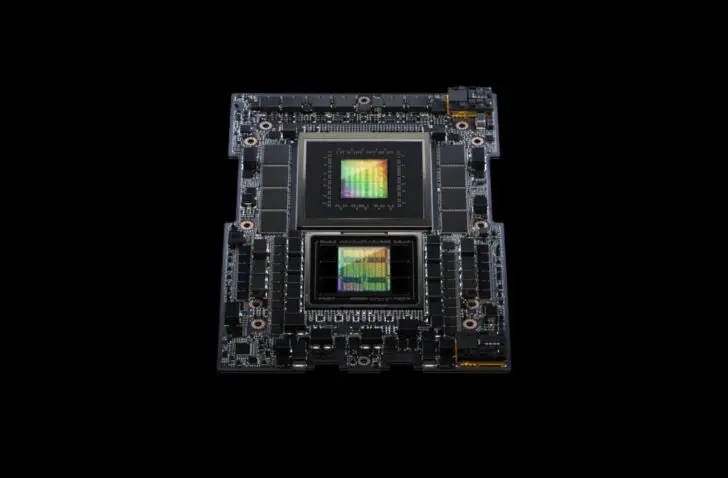
Nvidia is permitted to supply its most powerful H200 chips to China and Hong Kong again. The US government had already allowed this for some time, but now Beijing is also reopening its doors. Chinese tech giants such as ByteDance and Tencent have reportedly already received initial deliveries of around 10,000 accelerators.
At the end of 2025, the Chinese government imposed restrictions on domestic companies regarding the purchase of foreign chip technology. It did so partly as a countermove against trade restrictions imposed by Washington, but also to promote its own chip industry. Now China is once again allowing ‘small’ deliveries of Nvidia chips, reports the Financial Times.
Mutual easing of restrictions
Earlier this year, Nvidia received the green light from the US government to supply H200 chips to China as well. Nvidia CEO Jensen Huang unhesitatingly called the restrictions a ‘failure’ by Trump, as China represents an important sales market. The sudden turnaround by the Trump administration was primarily driven by opportunism. In exchange for a share of the revenue, the US no longer sees security risks in supplying the most powerful AI chips to China.
It took a bit longer to also obtain permission from Beijing. The Chinese government is reportedly allowing Nvidia’s chips again to remain competitive in the global AI race with the United States. It initially hoped to achieve this with Chinese chips, but for now, these are nowhere near the level of what Nvidia can provide. There is reportedly a stock of half a million H200 chips ready to be shipped to China.
Chinese success models
While a gap may still exist between the United States and China in terms of chip technology, it is much less pronounced in terms of models. Following DeepSeek, we are seeing more Chinese AI models that perform just as well as their American counterparts from OpenAI and Anthropic.
Ironically, these models prove that it is also possible with much less powerful hardware, although there is a controversial side to it. We will explore this further in this analysis.