

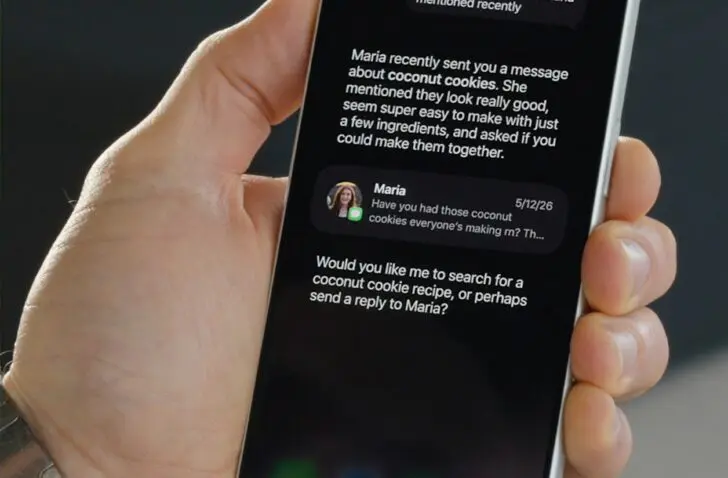
Siri is getting a major injection of generative AI and will henceforth be called Siri AI. Because the tool does not meet the competition requirements of the Digital Markets Act, it will not be coming to Europe for the time being.
Siri is becoming Siri AI, but not in Europe. The AI upgrade for Siri is strongly reminiscent of Google’s Gemini integration in Android. It’s not exactly revolutionary: Siri will assist users when they have questions or want to complete a task, and has access to the device it’s running on. For example, if you want to navigate and stop by a friend’s house, Siri will retrieve that friend’s address from your contacts and plot a route in Apple Maps that takes it into account.
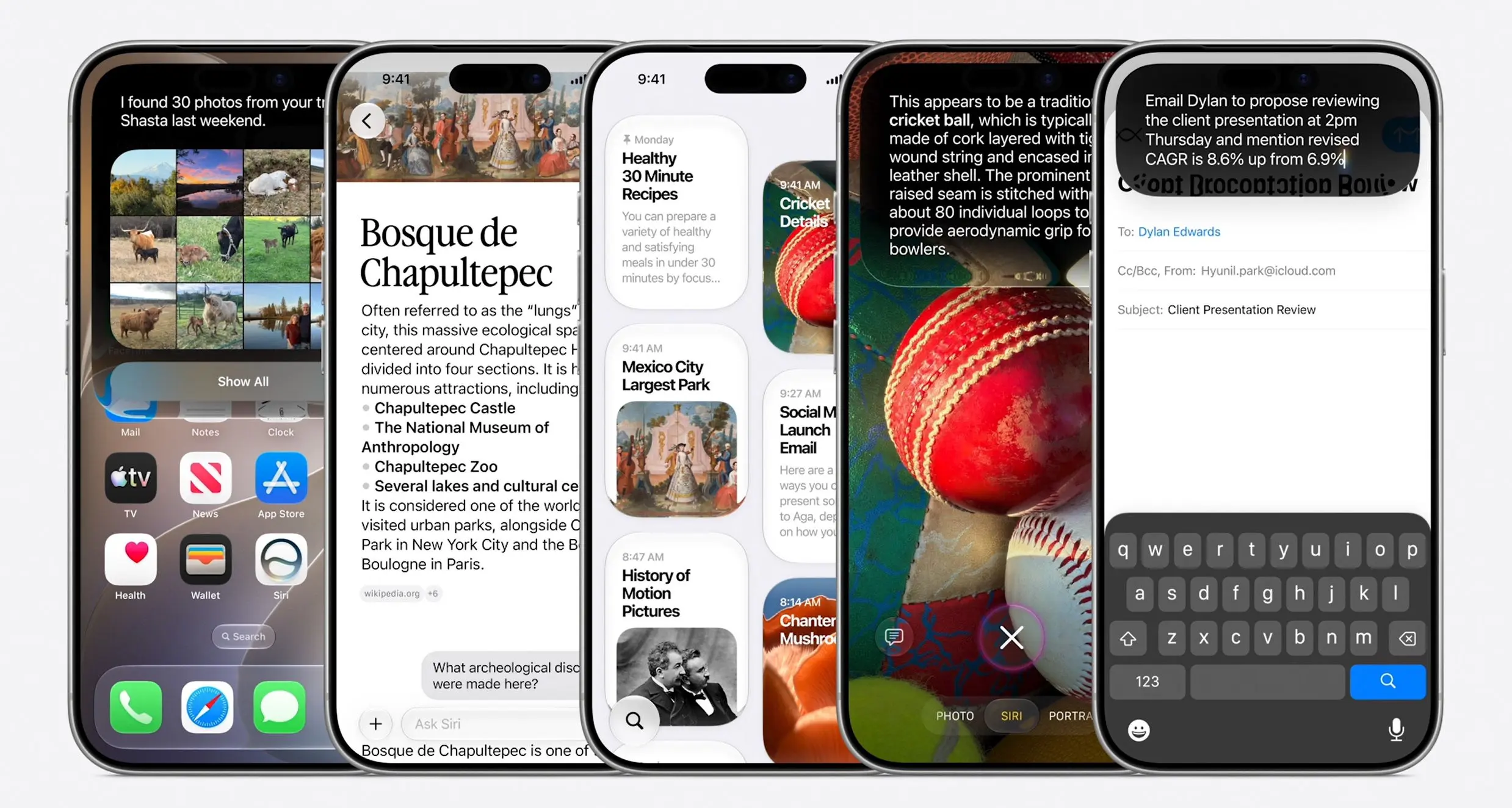
Siri AI not only knows what’s on your device but also understands what’s happening on your screen. For instance, you can look at a photo of a frog and ask if it’s a nocturnal animal without providing any extra context. Apple claims it implements AI tailored to people, in contrast to other players, but ultimately mostly presents its own version of Gemini on Android.
Same problem as Google
This implies that Apple is running into the same obstacle as Google. Earlier this year, Google was called to account by the European Commission because of the integration of Gemini into Android. After all, the Digital Markets Act (DMA) requires major providers, including Apple and Google, to offer a certain level of openness in their ecosystems.
The EU believes there is no reason to deeply embed a single AI assistant exclusively into an operating system without offering third parties the option to provide their own AI assistants.
Same dance, different tune
In fact, the discussion is always about the same thing: a tech giant wants to use one solution (the operating system) to promote another (a browser, search engine, AI assistant, etc.), but that isn’t allowed. The tech giant then claims that openness is detrimental to user privacy and security. After several years of litigation, they concede, and it turns out there’s no security issue, but by then it’s too late and the market has already been divided.
With Siri AI, Apple is starting the dance all over again. The EU demands openness and does not believe that Apple, as an operating system developer, should be allowed to develop its OS in such a way that it only works with its own AI assistant. In the run-up to the launch of Siri AI, Apple made several inadequate proposals but did not receive approval.
Laying the blame on the DMA
The manufacturer is now pointing to the DMA as the culprit: the European regulations that the company refuses to comply with would supposedly prevent European users from accessing Siri AI with the launch of iOS 27 and iPadOS 27. Apple, for its part, accepts no blame whatsoever. Complying with the DMA would supposedly be impossible, again citing user privacy and security.
Apple claims that “under the EU’s extreme interpretation of the DMA, it would be required to give every virtual assistant access to users’ private data,” and acts as if that were a bad thing.
The claim about access is correct, of course: just as Siri AI has access to all that data, the EU wants iPhone or iPad users to be able to choose for themselves to install an alternative assistant. If Mistral were to release an assistant, for example, the EU wants Apple not to hinder its installation.
‘Only Apple is safe’
That is dangerous, Apple reasons. After all, security researchers have already shown that an AI system can be misused to steal data. Not Apple’s, of course: Apple’s systems are infallible (unless they aren’t).
European users will be able to use Siri AI on macOS 27, but not on mobile devices. Apple says it continues to work with the European Commission to find a solution and, in the meantime, hopes to convince public opinion to turn against antitrust rules. Regardless, Siri AI will only be available in English at launch later this year.