


BirdyChat is live in Europe. Developped in Latvia, the chat service positions itself as a professional alternative to WhatsApp, while remaining compatible with Meta’s messaging service.
BirdyChat is available to users across Europe. The messaging service is best compared to WhatsApp and aims to provide a professional alternative to Meta’s popular app.
Microsoft Teams and Slack are established tools for internal business communication, but quick messages with external business partners often still happen via WhatsApp. This brings professional communication into the sphere of private life: WhatsApp is also the most popular service in Europe for private messaging.
“Most messaging apps we use today are more than ten years old,” says co-founder Rolands Mesters regarding the problem BirdyChat aims to solve. “Due to a lack of alternatives, work has increasingly encroached on the personal chat apps we used to use only for friends and family. BirdyChat offers a dedicated alternative where work-related conversations can take place.”
Compatible with WhatsApp
The new messaging service offers functionality similar to WhatsApp, but within a professional framework. Crucially, BirdyChat is compatible with WhatsApp. Under pressure from Europe, Meta was forced to open WhatsApp to external applications, and BirdyChat takes advantage of that.
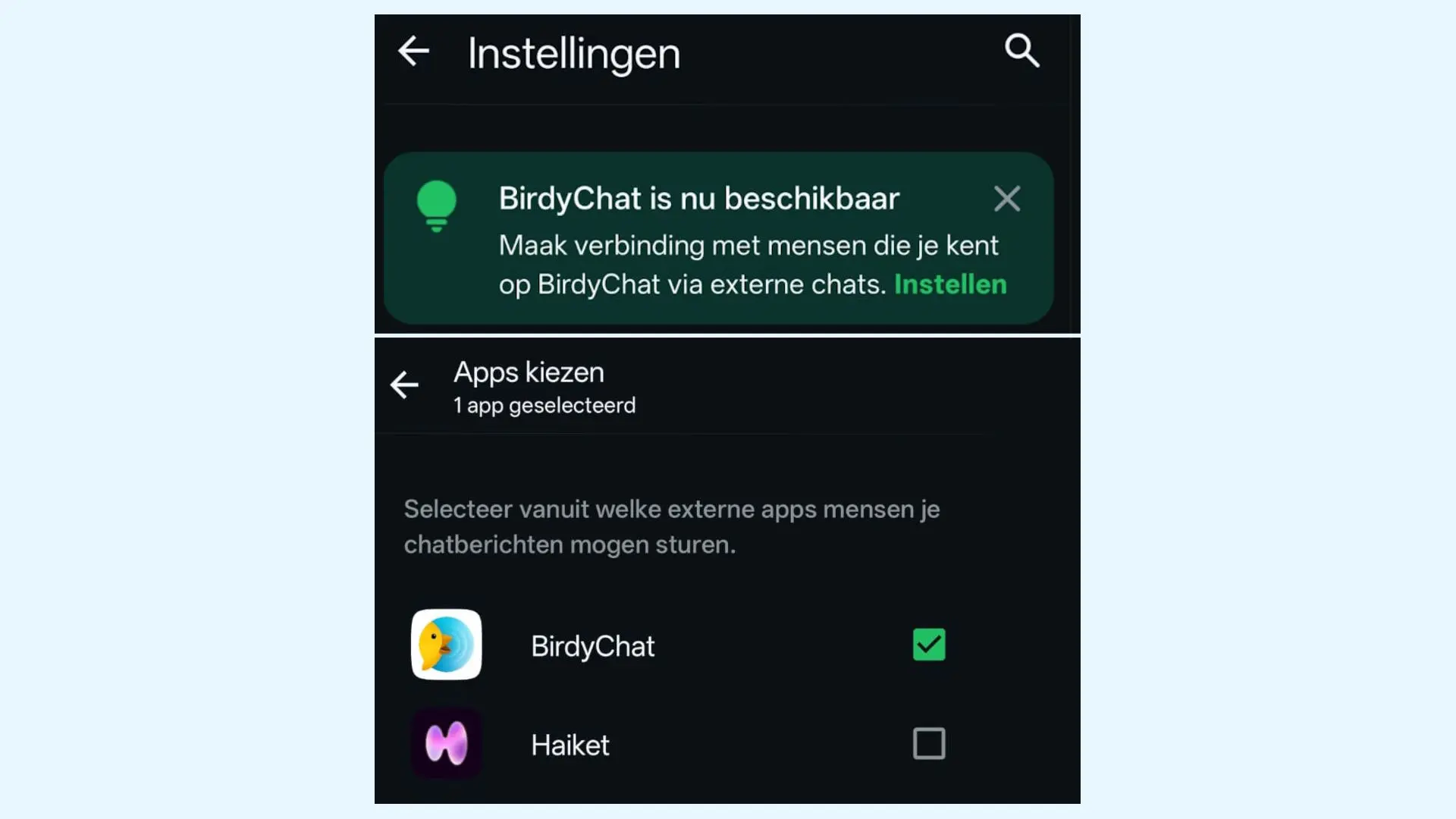
A messaging service can only take off if it has users, and compatibility with WhatsApp makes it possible to embrace BirdyChat at an early stage. You can send messages from the app to (business) contacts who still use WhatsApp. Anyone visiting WhatsApp settings right now will see a banner at the top announcing BirdyChat’s availability. From there, you can configure BirdyChat to communicate with WhatsApp.
European ambition
BirdyChat is being developed in Latvia by Mesters, who previously built and sold a fintech startup, and Martins Spilners, an engineer. ITdaily spoke with Spilners in Riga last year. At the time, Spilners indicated that after a short test launch in Latvia, he wanted to conquer the entire European market immediately. A European launch was initially planned for late 2025 but is now taking place with a slight delay.
BirdyChat highlights two key advantages. First and foremost, the chat application is entirely European-made, in contrast to WhatsApp or even the privacy-friendly Signal.
Business features
Furthermore, the focus on professional use translates into several handy features. For instance, you don’t need to register with your phone number; instead, your account is linked to your business email address. This makes it possible to start or receive conversations without knowing someone’s private phone number, which is, of course, required for WhatsApp.
Additionally, BirdyChat includes organizational capabilities relevant to a professional setting. You can sort chats by topic, reply in threads, and close projects when they are completed.
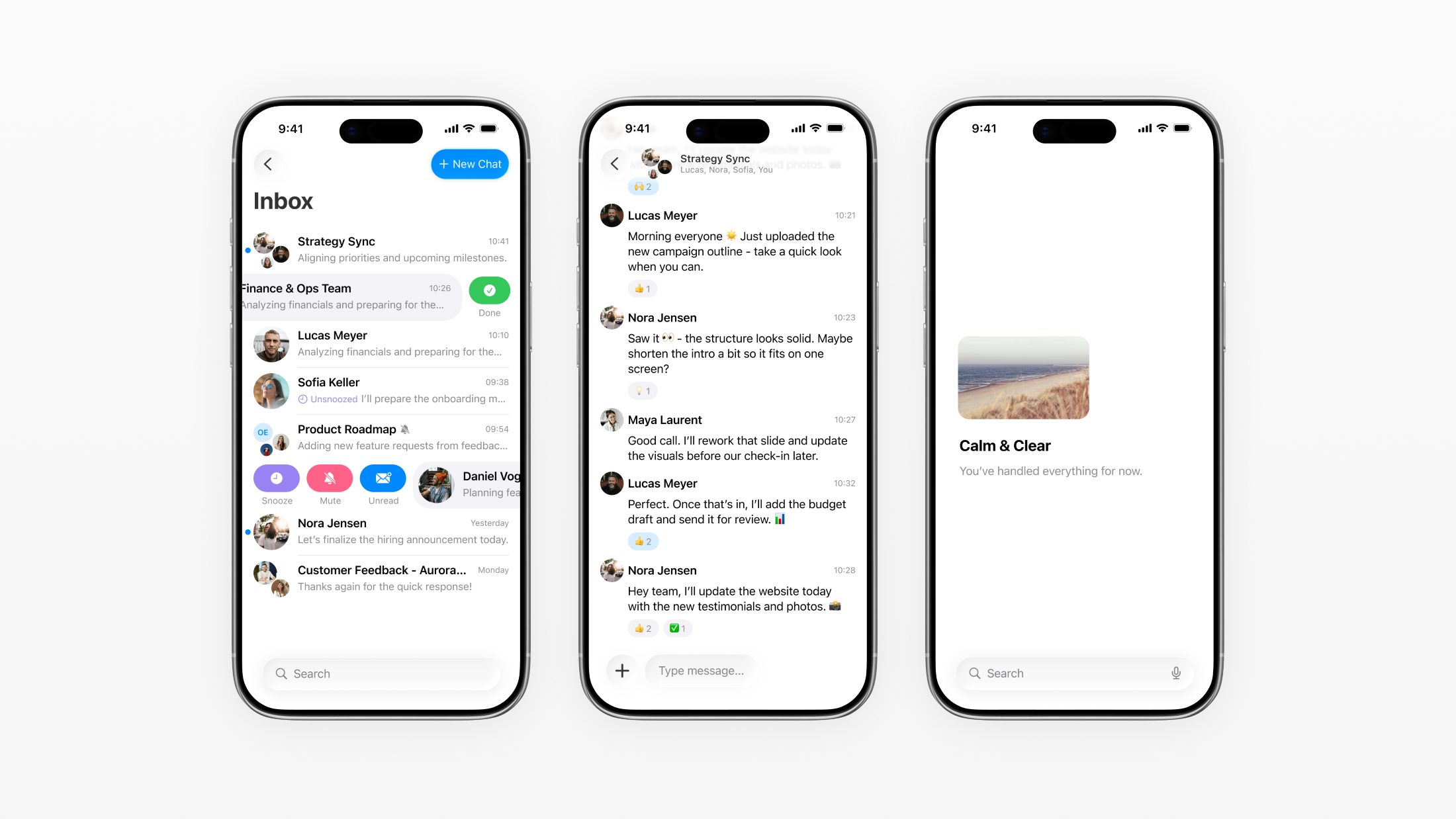
By using an inbox for pending messages, BirdyChat adopts some characteristics of email. In this way, the service strives to be both a professional version of a chat app and a modern alternative to traditional email.
The chat service also includes functionality familiar from apps like WhatsApp and Signal. For example, messages are always encrypted.
Over the past few months, BirdyChat built up a waiting list of 50,000 interested parties across both the EU and the UK. The application is now available outside Latvia and across Europe on iOS, Android, and macOS. Currently, BirdyChat is free. The service is backed by investors and recently raised 1.7 million euros.
Real demand
The demand for professional and European chat solutions as an alternative to WhatsApp’s dominance is real. Governments are also looking for better ways for employees to communicate. For example, Belgium is introducing its own chat application, Beam, for military personnel and civil servants. BirdyChat benefits from its European roots but is not linked to any government. This gives the application a strong hand.”
The switch to BirdyChat is very easy for those who want to try it, thanks to its interoperability with WhatsApp. The question now is whether the disruption of the work-life balance, combined with suspicion toward Meta and WhatsApp, is significant enough to break through inertia and habit. Signal proves that it is possible: the demand for less Meta and more privacy provided a major boost in users coming from WhatsApp.