
Facebook changed its name for it, but how is the famous Metaverse doing now? At the start of 2026, little seems to be left of it. Everything related to XR is disappearing into the background again, but is there still hope?
We’re taking you back five years. On October 28, 2021, Facebook was no longer the large company of founder Zuckerberg, but the platform transformed into one of the major branches of the mother tree Meta. In December of that year, the first steps towards the Metaverse were taken, with public access to the VR game Horizon Worlds.
This was in line with Meta’s already existing (and soon to be discontinued) virtual meeting rooms-with-avatars of Horizon Workrooms. Five years later, the Metaverse seems to be suffering the same fate as Threads (remember that?): a Meta project that was initially supposed to be a new success story, but in which the world quickly lost interest.
Layoffs within Meta’s VR department suggest that Zuckerberg himself has given up on his dream. Or are we being too pessimistic? Is the virtual world dead and buried, or is there still hope?
But why?
Do you know anyone who is really active in the Metaverse? Who really spends hours in the metaverse every day or week? In any case, in our editorial office, we all looked around with questioning glances before we had to answer ‘not really’.

In 2022, Europe wasted 387,000 euros on a failed gala in the metaverse. Only six participants showed up… a costly affair. Everyone who follows the world of technology, social media or digital marketing a little has heard the term ‘Metaverse’ at some point. Naming an effective participant is a different pair of avatar sleeves.
What’s the reason for that? Well, there are several factors. A report by research firm Gartner already put its finger on the sore spot in 2023. Perhaps in 2026 we will have to conclude that Zuckerberg’s dream was always doomed to fail.
Practical stumbling blocks
To begin with, you have to invest in expensive hardware to play in the Metaverse. It is a virtual world, so a VR headset is the least you need. Not everyone is keen on that or has the budget for such an addition to their collection of electronics that gives you headaches and nausea. Meta is also launching ‘smart glasses’ that look a bit more fashionable, but the idea remains the same.
Meta has the Quest 3, its own headset, and it currently has a suggested retail price of 549.99 euros (including VAT) on its site. You can also look at other manufacturers, but the price is no better there, on the contrary. For the Lenovo ThinkReality VRX, you currently pay a four-figure amount (1,569 euros, including VAT). Apple really takes the cake by putting a price tag of 3,500 dollars on its Vision Pro. That thing is not popular: after low sales figures, Apple recently felt compelled to reduce its production.
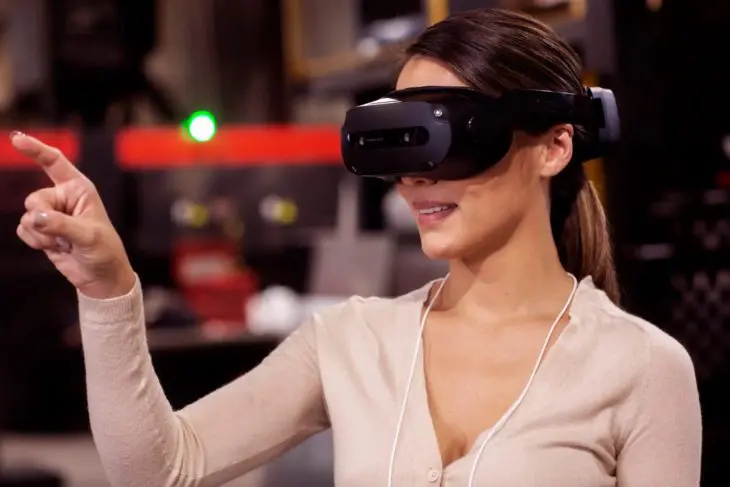


Moreover, the image quality of the virtual world sometimes leaves something to be desired. Anyone who saw the Zuckerberg avatar at the launch of Horizon Worlds in Spain and France must still be laughing about it. When the graphic part is substandard, virtual meetings are of course not more appealing.
That doesn’t mean that the world expects quasi-realistic images: fun animated avatars are even cool. However, cartoonish is not the same as laughable and it should look like it was created this decade.
Good timing, bad timing
A lot depends on timing. When the Metaverse was announced in 2021, covid-19 still had almost the entire planet firmly in its grip. There were lockdowns, people went out much less and life took place disproportionately online. Nobody knew how long that was going to last.
Interest in online possibilities and activities rose to unprecedented heights during that period. People who had never made a video call before suddenly started quizzing via Zoom, working from home was the norm and we were all glued to our various screens. The digital target audience had never been so large. A virtual universe, with the resources of Facebook behind it: that just sounded very appealing at the time.
Unfortunately for Meta, the corona crisis did not last forever. The pandemic is no more than a bad memory and people want to go out again, see each other for real. Despite the economic climate, we are all going out to eat more, for example. People stick to working from home because it is practical, not because they enjoy video calling. Even companies like Zoom are significantly reducing hybrid working.
read also
Zoom Seeks its Place in the Hybrid World: Underdog or One-Hit Wonder?
Anyone who has ever brainstormed knows that it almost always produces more ideas in a physical space than in a video meeting. Certainly when the ‘new’ is off the virtual alternative. A meeting with food and drinks or a dinner that also happens to be a meeting still sounds quite appealing to many people.
Perhaps that is an important reason for the current disinterest in the Metaverse. The announcement came at a perfect time, only that moment did not last long enough.
The good and the bad
During that lockdown period, some of our editors had a meeting in VR with people from Salesforce: an experience they looked back on with great pleasure afterwards. The report of this was therefore extremely positive. In other words: it had an added value at the time.
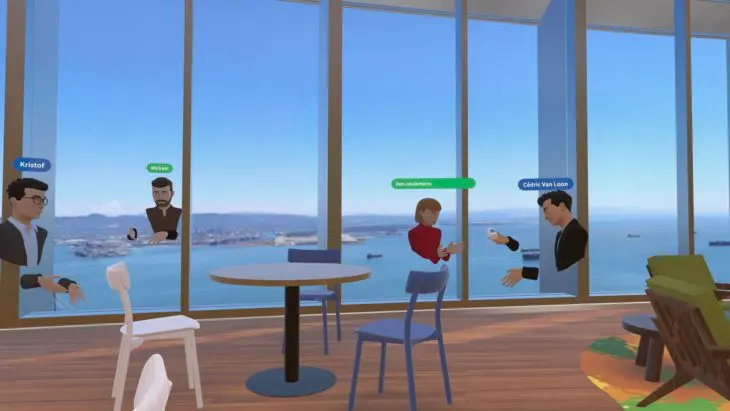

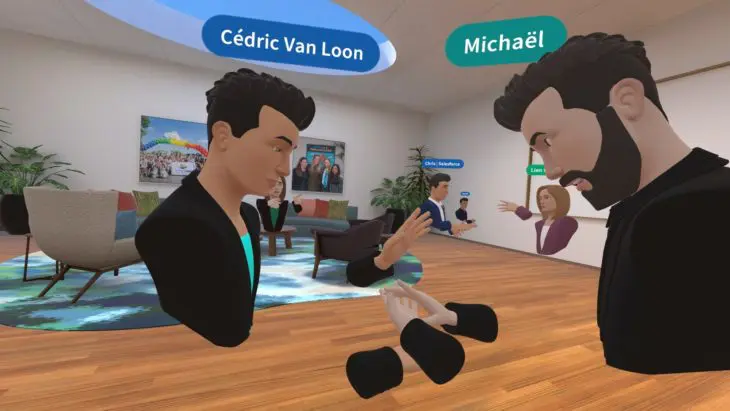
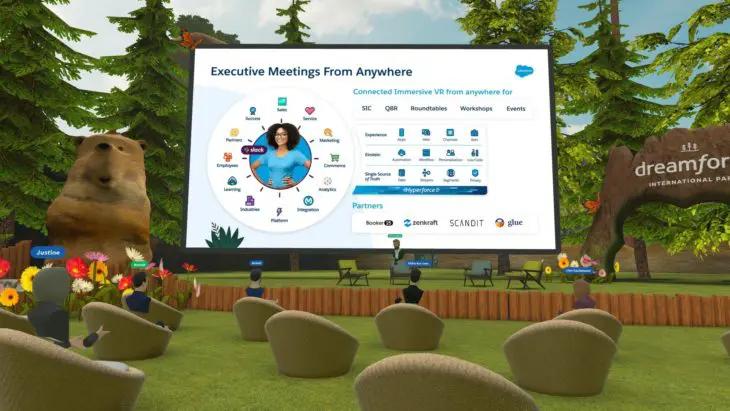
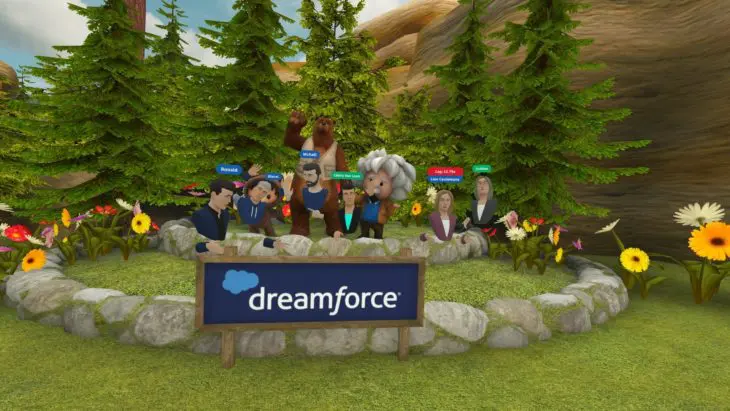
Illustratively, Salesforce stopped that project just as quickly: a combination of falling demand, a decreasing focus and fewer resources for digital meetings, that’s what it sounded like. The focus is now back on physical meetings. The annual Dreamforce event is once again a grand spectacle and Salesforce is also extending that line at a local level.
read also
The Metaverse in 2026 – virtually dead or is there still hope?
In a classic business environment, the Metaverse seems to have little place. There is already so much digital distraction these days that a virtual world would only generate even more notifications.
What’s in a name
A naughty thought, but is it the name Meta itself that is also off-putting? Ultimately, the company does not always appear positively in the news (just think of the many squabbles with the EU). It is not an unrealistic thought that there is a more negative aura around the technology giant.


In the end, Zuckerberg shouldn’t take it too personally either, if he activates his emotion chip. Expectations were ultimately also high for Second Life. Officially, that universe still has quite a few users worldwide, but that virtual meeting place is not really relevant anymore. We suspect that many members treat their account like we treat our gym membership: too lazy to cancel it.
Of course, Meta remains a large company with influence in many layers of technology and social media. In 2024, the company still achieved an annual turnover of 164 billion dollars: an absolute record. Zuckerberg is an ambitious entrepreneur and will not give this up quickly, especially since it is somewhat his dream project. But even he will not be able to justify forever that the Metaverse costs more money than it generates.
As long as he and Meta are there, there is always a chance that the Metaverse will still become interesting. That can be as a virtual meeting room, but equally for marketing or as a virtual store. How many companies willingly and unwillingly started on Facebook in order not to be left behind? The same for Instagram. If this sounds a bit double, we understand that. It IS also double, because you never know with Meta.
Old hands at the game
The earlier mention of Second Life does bring us to another factor, one that may not be thought of so quickly. Among everyone who is already actively involved with virtual worlds and avatars, there are undoubtedly many people who simply do not need another universe.
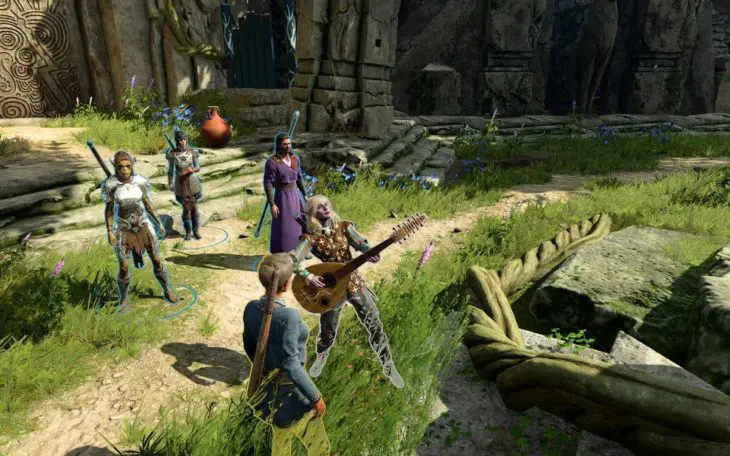
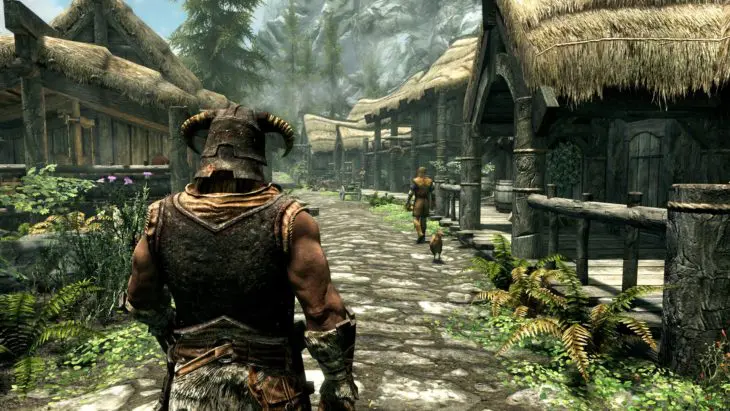
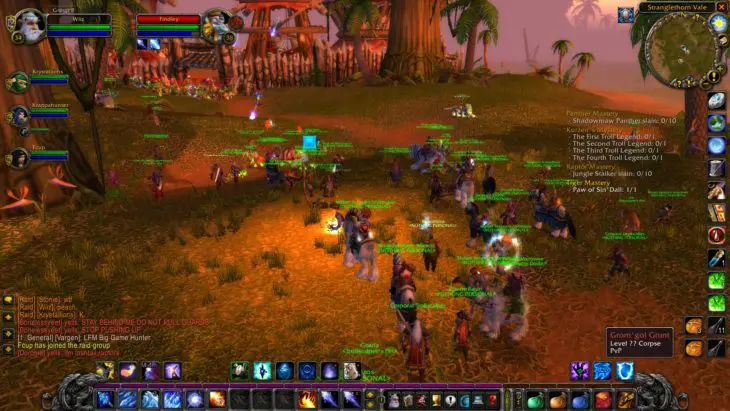
For example, you still have IMVU, a virtual world with 3D avatars that has existed for nineteen years. The site still has millions of daily users. The well-known online role-playing game World Of Warcraft has been around for just as long and also still has millions of users. It doesn’t stop there, there are many other examples. The series of Baldur’s Gate, Final Fantasy or The Elder Scrolls, to name a few. In itself, many popular online games already form a virtual community, but one with a clear purpose.
That is certainly not a mild competition to take on, even with Zuckerberg as star player, coach and team owner. There is already an extensive range of digital worlds, each with a legion of loyal followers and users. Virtual universes that have existed much longer and each with better graphics.
Even for those who just think an avatar seems funny, there are also options. You can also create 3D versions of yourself in Teams or Meta’s own WhatsApp. That is by no means a fully-fledged universe, but for the average digital person that is often more than enough.
Much show, little content
What is the Metaverse actually? Asking the question is not answering it. Is that an environment purely in AR/VR, or should we look further? You can wonder whether it is something that one organization like Meta can create from scratch. Within the tech industry, there has never been any consensus on what the Metaverse is or should be.
The editors of ITdaily have been scouring the Mobile World Congress in Barcelona for several years and have seen the Metaverse hype rise and disappear from the front row. At the exhibition stands, ‘Metaverse’ applications were shown with great fanfare that were nothing new compared to what has been known for years as VR, AR, XR (or whatever you want to call it). The Metaverse is a hollow concept that has not made the translation to practice.
read also
The Metaverse in 2026 – virtually dead or is there still hope?
Giving Meta all the blame would be unfair. Many have tried it with little success. Microsoft quickly got tired of its HoloLens and the Google Glass has also been sent to the Google graveyard. In 2024, Apple thought it had reinvented hot water with the Vision Pro – we spontaneously think of Tim Cook’s legendary One More Thing-moment – but two years later it also has to conclude that only a few have 3,500 dollars to spare and developers are therefore little motivated to develop apps.
New toy
The demise of the Metaverse goes hand in hand with the rise of another hype: artificial intelligence. The launch of ChatGPT in November 2023 has gone down in the history books as the moment the AI hype broke loose, with no end date in sight. Suddenly, tech companies and their investors were only interested in announcements if they contained the letters A and I.
If there was any momentum left for the Metaverse, it was mercilessly swept off the table. Even Meta hardly talks about it anymore and is now focusing fully on AI. The AI fever has certain similarities with the Metaverse fever, as in that a lot is shouted and money is thrown without a clear return.
However, there is one fundamental difference: AI chatbots have managed to appeal to the masses. After just two months, ChatGPT had ten times more users than Meta’s Horizon Worlds ever had. As long as people continue to use AI tools en masse, the hype machine will continue to run and AI will be the shiny toy.
Virtually dead, but not yet buried
At the moment, there seems to be little hope for the Metaverse. The fact that Meta is pulling the plug from the Horizon Workrooms virtual work environment says more than it will admit. Headset manufacturers are scaling back production rather than up. We cannot help but conclude that the Metaverse has failed – at least the concept that Zuckerberg once proposed.
That does not mean that the technology behind it is no longer relevant. The world of extended reality is much more than Meta, and will continue to exist without Meta. Recently we saw ourselves at a trade fair in Brussels that the community still believes in it and that there is no shortage of innovative applications in healthcare, production and more domains.
read also
When will XR finally go mainstream in Europe?
The industry will have to go back to the essence. XR does not have to be mass technology, but should be used where it has an effective impact. In that context, the decoupling of Meta and the Metaverse may just be refreshing.
This article originally appeared on March 8, 2024 and was updated with the latest information.