


Orbital is preparing to send its first GPU satellite into space using a SpaceX rocket. The company wants to investigate whether hardware for AI data centers functions correctly in space. In addition to technical hurdles, there are also economic challenges.
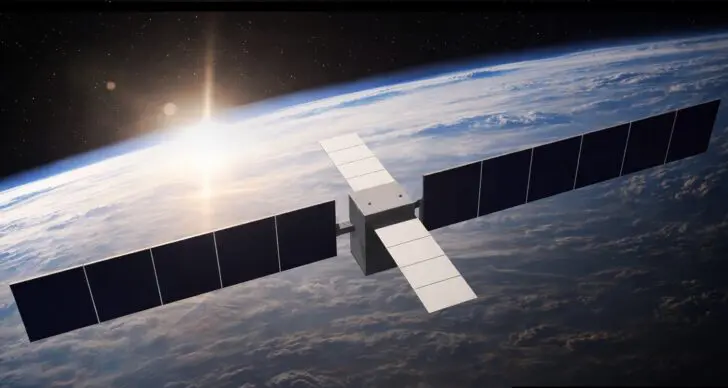
Orbital is planning its first test mission for April 2027 to bring AI data centers into low Earth orbit. The American company will launch a satellite containing a GPU server aboard a SpaceX Falcon 9 rocket.
The first test mission, Orbital-1, aims to demonstrate that GPUs can function reliably in orbit. Additionally, the company is testing radiation resistance and the ability to execute commercial AI inference workloads.
Abundant electricity
Orbital claims it wants to provide an answer to the increasing energy needs of data centers. While the demand for computing power for AI models continues to rise, companies are hitting the limits of the power grid. According to Orbital, electricity and cooling are the largest costs for data centers, and these are only becoming more challenging.
Orbital plans a constellation of satellites, each equipped with Nvidia servers, capable of processing workloads in parallel. The satellites run on solar energy, which should be permanently available thanks to the geosynchronous orbit Orbital is targeting.
Cooling via radiation
Cooling is another challenge. In space, radiation is the only way to dissipate heat. Orbital expects that radiators will be sufficient to cool the servers on board the satellite. This is not new: the ISS also stays cool with the help of large radiators, and the space station has already housed several servers.
In space, radiation is the only way to dissipate heat.
The timing of the plan is notable. Jensen Huang, CEO of Nvidia, already indicated during his GTC conference in March that he personally sees a future for Vera Rubin-based servers in space. The company is specifically working on the Nvidia Space-1 Vera Rubin module to support that plan.
However, Huang indicated that Nvidia had not yet solved the cooling problem. The company is reportedly working diligently on an effective cooling system and has assigned its best engineers to the task.
Tests leading up to inference
Orbital still expects to be able to keep Nvidia hardware cool in space by next year. This is likely possible because the first test satellite will not yet have a very large cluster on board. Orbital primarily wants to test how well the GPU functions in space. After all, besides cooling, there are other challenges in space. For example, cosmic radiation can cause bit flips and errors.
Orbital focuses specifically on inference workloads because they are better suited for distributed processing than training. Training requires thousands of GPUs that must communicate with minimal latency. Short and fast interconnects are important for training clusters, which is difficult to achieve in a satellite network. Inference, on the other hand, processes each request independently, making it easier to scale capacity via a constellation of satellites.
Eyes on space
In addition to Orbital, several other parties have their eyes on the stars as a prime location for placing new data centers. Elon Musk, CEO of SpaceX, also wants to build a data center network in space. With Starlink, SpaceX has already demonstrated that connectivity between low Earth orbit and the ground can operate efficiently.
Google also wants to launch AI data centers into space. The search giant is investigating the technical and economic feasibility with Project Suncatcher. Late last year, Google researchers also pointed to 2027 as the year for field tests.
Despite all the ambitious goals, there are plenty of obvious reasons to be cautious. For instance, while space is infinite, the area around Earth is not. Earth’s orbits are becoming crowded, and satellites from companies like Starlink are already complicating space observation from our planet.
Complex economic picture
Economically, there are still several things to be clarified. A single Falcon 9 launch costs approximately $74 million. The rocket can carry about 22.8 tons into low Earth orbit. This brings the launch cost of a single kilogram for a standard mission to about $3,250.
The new Vera Rubin NVL72 system is a brand-new rack from Nvidia, containing the manufacturer’s latest chips. The rack has 72 Nvidia Rubin GPUs on board, alongside 36 Nvidia Vera CPUs. Including peripherals, the rack weighs 1,814 kg. Of course, you cannot simply push a terrestrial rack system into a satellite, but launching a Vera Rubin NVL72 of that weight would cost about $5.9 million based on weight alone.
If we optimistically assume that the satellite, solar panels, and radiators do not add much to the weight of an NVL72 system, it might be possible to launch twelve units into space with one launch. The question then is whether, with a budget of $74 million, you couldn’t find a more obvious way to provide cooling, connectivity, and power for twelve Vera Rubin NVL72 systems.
The actual prices will differ from the simple calculation above based on known parameters. Orbital, as well as SpaceX and Google, believe a business case can be made. Further research could lead to a decrease in the weight of GPU satellites, and a high frequency of launches could also drive down the price.
Data centers everywhere
For its part, Orbital is opening Factor-1 in Los Angeles, USA, a research facility to further develop the project. In any case, it seems that companies worldwide are looking for new places for their data centers. For example, the Chinese are investigating data centers on the seabed (after Microsoft previously experimented with that) and the Japanese want to place their data centers on a boat.
For now, terrestrial construction sites with good access to fiber optics and the power grid still seem to be the most popular.