


Snowflake continues to build out its data platform. The role of the Horizon Catalog is growing, and AI agents are being provided with context and policies designed to make their answers more relevant.
At its Summit in San Francisco, Snowflake is introducing new extensions for its platform. The most significant are linked to the Horizon Catalog. “Horizon Catalog is where we innovate for management and control over what AI does,” says Christian Kleinerman, EVP of Product at Snowflake. Three new additions are stealing the show in this context: a context layer for AI and BI, new security features for AI agents, and automatic optimization of computing power for AI workloads.
With these, Snowflake aims to address several practical problems organizations face when moving AI from pilot projects to production. The company sees the same challenges as other major data and AI players and is solving them in its own way. These include inconsistent data definitions, traditional access models not built for AI agents, and complex infrastructure for fluctuating AI workloads.
Horizon Context & Cortex Sense
The most important innovation is Horizon Context. This feature brings together business context across databases, data lakes, and BI tools, ensuring that tools, teams, and AI agents work with the same definitions. Snowflake is positioning the addition as a context layer for AI and BI, on top of existing data.
“Context creates a knowledge graph on steroids,” says Artin Alvanes, Senior Director of Product Management. “It brings together context from both internal and external systems.”
Context creates a knowledge graph on steroids.
Artin Alvanes, Senior Director of Product Management at Snowflake
Context is becoming a major part of the catalog, adding a complete layer of information and semantics. This is useful for humans, but especially for AI agents, allowing them to interpret data from different systems in a consistent way.
Horizon Context sits alongside Cortex Sense, which Snowflake also announced at the Summit and which also deals with contextual support for AI. “Cortex Sense runs on Horizon Context,” Alvanes clarifies. Sense is therefore an implementation of Horizon Context.
Cortex Sense ensures that prompts in both CoCo and CoWork are provided with relevant context. This increases the accuracy of answers by three to four times.
Semantic Studio
Also new are Semantic Studio and Semantic View Autopilot. Semantic Studio allows teams to create shared business logic without SQL knowledge. Semantic View Autopilot automatically creates and refines semantic views.
Snowflake also states that semantic views and data agents can be automatically created for shared datasets, including via the Snowflake Marketplace.
Security for AI agents
Snowflake is further announcing security features specifically targeting AI agents. “We are working hard to earn and maintain your trust,” Kleinerman notes.
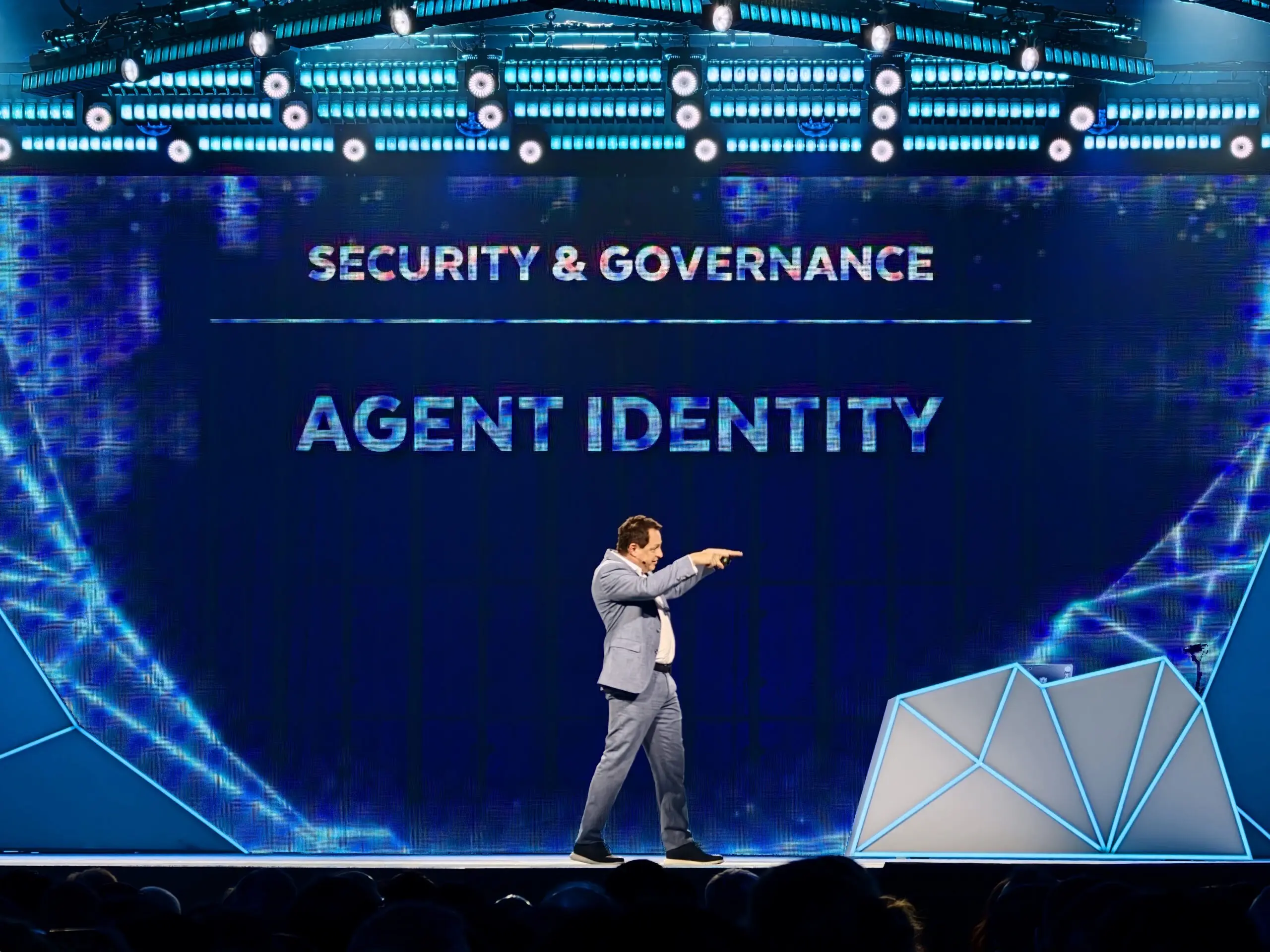
A major innovation is Agent Identity. Agent Identity gives agents a verified identity before they can access data or perform actions.
We are working hard to earn and maintain your trust
Christian Kleinerman, EVP of Product at Snowflake
“To achieve this, we had to build the concept of an AI agent as distinct from a human into the platform,” says Alvanes. “This is now baked in, so agents no longer need to be tagged. Because the platform can now see agents as different from humans, it also becomes possible to roll out specific policies.”
This can be useful when different rules apply to humans and AI agents. “For example, regulations might require that an AI agent only sees masked data, while a human is allowed to view the data normally,” Alvanes gives as a practical example.
Additionally, the Snowflake Trust Center is receiving expansions for monitoring the security status of AI systems, including CoCo and CoWork. Snowflake promises more visibility into risks, faster detection of violations, and protection against prompt injection, ransomware, and data exfiltration, among others. Furthermore, centralized policies should prevent unauthorized access or manipulation.
“Through the Trust Center, you can, for example, scan an account for AI agents,” Alvanes explains. “Users then receive suggestions about the security posture or any privileges that are too high.”
Don’t call it serverless
The third addition is Adaptive Compute. Snowflake introduced the concept of Adaptive Compute at its Summit last year, and Kleinerman announced its general availability on stage this year. This system automatically determines in real-time what mix of computing power and software resources is needed for AI and application workloads. This should reduce manual tuning and infrastructure management.
This is essentially a managed version of a serverless approach to the underlying IT infrastructure, although Alvanes doesn’t find ‘serverless’ to be an ideal term. “’Adaptive’ covers it better. The solution estimates the underlying performance queries need and provides the necessary computing power. That’s not so simple, as workloads vary significantly.” Snowflake promises to make that determination automatically and in real-time for the customer with Adaptive Compute.
“Existing budget solutions also work with Adaptive Compute,” Alvanes clarifies. “You can track the budget and even look at the cost per query.”
Horizon Catalog is taking on a larger role within Snowflake in the context of AI. The solution is emerging as a crucial layer between data and AI agents, supporting both security and semantics.
Furthermore, as a SaaS player on top of hyperscaler infrastructure, Snowflake is aware that efficiency benefits the customer. The more smoothly (AI) workloads run, the lower the costs. Adaptive Compute fits into that vision.