


At the Aston Martin F1 team headquarters, 1,100 people work on just two racing cars. Cameras are strictly forbidden. What we see is the visible tip of a Formula 1 organization that is essentially an experimental prototyping company with data as its lifeblood.
Before we begin exploring the Aston Martin F1 factory in Silverstone, the team wants us to forget that Formula 1 is a sport. According to them, it is better to view everything as an experimental prototyping machine packed with research and development. Numerous disciplines play a vital role in this, with data serving as the universal foundation.
An F1 race is highly visual, no one denies that, but in the grand scheme of things, each race weekend represents about ten percent of what happens here. The rest of the iceberg is contained within this building.
The Central Nervous System: One Loop
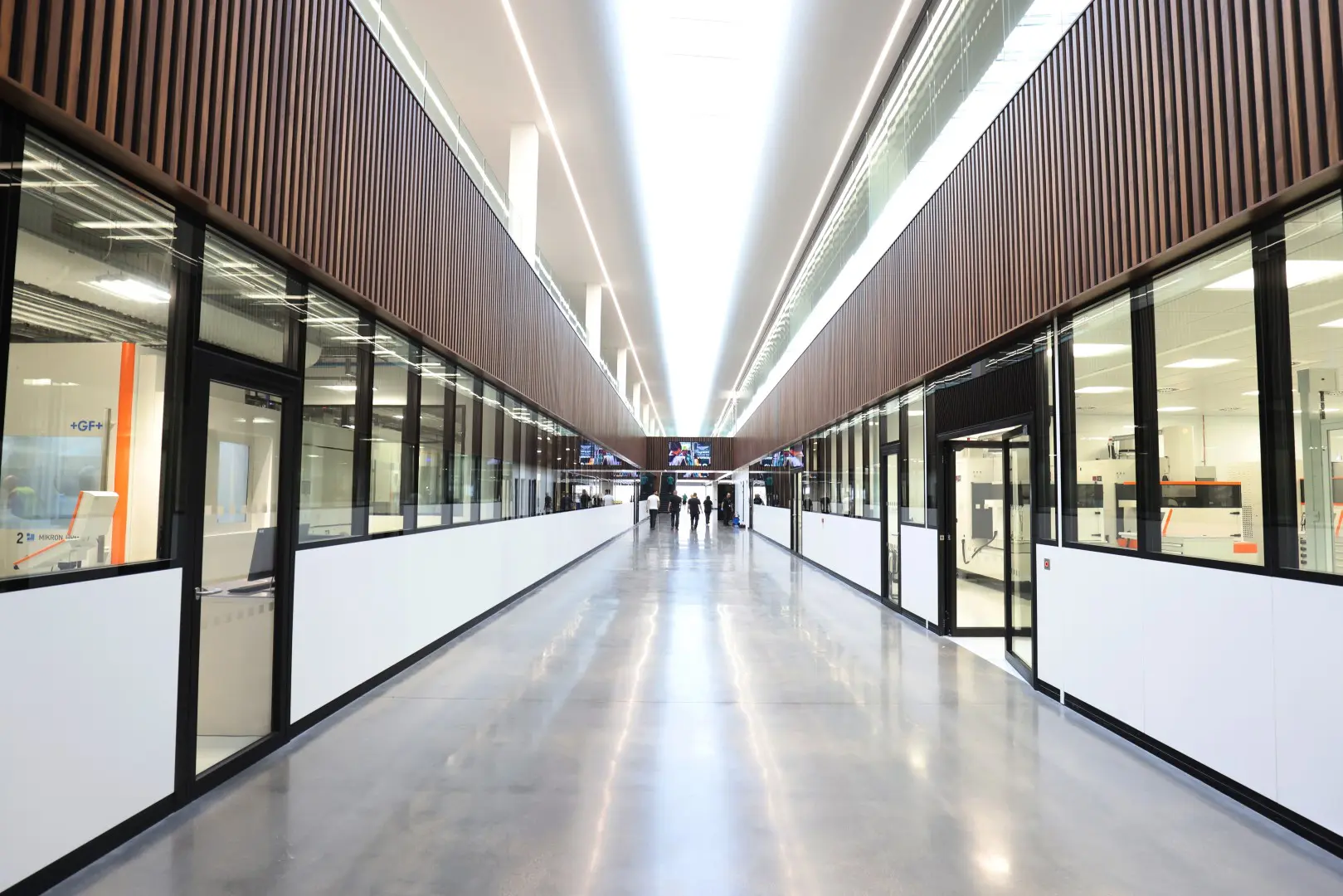
All departments branch off from one large, spacious corridor. Aston Martin calls it the central aorta. First come the aerodynamicists, then the materials specialists, then the electricians, then the builders, then the track—and everything that comes back from the track feeds back into the first step. This circular design is reportedly the most efficient model for this type of product development.
What stands out is how quiet it is. Our guide prefers not to call it a factory. It is bright, clean, and beautiful. There are no smoking chimneys, but there are so many solar panels on the roof that the complex generates more power than a medium-sized hospital consumes. Raw materials enter at one end of the building; four to five weeks later, a racing car rolls out the other. Between those two doors, more than a thousand people work in a finely tuned choreography.
Operational budget: 215 million dollars per year. That is the cost cap amount that has applied in Formula 1 for several years. The limit has brought the midfield closer to the top and, as our guide emphasizes, made the craftsmanship more interesting for engineers. When you can no longer solve a problem by throwing money or people at it, you have to be inventive.
Composition, Gluing, Baking
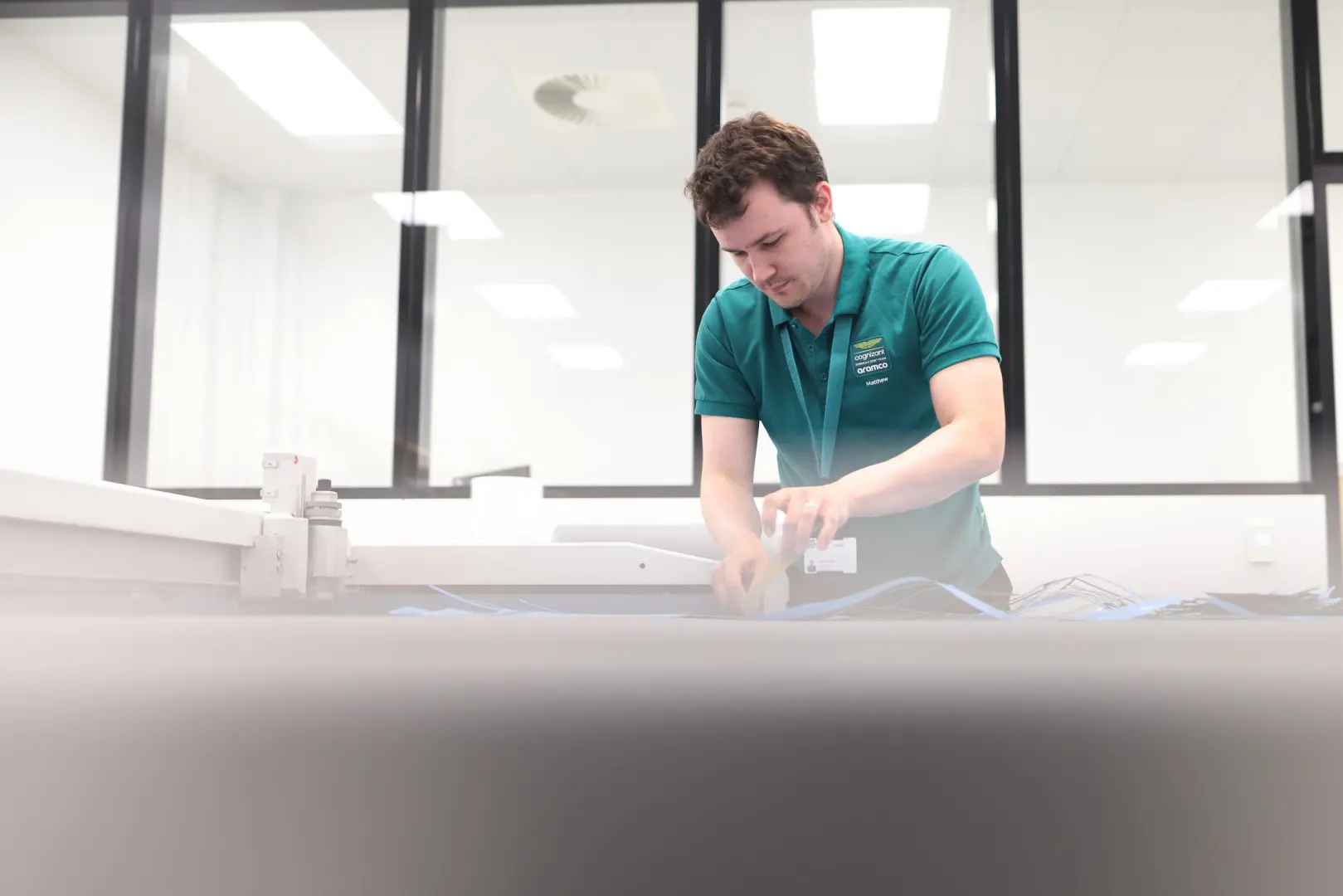
First stop: the carbon fiber department. Today, about 85 percent of an F1 car is built from carbon fiber. According to our guide, it is the strongest and lightest material the team works with. We are shown the step-by-step creation of a component. First, a blue pattern mold in resin, a piece of precision machining. Then a carbon fiber mold. And finally, inside that mold, the layer-by-layer application of pre-impregnated carbon sheets. Entirely by hand.
A machine cannot do this work, for one simple reason. The design office pumps out around 50,000 drawings annually, averaging one new design every two and a half minutes. Reprogramming a machine at that frequency would mean it never actually gets around to production work. One hundred laminators work here in 24/7 shifts, guided by lasers that show them exactly where the next sheet needs to be placed.
Once a component is fully built, it must go into the autoclave. This is because there is air between each of those layers. Before the baking process, that air must be removed; otherwise, delamination occurs as soon as the resin expands under heat. A large pink vacuum bag around the component sucks the air out; the autoclave then finishes the job under pressure and heat.
Rohacell, Nomex, and Aluminum Core
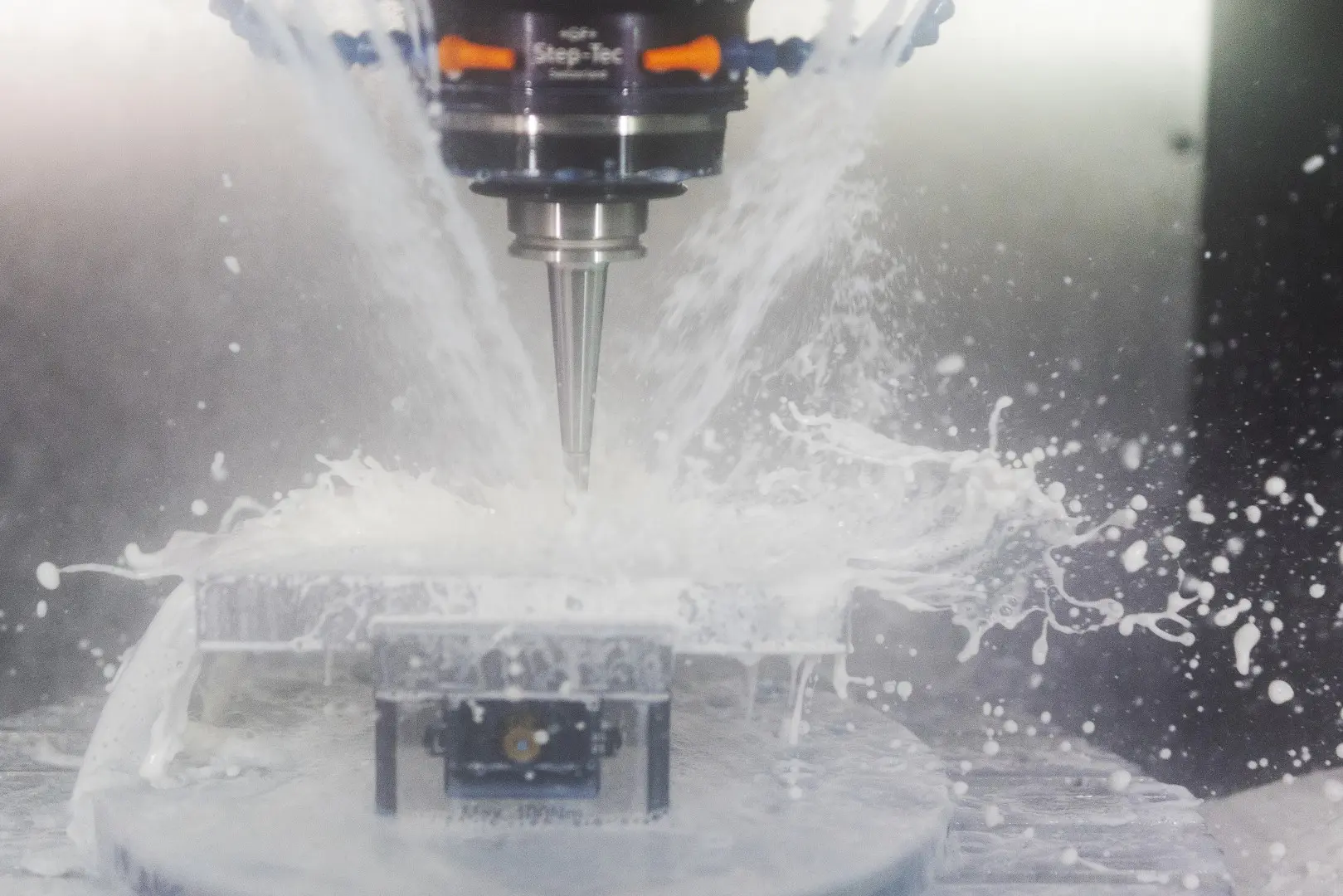
Carbon fiber is not the only building block of such a racing car. In a cross-section of a rear wing on display, we see a white filling: Rohacell. This is a foam that is lightweight, dimensionally stable under pressure and heat, and can be machined very precisely. It emerges from the CNC machine under high pressure in patterns we would sooner expect in an Apple factory than an F1 factory. The only downside: one square meter of Rohacell sheet costs about 1,500 pounds, which the team—logically—uses selectively.
For parts that need to be flexible yet strong, the choice falls on Nomex. This is the same material used in the drivers’ racing suits, fire-resistant and pliable. Our guide hands over a sidepod whose core material is entirely Nomex, sandwiched between layers of carbon fiber. The entire piece weighs almost nothing.

For crucial (and life-saving) components, such as the chassis, they switch to a sandwich construction with an aluminum core. An aluminum honeycomb is placed beneath the Nomex and carbon fiber. Together, these materials can absorb impacts of 30, 40, or even 50 g, allowing the driver to step out unharmed.
The fact that there hasn’t been a fatal crash on an F1 track since the mid-90s is evident here in the compressed materials on the table.
Non-Destructive Testing
Every part that passes through here must be checked. We end up in a room with four absolute arms—laser calipers on an articulated arm—that scan the geometry of a workpiece micron by micron. The result is a point cloud that is overlaid onto the CAD design.
On a large screen, we see a rear wing covered in green, red, and blue spots. Green is good, red means too much material, and blue means too little. For red, technicians take 3,000-grit sandpaper and sand away microns. For blue, repair or replacement is required.
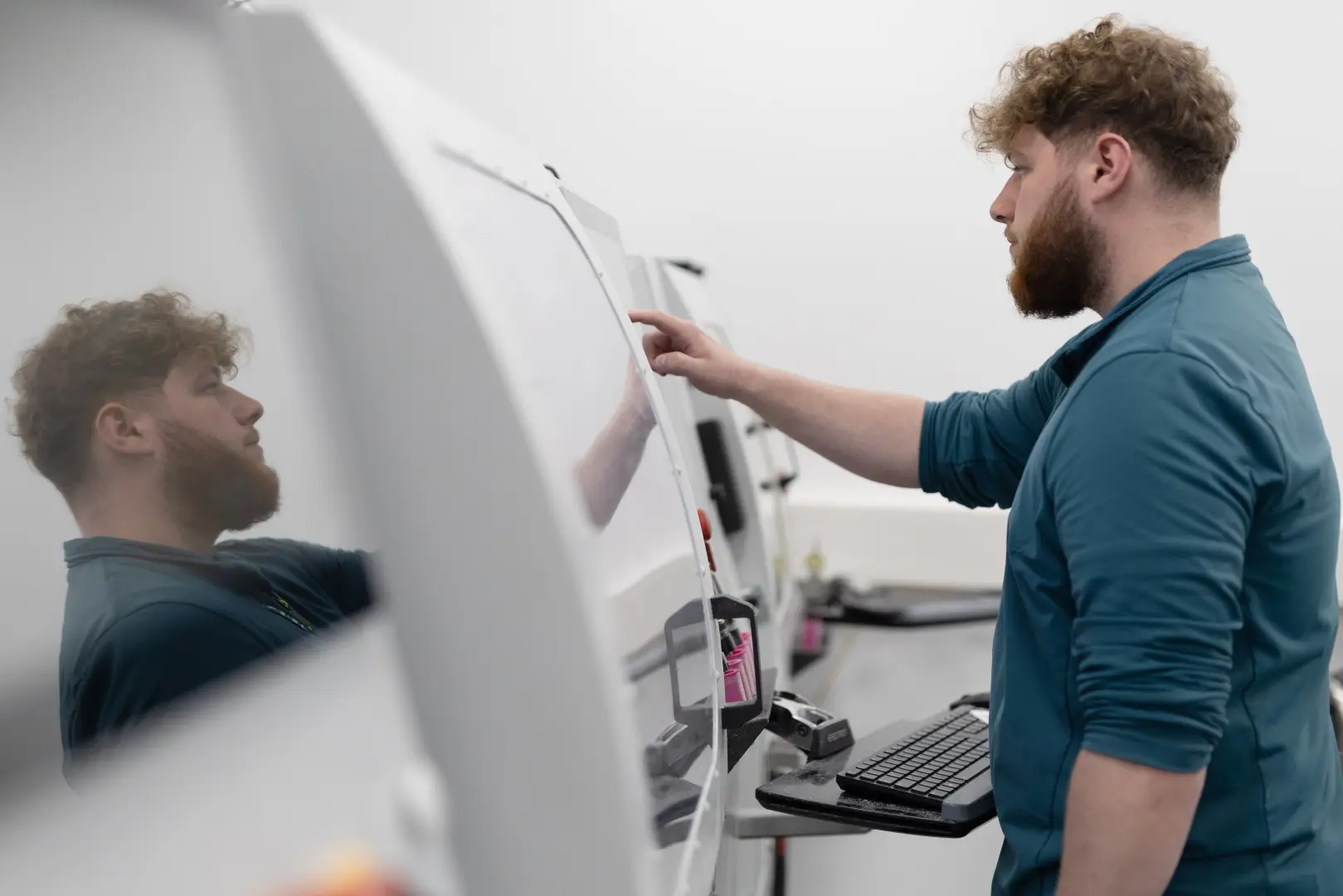
Then there is the section our guide calls his favorite department: non-destructive testing, or NDT for short. Carbon fiber receives an ultrasonic scan, the same technology used for pregnancy ultrasounds. For metal parts, eddy currents and a fluorescent contrast ink are used, which highlights any micro-cracks under black light. Everything that can be repaired is repaired. Because every repaired piece counts toward the cost cap budget; what ends up in the bin costs double.
CoreWeave Wind Tunnel Model
In the machining department, we see a PUO bracket (Push Outboard Upright) being milled from a solid block of titanium. The design was created using topology optimization: the team tells a computer where the part is attached and what forces are acting on it, and the algorithm then ‘grows’ the leanest, strongest connection between those points.
The result looks organic, almost bone-like, and measures about 20 by 20 centimeters. It takes forty hours of milling per piece and sixty hours of programming to make the machines perform every movement precisely in x, y, and z. Unfortunately, we weren’t allowed to take a photo of it.
The sixteen milling machines here run 24/7. Two of them are permanently reserved for the CoreWeave wind tunnel model. This is because testing a full-scale F1 car in the wind tunnel is not allowed. The FIA, the governing body behind F1, mandates that testing must be done with a 60 percent scale model. That model is largely 3D-printed in ceramic-reinforced PLA, which allows the team to print about 600 parts per week. Previously, using wood and clay, producing one part per week was an achievement. Rapid prototyping takes on a whole new dimension here.
Time in the wind tunnel itself is strictly rationed. The FIA allocates hours based on a team’s position in the standings: the top-performing team gets the least time, while the team at the bottom gets the most. The better you drive, the less you’re allowed to test. This makes every second of wind tunnel time precious and data-intensive.
Aston Martin has the advantage that its wind tunnel is the newest of all F1 teams. This allowed the most modern measurement technology to be built in from the start. This includes Particle Image Velocimetry: tiny particles in the airflow, tracked with laser sheets and stereoscopic cameras, provide a real-time image of how air moves over the car.
Compared to the smoky-candle experiments of the past, this is, in our guide’s words, the difference between a dark room where you’re fumbling for the light switch and the same room with the lights on.
The Steering Wheel as an Interface
In the electronics department, we take a breather. This is where wiring harnesses are made, sensors are calibrated, dashboards are tested, and steering wheels are assembled. The wheel has sixteen buttons, nine rotary dials, and six paddles on the back. A driver presses the standard buttons about 800 times per race, turns the rotary dials 160 times, and uses the gear paddles 3,000 times per Grand Prix. On average, something on this steering wheel changes every second.

What immediately stands out is that the lower part of the steering wheel is a 3D-printed piece shaped exactly to the driver’s fingers. Aston Martin scans the fingers of Lance Stroll and Fernando Alonso, with gloves on, in the same room where their seat molds are made. That scan is then converted into a mold on which the small lower section is printed. This is the post where the clutch rests during the start.
During that single second when the lights go out, the driver presses that plate in exactly far enough to find the clutch’s bite point. Not a millimeter too much, not a millimeter too little. A steering wheel weighs about 1.2 kilos, reportedly costs the team around 35,000 pounds per unit, and is replaced twelve times per season.
NASA Couldn’t Do Better
Then we enter a room we won’t soon forget: Mission Control. It is here that 45 people work together during a race, in a setup that physically resembles a spaceflight control room. Aston Martin’s Mission Control is twice as large as NASA’s in Houston. This is in addition to the 58 engineers who are on-site during a race weekend.
What happens here illustrates perfectly why the partnership with NetApp means more than just storage in a rack. During a Grand Prix, telemetry data arrives in Silverstone with a delay of only 0.2 seconds. Only from Australia does it take longer: 0.3 seconds.
The screens show live feeds of the two drivers, telemetry, the international feed (with a built-in delay of about 12 seconds), and at the back, a separate team listens in on the radio traffic of all other teams. Because that radio is public, it is officially permitted industrial espionage. Everyone eavesdrops on everyone else. That’s why teams speak in codes like ‘strategy two plus four,’ which mean nothing without the corresponding key.
The infrastructure supporting all of this runs largely on NetApp storage at the headquarters and on trackside FlexPod units that literally travel the world. These units are taken out of a truck, loaded onto a plane, set up again in a pit lane in Miami, Bahrain, or Suzuka, and must work immediately. Sometimes this happens in 40-degree heat, sometimes in humid sea air.
If, despite all planned defenses, there were ever a ransomware attack, the attack would be detected at the storage level, a recovery point created, and restored within seconds. Aston Martin loses no wind or performance data, and this is backed by a commercial guarantee from NetApp.
What We Aren’t Allowed to See
At the end of the tour, we admire the design office. More than 250 people work there, collectively producing 50,000 drawings annually. Again, aerodynamicists first, then materials engineers, then electricians, then builders, and so on. One team per category, all in a circle. The entire western part of the building is dedicated to this, with windows overlooking the gym and building three. That’s where the secret wind tunnel, the 3D printers, and the simulator are located.
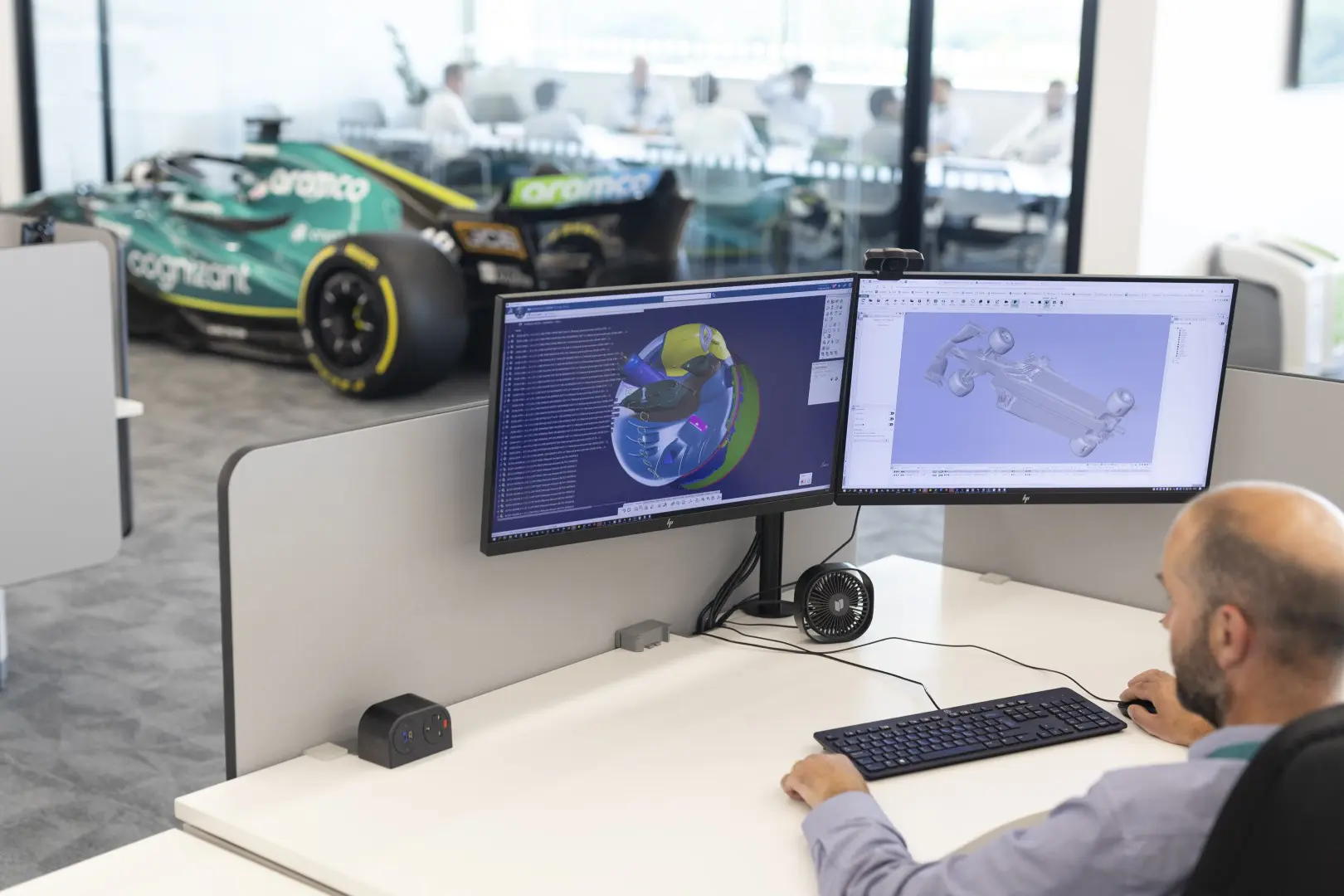
We aren’t allowed inside. It makes sense: this is where tomorrow’s car is designed. We do, however, get a sense of the scale and culture. The work itself, our guide tells us, is still largely done manually, with some help from optimization algorithms. This is intentional. AI can make mistakes, and they cannot skip intermediate steps. They are simply too close to the physical limits of the material.
The Visible and Invisible Layers
What sticks with you after a tour of the Aston Martin factory? First of all, the scale. Two drivers, 1,100 people, 58 engineers on-site, 45 in Mission Control, a car costing 15 million dollars each. An F1 team is an R&D machine that puts a new ‘product’ on a global catwalk every two weeks, televised live to a worldwide audience.
Next, the material expertise is striking. Carbon fiber, Rohacell, Nomex, titanium, and aluminum honeycomb are each used in a specific part of the car. And the numbers: 768 kg minimum weight, 1.5 kg fuel loss per lap, 3,000 steering wheel interactions per Grand Prix, 1 million data points per second, 600 wind tunnel model parts per week.
And finally, the invisible layer. Because anyone who looks at this factory and only sees mechanics is missing the story. Beneath every part, every measurement, every lap on the circuit, lies a data infrastructure that makes it possible to both have a new car ready every two weeks and to follow a Grand Prix race in real-time from Silverstone.
Along the track, from the headquarters, in the cloud—NetApp builds all those networks together with Aston Martin. We see very little of it. Most of it is, literally and figuratively, in the walls. Without that platform, the car on the track wouldn’t know where it stands. And in this sport, that is the difference between winning and driving into the pits shaking your head.