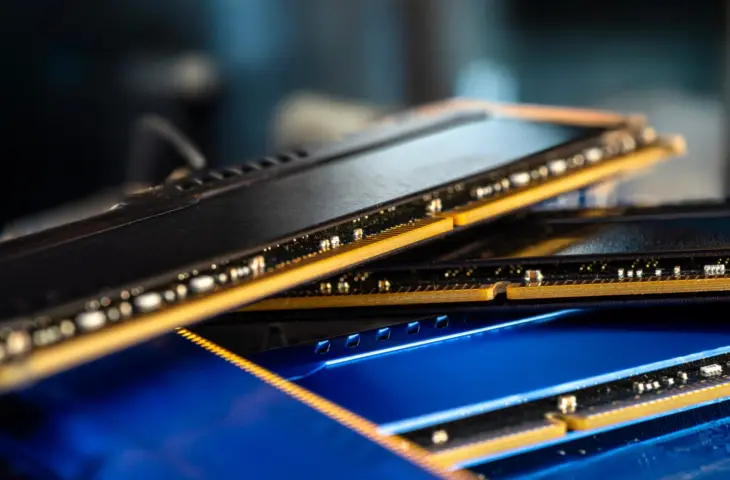
Do you have all the RAM you need for the near future? Or have all the new PCs for your company already been purchased? If not, hopefully you won’t need any in the coming year because AI is driving prices up significantly.
AI will improve the world, if we are to believe the AI enthusiasts. Some patience may be required, but we’ll have to muster it to be able to step into the AI-driven Garden of Eden sometime soon, laptop in hand. In the short term, the development of AI and the construction of AI data centers will mainly ensure that that new PC becomes more expensive and your smartphone contains less memory.
Triopoly
Here’s the thing: memory is a market that is very sensitive to supply and demand. This is because there are only three major memory manufacturers: SK Hynix, Samsung Electronics, and Micron. Together, they control about 93 percent of the market.
Memory chips are microchips, which, like CPUs and GPUs, are baked on wafers. SK Hynix, Samsung, and Micron have several factories with different production lines containing equipment to build memory chips on wafers. Setting up such a factory takes years and costs billions, so manufacturers don’t just add one.
RAM is the new oil
They have learned their lesson: in early 2023, the price of memory plummeted because the capacity of the factories was much greater than the supply.
There you are as a memory manufacturer, with a very expensive factory where chips roll off the line that are only worth a fraction of what their sales value was when you pumped billions into the factory. By reducing production somewhat, the price climbed back to a feasible point, but the impact on the manufacturers’ balance sheet was visible.
There you are as a memory manufacturer, with a very expensive factory where chips roll off the line that are only worth a fraction of their previous sales value.
In that respect, memory is a bit like oil: a handful of players decide on the available capacity, and those players have no interest in a glut that depresses the price. A memory shortage is not even bad for them: when prices rise, every factory generates more profit.
AI is hungry
Meanwhile, demand is rising dramatically, but not because we all want more DRAM in our laptops. The culprits are the AI companies. Whether you want to train AI models or perform inference, immense amounts of memory are essential for this. For inference with DeepSeek R1-70B, you need around 50 GB of memory, just to load the model. For larger models such as GPT 5.2, this is a multiple.
Memory capacity is one factor, memory speed is another. To run AI workloads smoothly, manufacturers like Nvidia couple their AI accelerators to High Bandwith Memory (HBM). That is a version of 3D-stacked memory with a higher bandwidth than classic DRAM that you find in laptops.
Petabytes of HBM demand
The Nvidia Blackwell B200 is currently the most advanced AI accelerator. Microsoft, AWS, Google, and Meta have each ordered around ten billion dollars worth of chips from Nvidia. Microsoft alone wanted to cram 50,000 Blackwell chips into one data center. One Nvidia Blackwell B200 has 192 GB of advanced HBM3e on board.
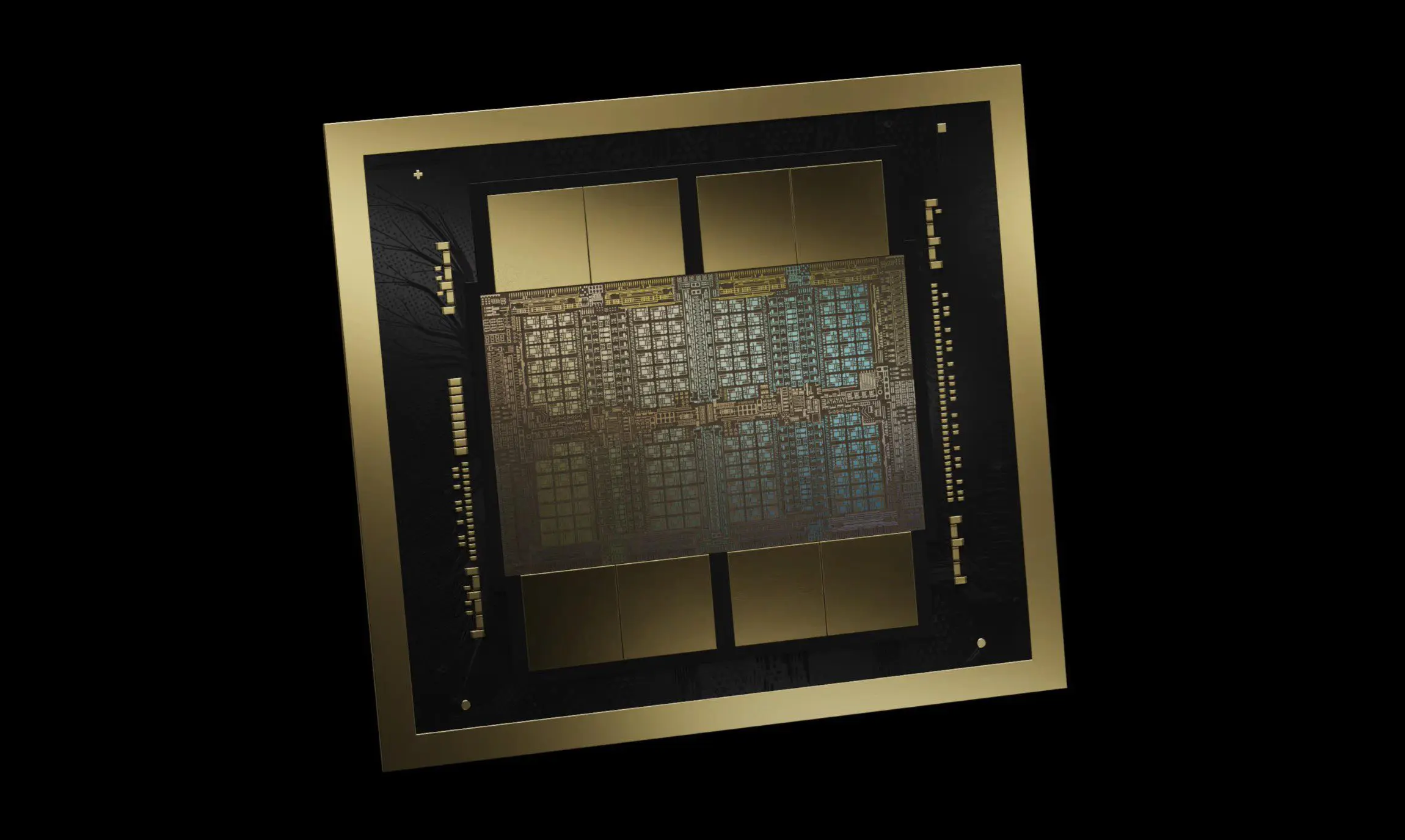
To meet that hunger for chips, petabytes of HBM are needed. Nvidia (and AMD and others) may design the chips, but the manufacturing is done by TSMC with memory from Samsung, SK Hynix, or Micron, in the available factories.
Reconfiguration of factories
HBM is more complex than DRAM, but it is built on the same production lines. A production line where DRAM rolls off cannot make HBM for AI chips. The equipment used is more or less the same: manufacturers can reconfigure their production lines to make HBM.
HBM sells at a higher price than DRAM
They do that too: HBM sells at a higher price than DRAM. The memory companies have done the math and determined that it is better for them to have their factories build HBM than DRAM. First, the production lines for somewhat older (and therefore cheaper) DDR4 memory were scrapped. DDR4 DRAM became more expensive than more modern DDR5 memory.
Less memory per wafer
The conversion from DRAM capacity to HBM capacity does not happen one-to-one. Producing HBM requires extra steps and consumes more wafer capacity. For a wafer with a certain capacity of HBM, a manufacturer can produce three times as much DRAM.
With the conversion of DDR4 production lines, the hunger for AI-HBM was not satisfied. The next victim: DDR5. Micron even chose to give its strong RAM brand Crucial the coup de grâce in order to be able to pivot to HBM. That is annoying, because DDR5-DRAM (and variants such as LPDDR5x) is the memory that you find in PCs, servers, and smartphones.
read also
Micron Ditches Its Crucial RAM Brand in Pursuit of AI Funding
Samsung, SK Hynix, and Micron don’t care about that: HBM yields more than DDR5, so that is the priority. This naturally creates a new shortage, namely for DDR5. PC and server builders have also seen this, so they stocked up, which further increased demand.
Exponentially more expensive
You don’t need a master’s degree in economics to guess what happens next: demand rises, supply falls, so the price skyrockets. That is the situation we are in now. A set of 32 GB of RAM memory that cost around 80 euros in August 2025 now goes over the counter for almost 350 euros.
Server and computer builders cannot escape the price increases. The price of memory is also skyrocketing for them. In the entry-level and mid-range segments of laptops, profit margins are not exactly gigantic. Manufacturers have built up a modest stock, but they are slowly running out of it. The price increase caused by the AI hunger is therefore passed on.
Chronicle of an announced price increase
That is not hypothetical. All computer builders, from HP to Lenovo and Dell, have now indicated that such price increases are coming. From smartphone to laptop and desktop to server: the price for a configuration with a given amount of DRAM will increase from the beginning of 2026. In order to continue offering devices at certain interesting price points, manufacturers will also cut back configurations and put them on the market with less RAM.
read also
Dell first out of the gate with PC price increases, Lenovo follows
The timing is particularly painful given the end of support for Windows 10 by Microsoft. Many organizations have signed up for extended support to continue working on existing PCs for a while. By postponing the renewal of laptops to 2026, the price tag increases.
SSDs
The increase in DRAM prices is just the beginning. All those brand-new AI superclusters with their terabytes of HBM memory naturally want data to load into that memory. That data must come from fast storage, and that’s where SSDs are needed.
One Nvidia Vera Rubin system is ideally flanked by about 1,125 TB of SSD NAND. Around 30,000 Vera Rubin systems will be shipped in 2026. In 2027, Nvidia will deliver another 100,000. A little calculation tells us that SSD NAND manufacturers will have to produce around 150 million TB of NAND for Vera Rubin alone in the next two years. In 2027, Vera Rubin will account for 9.3 percent of the total demand for SSD NAND.
read also
AI is making SSDs noticeably more expensive, following RAM
You can guess the consequences yourself. NAND is largely built by the same manufacturers as RAM. Samsung and SK Hynix are the largest players, along with Sandisk. These three parties have already indicated that they will double the price of NAND in 2026. The price of SSDs has already risen in anticipation. It is unclear where the ceiling lies.
The high price of SSDs sets off a waterfall effect. Those who prefer SSDs but can also manage with HDDs are pushed towards the classic HDDs due to the high price. Part of the SSD demand unexpectedly ends up with the HDDs, and thus the price of those components also rises.
(No) patience
Patience is a virtue, but those who wait for a normalization of the price will be waiting a long time. Micron itself believes that the current RAM prices, which are still rising, are evolving towards the new normal. The manufacturer does not expect any declines in the foreseeable future, according to an explanation of the quarterly figures.
As far as laptops and desktops are concerned, the price will rise in the course of 2026. Computer manufacturers, always fighting for market share, are still selling systems under the current price conditions as long as they can. When they themselves have to integrate more expensive RAM, they will pass on the price increase. The same applies to SSDs.
At the beginning of 2026 you can still buy PCs at the earlier prices, but that will not last long. It is already too late for separate RAM in self-built systems. The situation will only worsen in the coming weeks and months.
This article originally appeared on December 26 under the title ‘Hopefully Santa brought RAM’. It has been updated with the most recent information.