

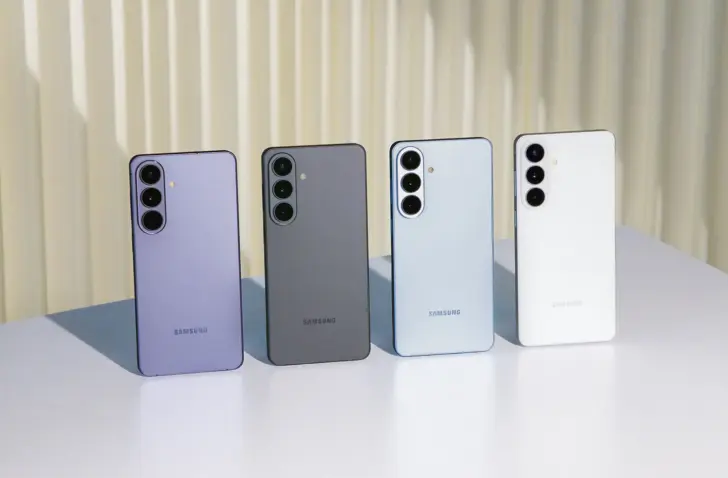
The Samsung Galaxy S26 sticks to the basics: a compact yet powerful flagship. However, once again this year, it’s hard to find any noteworthy upgrades.
Samsung has been playing it safe for several years with the smallest member of the Galaxy S series. While the manufacturer occasionally tries something new with the expensive Ultra, it opts for familiarity with the base model. Those hoping to be surprised will be disappointed, as the Galaxy S26 is once again a cautious upgrade over the previous model.
Growth spurt
The Samsung Galaxy S26 has grown by another tenth of an inch. The screen now measures 6.3 inches. As a result, the phone remains compact and fits comfortably in the hand. You will hardly notice the extra five grams (167 g). Compactness remains an asset that the S26 leverages in a price segment where phones can’t seem to get big enough.
Furthermore, very little has changed visually on the S26. The same applies to the specifications. The resolution remains at 1,080 x 2,340 pixels, which is justifiable for the screen size. The screen brightness reaches 1,384 nits, which is significantly lower than, for example, the Google Pixel 10a. Don’t look for the privacy screen: Samsung keeps this feature exclusive to the Ultra model.
Small powerhouse
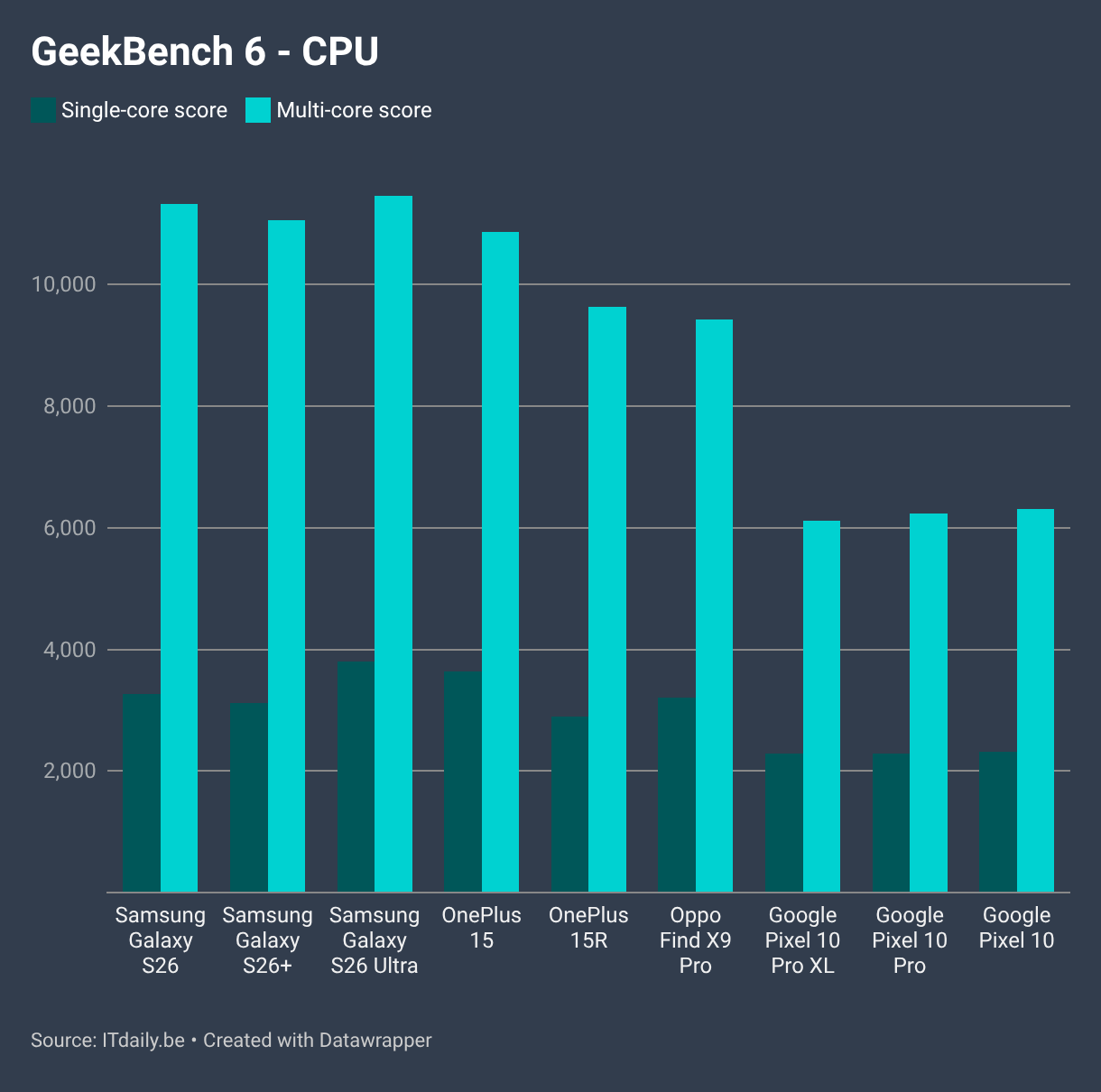
Year after year, Galaxy S phones prove that size is no indicator of performance. They effortlessly compete with larger flagships. While Samsung maintains a consistent line in many specifications, it surprisingly does not do so with the processor. This year, Samsung is once again rolling its own Exynos processor off the line.
That choice is bold, but it works out well for the S26. The Exynos 2600 doesn’t have to yield to premium processors from Qualcomm and MediaTek. In terms of absolute computing power, Qualcomm’s Snapdragon 8 Gen 5 is unsurpassed, but the Exynos 2600 is the equal of the MediaTek Dimensity 9500 in the Oppo Find X9 Pro and easily holds its own against Google’s Tensor chip.
The base storage has been increased to 256 GB, while the amount of RAM remains at 12 GB. Even a chip manufacturer cannot simply increase memory without raising the price, as the S26 has become one hundred euros more expensive as a result.
GPU
The S26 doesn't have to take a back seat to anyone in terms of graphics either. The Xclipse 960 records excellent benchmark scores, which are close enough to the S26 Ultra that no differences are visible in practice. The S26 handles graphically intensive applications without much fuss.
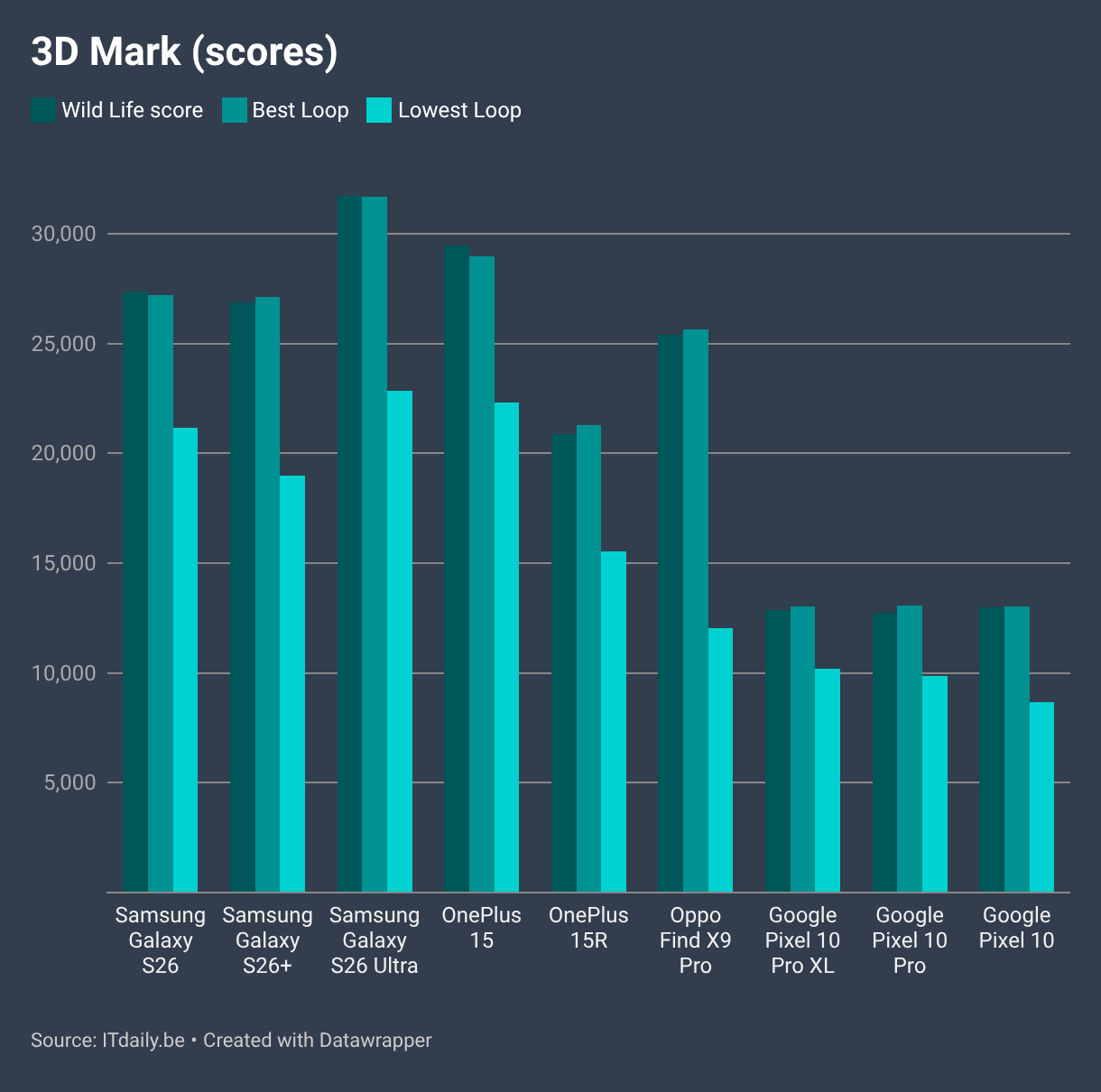
Smaller phones generally have less thermal capacity, making them more susceptible to overheating. During our testing period, we never felt that a heat stroke was imminent. It might happen if you were to game intensively for hours while having other applications open, but you don't do any phone a favor with such heavy labor.
Excellent battery life
The Samsung Galaxy S26 proves that its small size doesn't have to be a disadvantage for battery life either. On paper, you might expect otherwise, as there is only room for a 4,300 mAh battery. However, the device's internals prove to be very energy-efficient. As a result, the S26's battery lasts almost as long as that of the S26+.
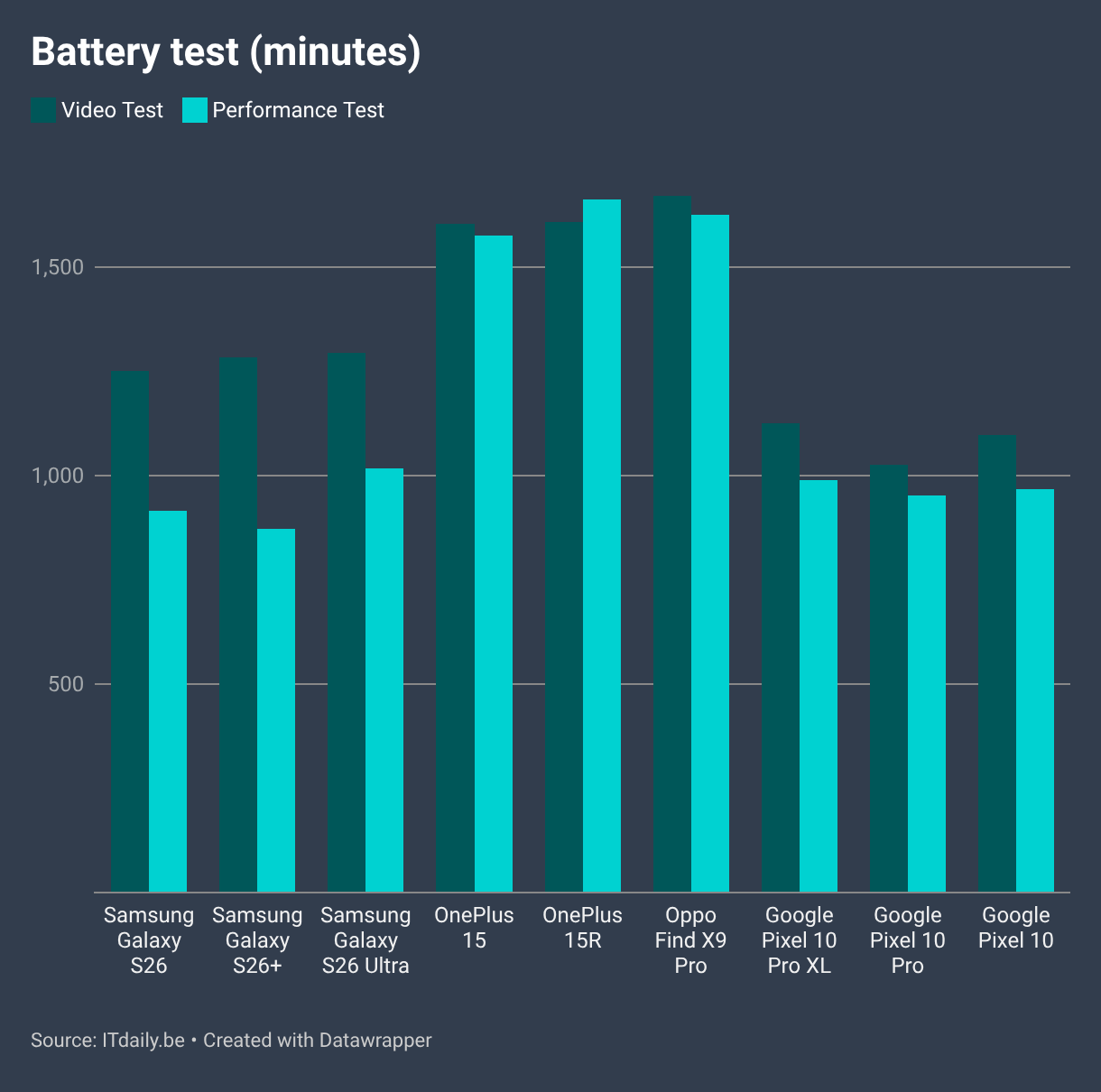
Clear differences are only visible with the OnePlus 15(R) and Oppo Find X9 Pro, but then again, they have hefty 7,000+ mAh batteries. The comparison with the Pixel 10 is also interesting, as the phones have the same compact size as the S26. Its battery is larger, but the Tensor chip uses it less efficiently.
Disappointing charging speed
So much for the good news, because the charging speed is a disappointment, as it is every year. 25 W via cable and 15 W wireless is frankly disappointing and, above all, hasn't improved in several years. Even with a smaller battery, it takes longer to recharge the S25 than its price peers. 26 minutes for a half charge and 47 minutes to eighty percent should not be acceptable.
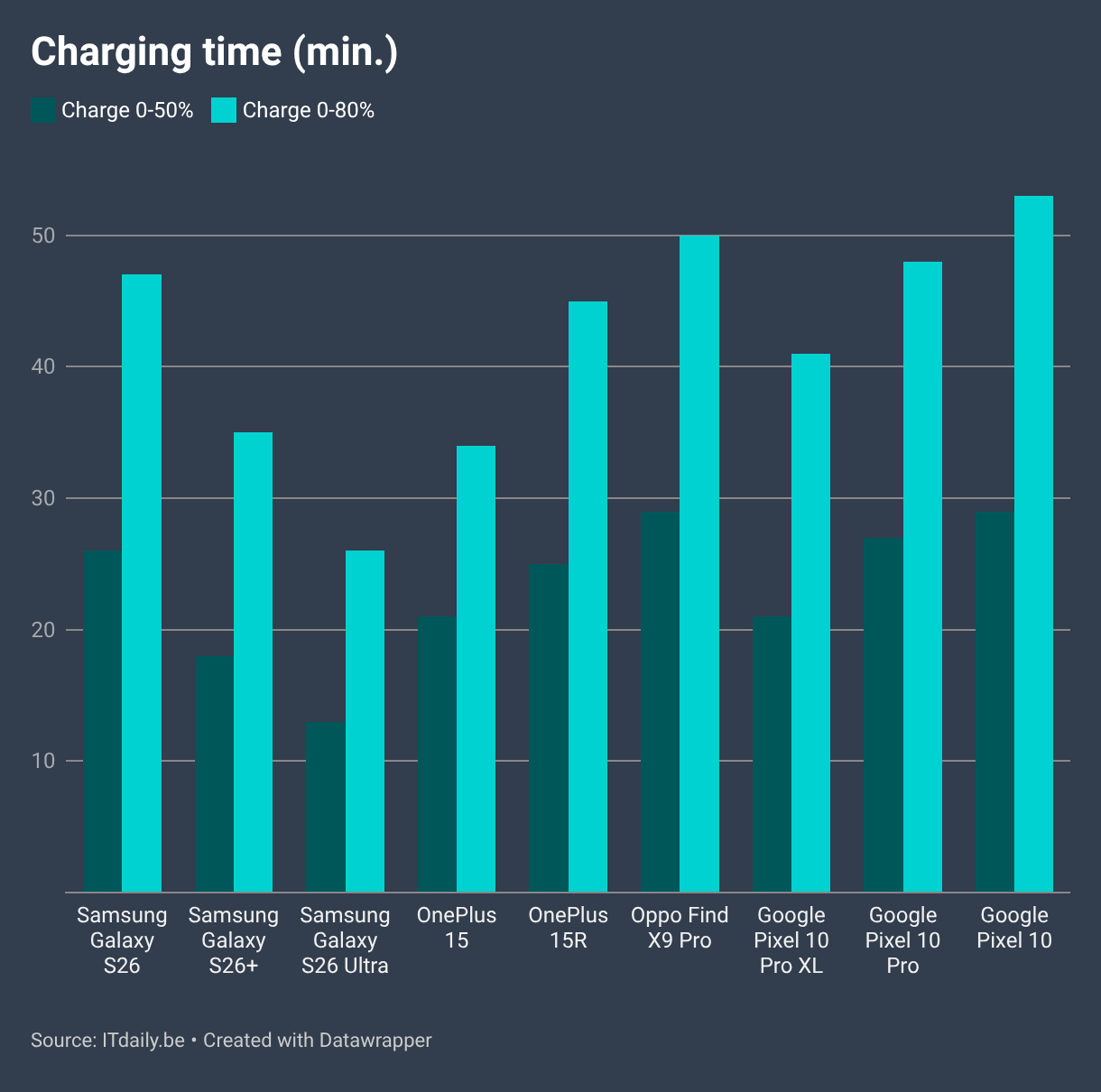
The smaller size is an excuse to some extent: the Pixel 10 is also anything but a fast-charging champion. But in the meantime, even the cheaper Galaxy A models have overtaken the S26 in charging speed. Matching the 45 W of the Galaxy S26+ should at least be possible, and even that wouldn't be lightning fast.
Cameras are lagging behind
Innovation is also long overdue for the cameras. The camera setup has hardly changed since the Galaxy S22. Vertically stacked, you get a 50 MP main camera, 10 MP telephoto camera, and 12 MP wide-angle camera, with a 12 MP camera on the front. In 2022, these were good cameras, but four years later, they feel outdated.
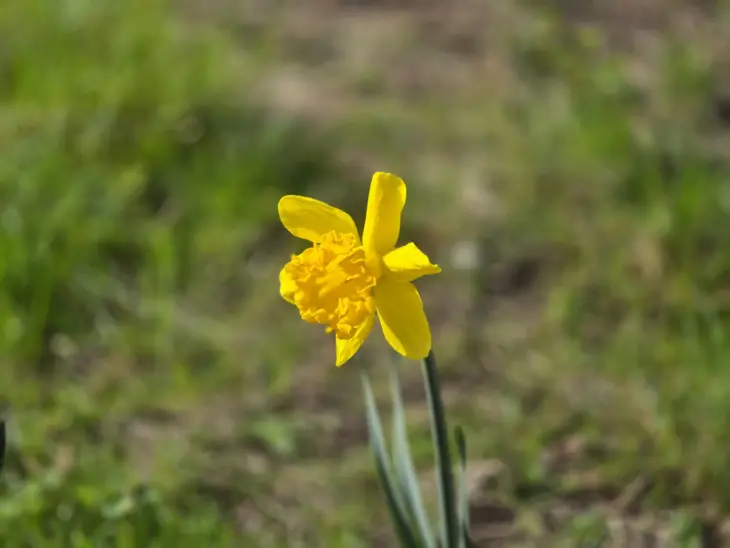
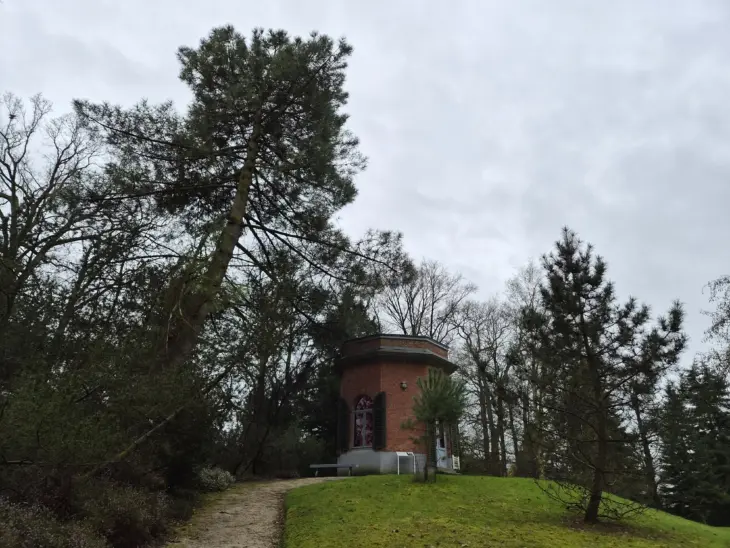
The main camera can still produce good results under the right lighting conditions, although green areas like grass fields are blurry. Samsung really can't get away with the wide-angle and telephoto cameras at this price point anymore, especially when compared to what other devices can do—even cheaper models like the Nothing Phone 4a. Samsung treats the S26 like a mid-range device when it comes to cameras.















Smarter Bixby
Since the Galaxy S24 series, Samsung has gone all-in on AI on your phone under the 'Galaxy AI' banner. This is a range of AI features that aren't that different from what you'll find under other banners on other phones, such as writing texts or editing photos. The S26 is entering 'agentic AI,' according to Samsung.
In practice, it all works out quite well, at least if your native language isn't Dutch. Support for Dutch remains limited or absent for most AI features, which makes Galaxy AI only a half-filled box. Moreover, the photo editing features are hit-and-miss and sometimes miss the mark completely.
Samsung's own AI assistant Bixby is making a striking comeback on the S26. With Galaxy AI, Bixby seemed to be pushed toward the exit. Now, Samsung is finally giving Bixby a reason to exist. Among other things, the AI assistant can adjust settings such as screen brightness for you. After the testing period, AirDrop support was added by Samsung.
Conclusion: stagnation or decline?
Samsung is continuing the trend of recent years with the Galaxy S26. The latest model only introduces iterative improvements over the previous version, which in turn also added very little that was new. As a result, the Galaxy S has remained virtually unchanged for several years.
The S26 has a strong foundation to fall back on. The smartphone is a compact device that delivers powerful, flagship-worthy performance, and that remains a rarity in the market. Samsung doesn't need to change that status quo.
The saying 'standing still is going backwards' is gradually becoming applicable to the S26. In certain specifications, the smartphone is slowly being overtaken by the competition, such as the cameras and the charging speed. That makes it difficult to justify the price increase to 999 euros this year.
Tested: Samsung Galaxy S26, 12 GB RAM, 256 GB storage, seven years of support, eco-label A, 999 euros incl. VAT
Pros
- Handy size
- Adequate image quality
- Surprisingly good Exynos processor
- Excellent battery life
- Improved Bixby
Cons
- Slow charging
- Disappointing cameras
- Little change compared to S25