


This small device can do what a laptop can. Almost. The MSI Cubi NUC 1I 1UMG is certainly not the world’s most powerful computer, but for those seeking a discreet system to power one or more screens, MSI offers an interesting solution.
The MSI Cubi NUC AI 1UMG (€571.46 excl. VAT) is not a conspicuous computer. The small black device has a volume of just 0.51 liters. According to MSI, the casing consists of at least 30 percent recycled plastic. We applaud this, although there is still significant room for improvement.
Specifications
Under the hood, we find components that would be at home in a budget-friendly office laptop. The NUC is powered by an Intel Core Ultra 5 125H. This chip features fourteen cores, including four P-cores (with dual threading), eight classic E-cores (single threaded, focused on efficiency), and two additional ‘low power’ E-cores. A Core Ultra 7 version is also available.
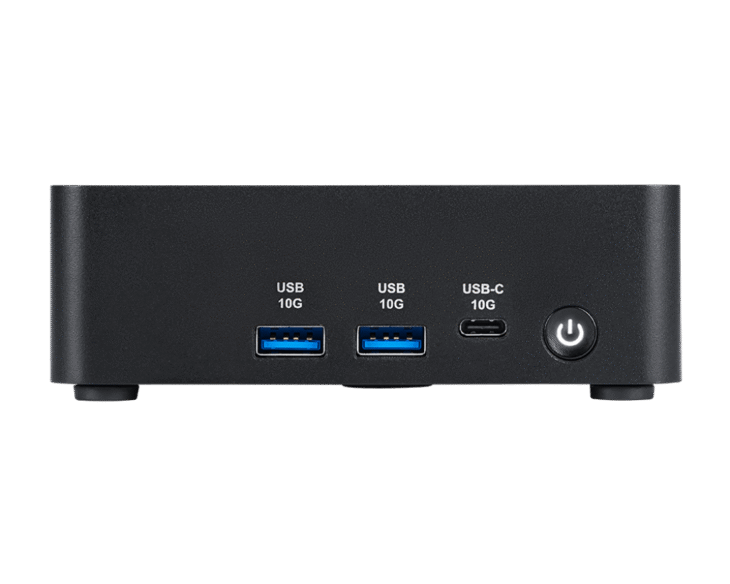

Our test model also features a modest 16 GB of RAM, relies on the Intel chip’s integrated Arc graphics, and comes with a 512 GB SSD. On paper, these specifications are sufficient for standard office tasks.
Modest CPU
Comparing the raw performance based on benchmarks, it’s clear that this NUC is not a powerhouse. Frankly, based on the specifications, we had expected a bit more horsepower.

The HP OmniBook X Flip features an Intel Core Ultra 5 226V: that chip is from a more recent generation and logically performs better. The
MSI appears to have opted for a restricted version of the Core Ultra 125H, which generates just enough heat to avoid the need for a loud fan. In this context, we wonder if the U-chip wouldn't have been a better choice.
It's no surprise that the modest chip ensures the MSI Cubi NUC AI 1UMG doesn't achieve a top score in our Office tests.

The other systems (all laptops) perform better. However, don't get fixated on the benchmarks, as they only tell part of the story.
Adequately Powerful in Practice
We did more than just benchmark MSI's NUC. The real question isn't whether a system scores exceptionally high, but whether it scores high enough. And it does. We used the NUC for various purposes, including light office work and as a hub for streaming demanding SaaS applications. All of that worked very well.
The overall user experience is smooth. This is partly due to the adequate 16 GB of RAM, but also because MSI doesn't skimp on the SSD. As you can see, it performs at the level of much more expensive devices.

Not an AI Machine
MSI markets the MSI Cubi NUC AI 1UMG as a mini AI computer, but that should be taken with a grain of salt. The NUC naturally has an NPU on board, thanks to Intel's Core Ultra chip. This accelerates AI-related workloads, analogous to how hardware media accelerators can support video workloads. The added value primarily comes from small details, such as more efficient background blurring in Microsoft Teams.
MSI strongly emphasizes the local AI component in the marketing of the MSI Cubi NUC AI 1UMG, so we subjected the small computer to our benchmark test for AI-driven text generation. We tested three models.

As you can see, the small computer does have capabilities, but they are no match for the integrated NPUs in more powerful laptops. Furthermore, even those laptops actually have very little AI processing power. To truly support local AI that is somewhat comparable to what you get via the cloud, you need a specialized workstation with an extreme amount of memory, such as the HP Zbook Ultra G1a 14.
Connectivity and Displays
The MSI Cubi NUC AI 1UMG is therefore not a powerhouse. However, it has other strengths, mainly stemming from its form factor. To begin with, the NUC is not a laptop. This means you don't purchase an unnecessary screen or keyboard. The small computer can be easily tucked away or mounted behind a screen (VESA-compatible). MSI provides an accessory in the form of a power button on a cable, allowing you to easily switch on the hidden computer.
The Intel chip is capable of powering up to four screens. MSI provides the necessary connections to make this possible: two HDMI ports are present, alongside two USB-C/Thunderbolt ports. Furthermore, MSI integrates two 2.5 Gigabit RJ-45 ports.
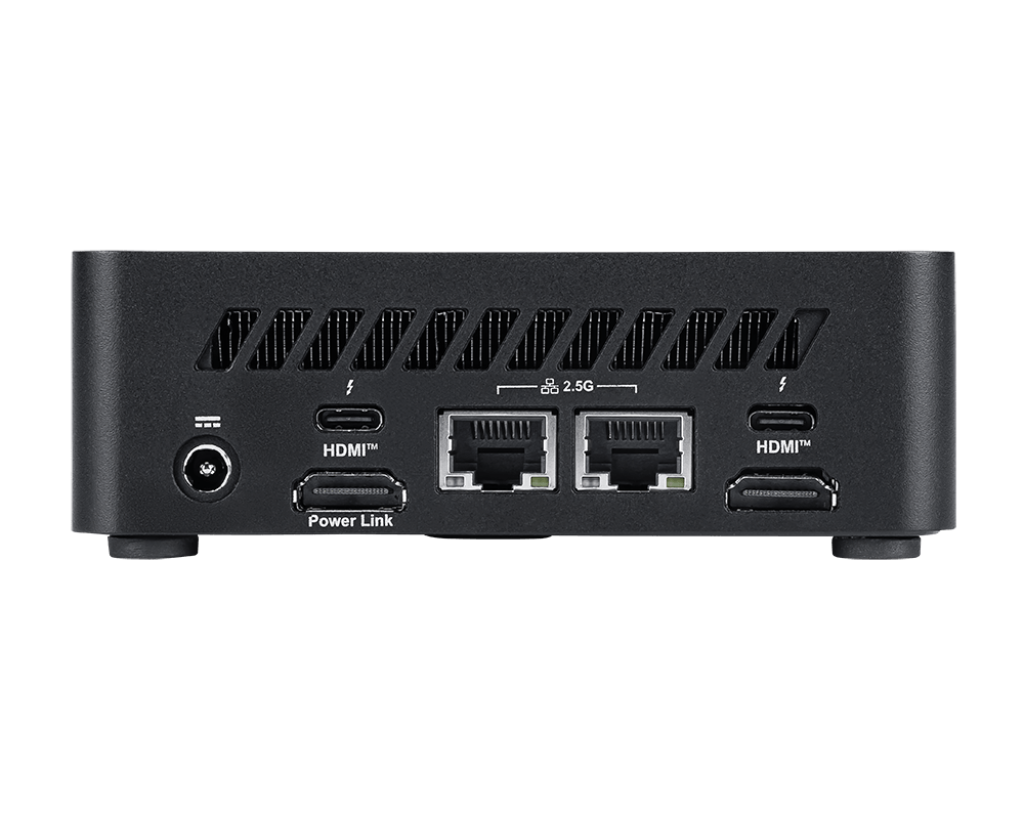
The MSI Cubi NUC AI 1UMG thus excels as a reliably connected hub for driving one or more screens. You can then stream content or applications to it. Consider VDI environments or SaaS applications.
We also mention the two USB-A ports for connecting additional peripherals, and the Kensington lock. This is relevant if you want to mount the NUC in a publicly accessible area.
Not a Powerhouse, but Relevant
MSI has extensive experience in building NUCs, and the MSI Cubi NUC AI 1UMG builds upon that. In its marketing, the manufacturer is a bit too enthusiastic. This computer is not an AI powerhouse. However, you do get a capable x86 system that is extremely suitable for either basic tasks or streaming other more demanding applications.
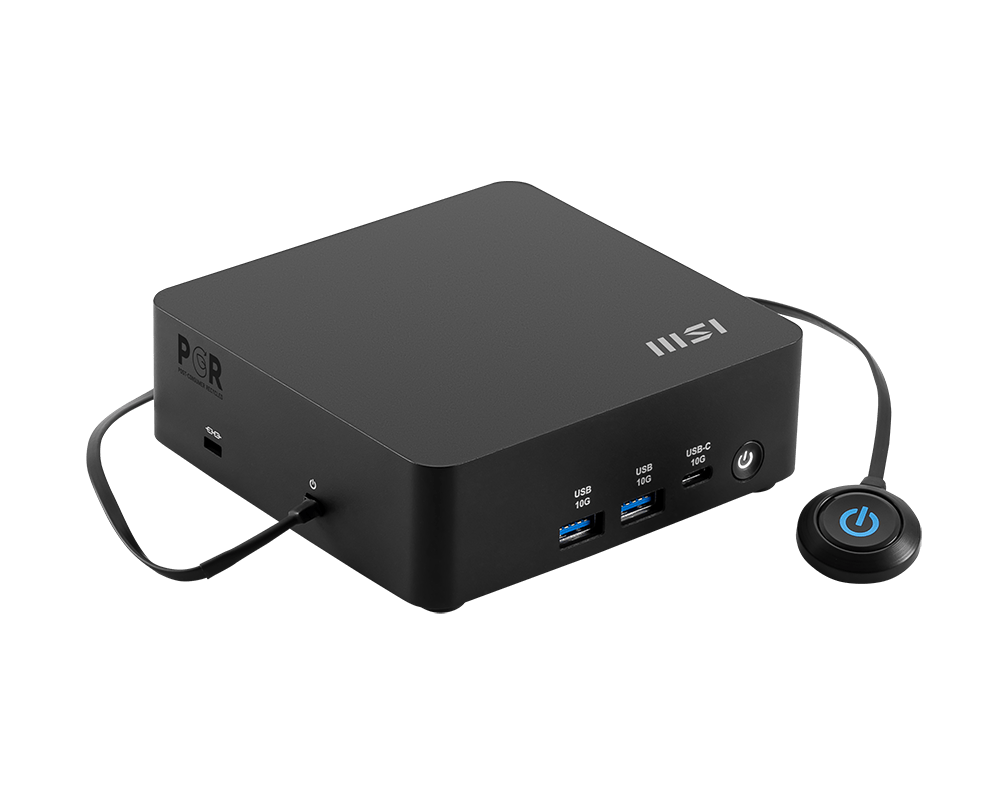
The Cubi NUC has several advantages compared to a laptop. For example, its compact VESA-compatible form factor is simply more convenient in various scenarios. Furthermore, MSI is very generous with its port selection. If you are looking for a Windows system that can handle peripherals and screens, and is also compact, then the MSI Cubi NUC AI 1UMG might be what you are looking for. At €571.46 excl. VAT, the recommended price is also quite reasonable.
Are you looking for a full-fledged laptop replacement or a compact desktop? Then think twice. The local performance is adequate for basic office work, but not much more. If you want to open demanding spreadsheets, occasionally do light video editing, or engage in intensive multitasking, then a slightly more powerful system is worth considering.
Tested configuration: MSI Cubi NUC AI 1UMG - Intel Core Ultra 5 125H, 16 GB RAM, Intel Arc Graphics, 512 GB SSD, Windows 11 Pro – €571.46 (excl. VAT).
Pro's
- Compact design
- Ample Connectivity
- VESA-compatible
- Sharp price
Contra's
- Modest Performance
- H-CPU Not Fully Leveraged