

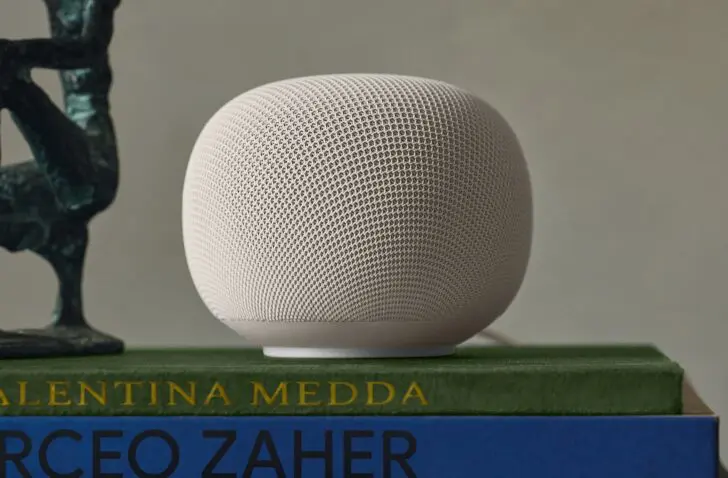
Six years after the Nest Audio, Google is finally releasing another smart speaker. The Google Home Speaker is the first device designed from the ground up around Gemini, the successor to Google Assistant. The hardware is finished and the price is reasonable, but the AI assistant still has to prove itself.
The Google Home Speaker (119.99 euros incl. VAT) finally ends the silence surrounding Google and smart speakers after six years. The spherical device inevitably brings the HomePod mini to mind and sits between the old Nest Mini and Nest Audio in terms of size. Of the four colors, only the understated variants are coming to Europe; red and green remain on the other side of the ocean.
The price is slightly higher than what the Nest Audio launched at back then, but in return, there is a modest hardware update that aligns with expectations.
Hardware: modest update, thoughtful details
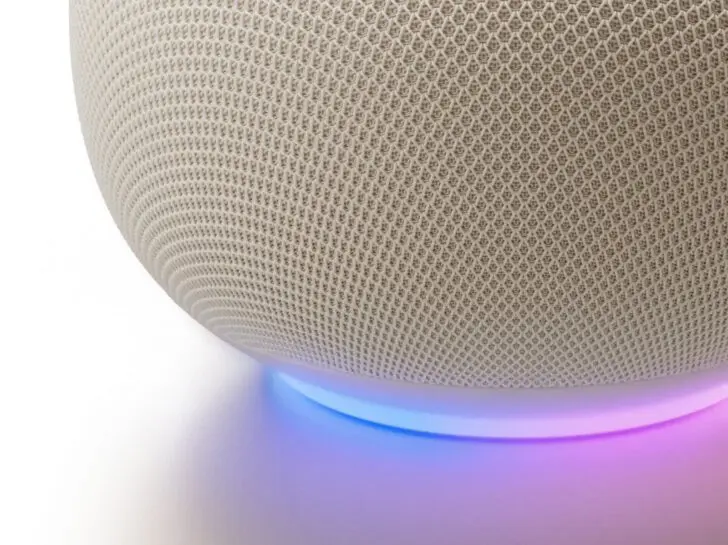
With a diameter of 107 millimeters and a height of 86.6 millimeters, the speaker remains compact. Inside is a driver twice as large as that of the Nest Mini, which is said to provide 2.5 times more powerful bass. The sound is projected into the room in 360 degrees. The LED ring at the bottom is a successful addition: white when Gemini is listening, colorful when it is thinking, orange when the microphone is off. This is much more intuitive than the four discrete dots of the past.
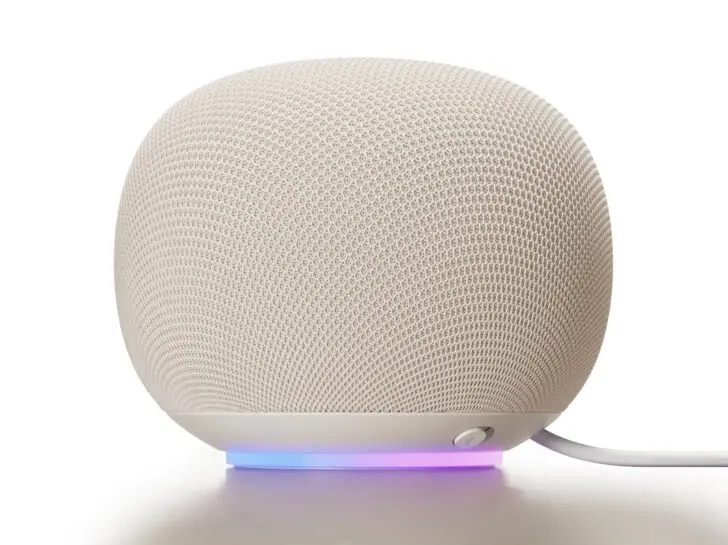
At the top are touch-sensitive buttons for volume and pause, and at the bottom is a physical switch that hardware-disables the microphones: credit to those who take privacy seriously. Less attractive is the fixed power cable. If it breaks, you have to replace the entire device. Installation via the Google Home app is completed in just a few minutes.
Sound: excellent background speaker, no musical marvel
For podcasts, radio, and background music in the kitchen or at the office, the Home Speaker sounds clear and more than adequate. The bass is noticeably improved compared to the Nest Mini, but remains modest.
Two units together form a stereo pair, and in combination with a Google TV Streamer, you can build a wireless surround system for a total of about 350 euros incl. VAT. The latter is an interesting alternative to an entry-level soundbar.
Gemini for Home: finally a conversation instead of commands
The real reason this device exists is called Gemini for Home. The new assistant has since replaced the outdated Google Assistant on older Nest speakers as well. The Home Speaker is the first to be designed around Gemini. The difference from before is significant. You can effortlessly combine multiple commands in one sentence, from dimming lights and the thermostat to a specific playlist. Gemini remembers the context within a conversation: ask for a recipe and then how many calories it contains, and the assistant understands what you are talking about. Thanks to Continued Conversation, you no longer have to repeat ‘Hey Google’ for every follow-up question.
Those who have Nest cameras or a video doorbell can ask Gemini questions. For example, ask if a package has been delivered, after which the assistant summarizes the footage in natural language. It is precisely these kinds of features that show where voice assistants with a language model are headed.
Growing pains and subscriptions
Yet the foundation is not yet finished. Precisely the basic commands that simply must work—turning off lights, pausing music—still occasionally go wrong or receive a cumbersome response where a simple confirmation used to suffice. An assistant that responds faster but occasionally falters remains an assistant that falters.
Google promises improvement through software updates, and the evolution since the launch at the end of June looks positive, but anyone expecting perfection is too early.
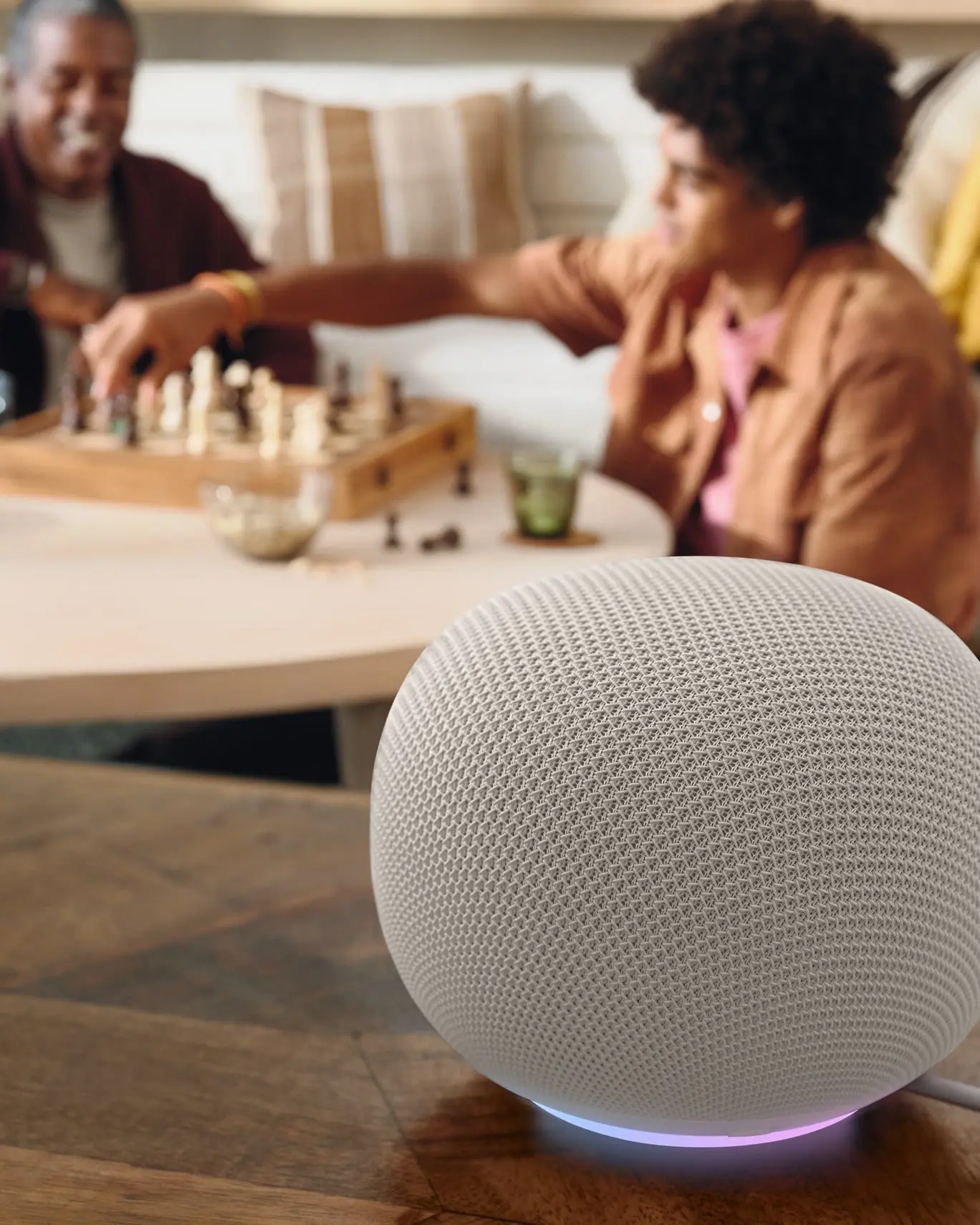
In addition, for the first time, there is a price tag attached to the office or home assistant. The free tier is sufficient for the basics, but for Gemini Live—the free-flowing conversation without a command structure—and the smartest camera features, you need Google Home Premium starting from 10 euros incl. VAT per month. The six included months soften the introduction, but the direction is clear: Google now sees your living room as a subscription channel.
Good to know: those who are satisfied with their existing Nest Audio do not need to upgrade for Gemini, as the assistant also runs largely on older devices.
Conclusion
The Google Home Speaker is the logical entry point for anyone building a smart home or office around Google today: neat hardware, a fair price, and an assistant that understands you in natural language instead of predefined sentences. The frustrations of the late Assistant years largely disappear with it.
At the same time, Gemini still struggles with growing pains in exactly those tasks that a smart home or smart office relies on, and the subscription course deserves a critical look. Buying is fine, especially at this price, but expect the device to only fully become what Google promises today after a few software updates.
Pros
- • Natural, smooth conversations with Gemini
- • Decent sound quality for 120 euros
- • Physical microphone switch and handy LED ring
- • Stereo and surround options with the Google TV Streamer
Cons
- • Modest bass reproduction
- • Fixed power cable
- • Most important extras are behind a subscription
- • Gemini not yet flawless in smart home basics