


Apple launches new displays for the first time in a long while with the Studio Display and Studio Display XDR. High resolution and solid peak brightness are central, although the entry-level model is primarily a reissue of what already existed.
Apple launches two new displays: the Studio Display and its big brother, the Studio Display XDR. The launch of the monitors comes as a surprise: it has been years since Apple gave its display lineup any love. The new Apple Studio Display succeeds the 2022 Studio Display. The Studio Display XDR, in turn, replaces the Pro Display XDR from 2019.
Studio Display (2026)
The new Studio Display has a 27-inch screen diagonal with a 5K resolution (5,120 x 2,880 pixels). The brightness is 600 nits, and the refresh rate is 60 Hz. The device supports the P3 color gamut. Apple includes a built-in 12 MP camera, as well as six speakers. Furthermore, the screen serves as a dock, featuring four USB-C ports, two of which support Thunderbolt 5. Charging is possible via one port, up to 96 watts.
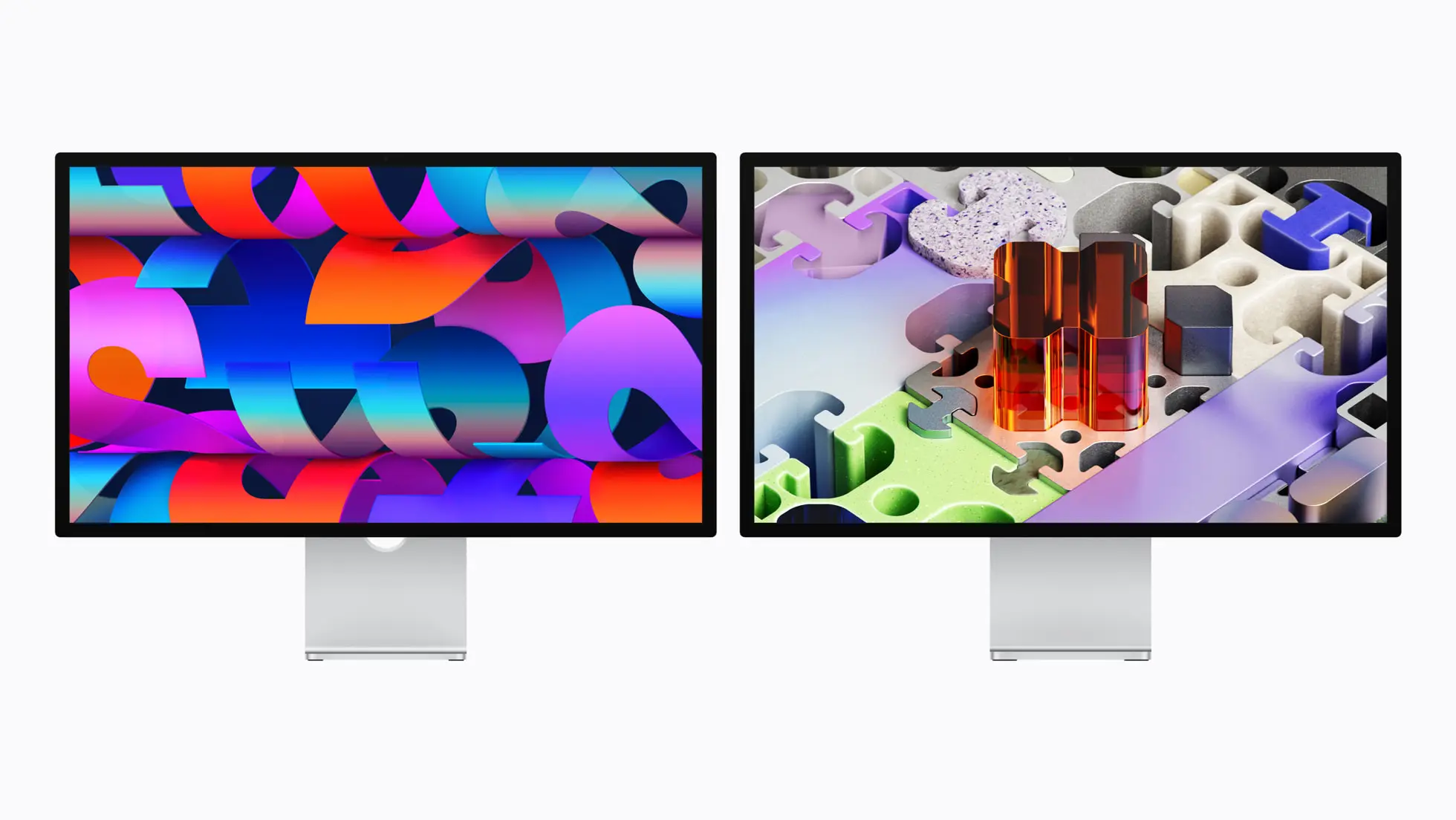
The starting price for this display is 1,699 euros incl. VAT, but that price doesn’t buy you ergonomics. In true tradition, Apple goes all out on margins for additional options that are standard with other manufacturers. A version of the screen that is height-adjustable costs a significant 400 euros more (2,099 euros). If you also want glass with an anti-reflective coating, that adds another 300 euros.
Studio Display XDR
The Studio Display XDR has similar base specifications: again, the monitor features a 27-inch screen diagonal with a 5K resolution and a 120 Hz refresh rate. However, behind this panel lies mini-LED, which enables HDR with 2,304 dimming zones. In SDR, brightness is limited to a still-bright 1,000 nits, while in HDR mode, the display reaches a peak brightness of 2,000 nits. This display also supports more colors with P3 and Adobe RGB.
The connections are the same: at the back, you will find two USB-C ports (10 Gbps) and two Thunderbolt 5 ports (120 Gbps). This screen supports charging at 140 watts.
The starting price for this display is a relatively market-competitive 3,499 euros incl. VAT, justifiable if the calibration is up to the level that graphics professionals expect. Apple shows its kinder side here, including a height-adjustable ergonomic stand for that price. However, the anti-reflective coating still costs 300 dollars.
No major progress
It is notable that the screens are not necessarily an improvement over their older predecessors. For instance, both the resolution and the size have decreased. After all, the Pro Display XDR featured a 6K resolution across 32 inches. Although the new lineup now consists of two screens, the options remain limited and primarily on the compact side. Especially for professional users, 27 inches is not particularly generous.
The difference between the standard Studio Display and the previous generation is also very small. The connections have been improved, but the size, resolution, brightness, and refresh rate remain virtually the same. That makes 2,099 euros for a version with a height-adjustable screen (a must for anyone who takes ergonomics somewhat seriously) a very ambitious price point.