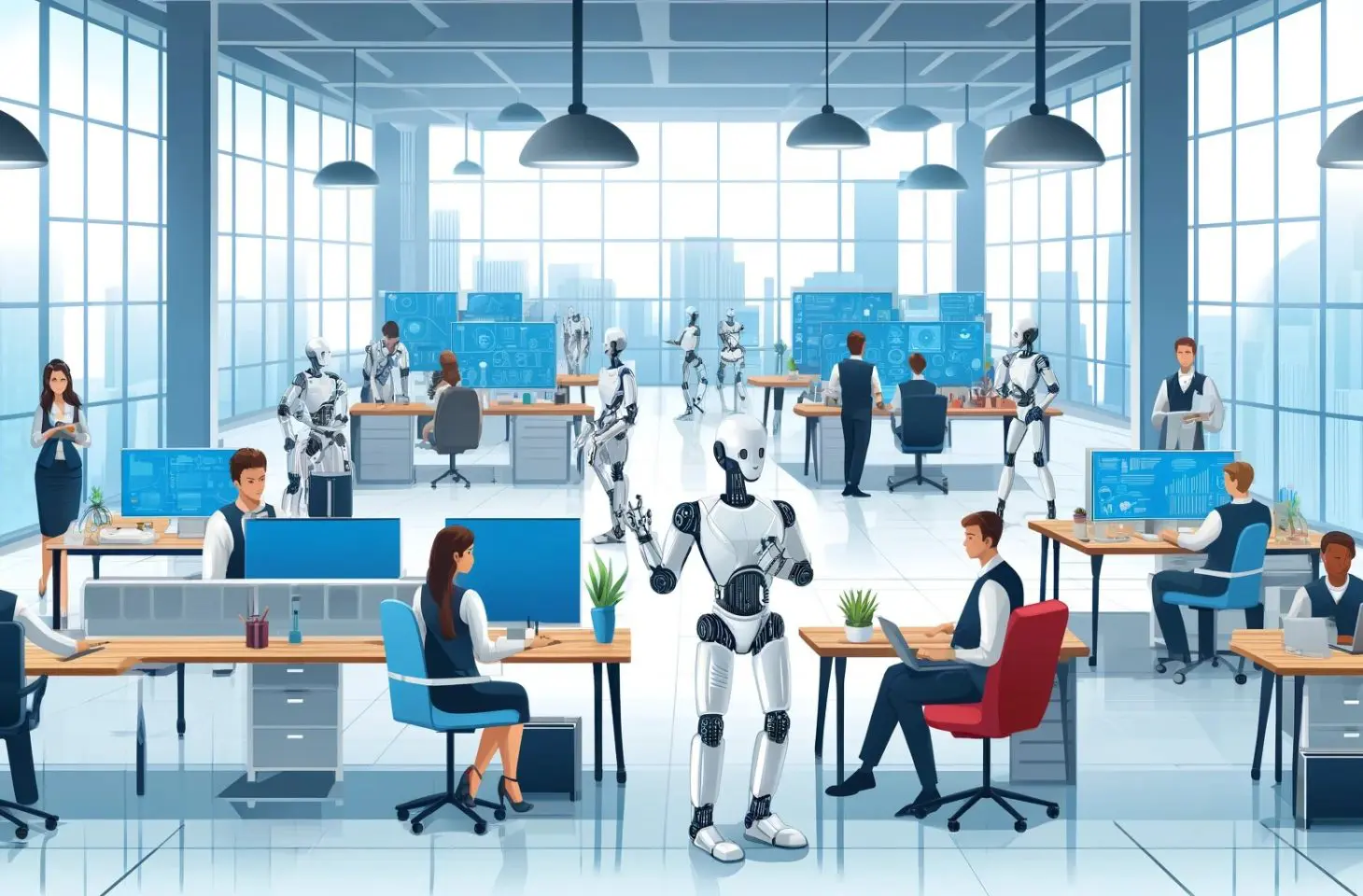
A new international study by DeepL shows that 69 percent of surveyed business leaders expect AI agents to profoundly change their processes by 2026.
In September, DeepL commissioned a survey of 5,000 business leaders in the US, UK, France, Germany, and Japan. Respondents indicate that organizations are preparing for the large-scale deployment of autonomous AI agents to automate knowledge work, increase productivity, and restructure the workforce. Language and speech AI are thereby shifting from standalone tools to an integral part of the IT infrastructure.
AI agents
According to the study, 44 percent of respondents expect agentic AI to significantly transform their organization by 2026. Another 25 percent state that this transformation is already underway. Only 7 percent believe that AI agents will not change their processes.
According to respondents, confidence in AI agents primarily depends on three factors: demonstrable ROI and efficiency (22%), employee adaptability (18%), and the organization’s willingness to embrace AI (also 18%).
read also
DeepL Introduces its Own AI Assistant and Customization Hub
At the same time, businesses face clear obstacles. The main obstacles are costs (16%), staff readiness (13%), and the technological maturity of solutions (12%).
AI in general is gaining a central role in growth plans. 67 percent expect a higher return on AI initiatives this year. 52 percent believe that AI will contribute more to growth next year than other technologies. More than half (51%) expect AI to create more new jobs than it eliminates existing ones. 52 percent indicate that AI skills will be necessary for most new employees.
Language and Speech AI
According to the surveyed companies, language and speech AI are becoming more important for international processes. Nearly two-thirds (64%) plan additional investments in language AI by 2026. The United Kingdom stands out with 76 percent, followed by Germany (74%), the US (67%), and France (65%).
read also
DeepL Tests Autonomous AI Agent for Business Workflows
According to the study, real-time speech translation is growing into a core function. Today, 32 percent consider this technology essential, but by 2026, that share will rise to 54 percent.