

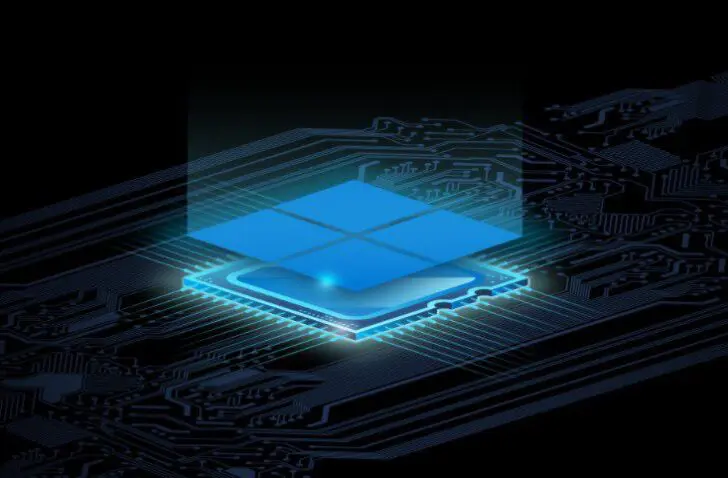
Manufacturers are not exactly eager to integrate Pluton into their laptops. As such, the security chip that Microsoft developed with Intel, AMD and Qualcomm exists mostly on paper.
Dell has no plans to embrace Pluton for the bulk of its commercial portfolio. That’s what The Register knows. HP also has no Pluton chips on the schedule at this time. Lenovo does integrate the security chip that Microsoft built with Intel, AMD and Qualcomm on a limited basis. Certain business ThinkPads with AMD Ryzen 6000 processor have Pluton on board, although the functionality is not enabled by default.
Not in Intel
AMD does offer Pluton optionally in its latest processors. That’s more than can be said of Intel. The twelfth-generation Core chips(Alder Lake) do not have Pluton on board, even though the chip maker developed with it. All this shows very moderate enthusiasm for Microsoft’s security solution.
Pluton is a security chip that integrates with the processor but functions completely separately. The chiplet thus serves as an isolated coprocessor that, among other things, can play the role of a TPM 2.0 module but also stores sensitive information such as security keys. Pluton can further monitor what is happening on the rest of the system from its isolated position, and sound an alarm when it sees suspicious practices.
Minuses
In itself, Pluton is a good idea, but the concept has downsides. First, it belongs to Microsoft. Pluton talks to Microsoft to roll out firmware updates via the cloud, among other things. The updates are a good idea, but both manufacturers and customers are not always keen on that communication with Microsoft.
Furthermore, with Pluton, Microsoft is shooting under the pigeons of its partners. HP, for example, puts in its laptops a fully isolated security processor that performs a similar set of tasks. It is not on the CPU die, which brings an extra layer of security. Moreover, a manufacturer can differentiate itself from the competition with that proprietary solution. The unitary Pluton makes it harder for HP, Dell and Lenovo to claim they have the best solution in-house.
Choice is essential
For its part, Microsoft expects adoption to accelerate in the future. The ability to turn Pluton on and off seems important in this regard. A standardized security module that transcends laptop brands certainly has its advantages in many cases. If you don’t have the choice to disable the chiplet, then you can quickly see Pluton as an unsolicited chain to Microsoft, which already has more than enough in its pocket with Windows.