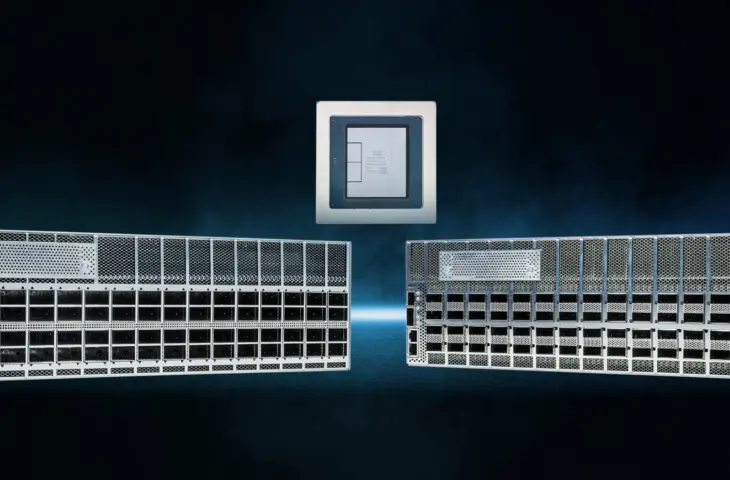
Cisco introduces the 8223 data center router, built around the new Silicon One P200 chip. The system is designed to help companies efficiently distribute AI workloads across multiple data centers.
Cisco is launching a new router system for data centers: Cisco 8223. The Cisco 8223 is designed for AI traffic between multiple data centers. The router offers 51.2 terabits per second of capacity and is built around the Silicon One P200 chip. According to Cisco, the device is specifically intended for so-called scale-across architectures, where AI workloads are spread across multiple physical locations.
One Cluster, Multiple Data Centers
That vision isn’t new and is driven in part by Nvidia. This summer, the AI specialist introduced Nvidia Spectrum-XGS Ethernet, enabling multiple data centers to form a single AI cluster.
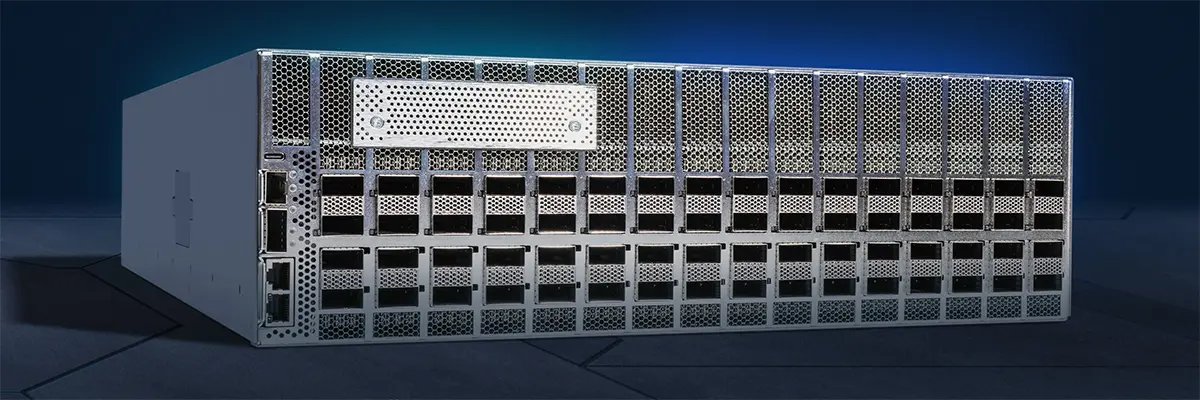
According to Cisco, the 8223 router is already being tested by several hyperscalers. The device is meant to offer relief especially for data centers that can no longer scale within a single location. Today, AI systems run into constraints around space, power consumption, and network infrastructure. With the new router, Cisco is targeting customers who want to expand their AI infrastructure to multiple locations without performance loss or added complexity.
Silicon one P200
The router combines high bandwidth with programmable networking technology. The Silicon One P200 chip in the system supports a total network scale of up to 3 exabits per second. With 64 ports of 800 Gbit/s, the system can process more than 20 billion data packets per second. Cisco emphasizes that the 8223 router is equipped with deep buffers to absorb spikes in AI traffic and avoid network latency.

The router also supports coherent optical links up to 1,000 kilometers, which is needed to set up large-scale AI applications spread across multiple data centers. Security is integrated via line-rate encryption with algorithms resistant to quantum computers, along with tools for monitoring and integration with Cisco’s own observability platforms.
The 8223 is initially delivered for open-source SONiC environments, with support for IOS XR coming in the near future. The underlying P200 chip will also be available for other platforms, including modular routers and systems within the Nexus range. This gives companies the option to build out their network architecture consistently.