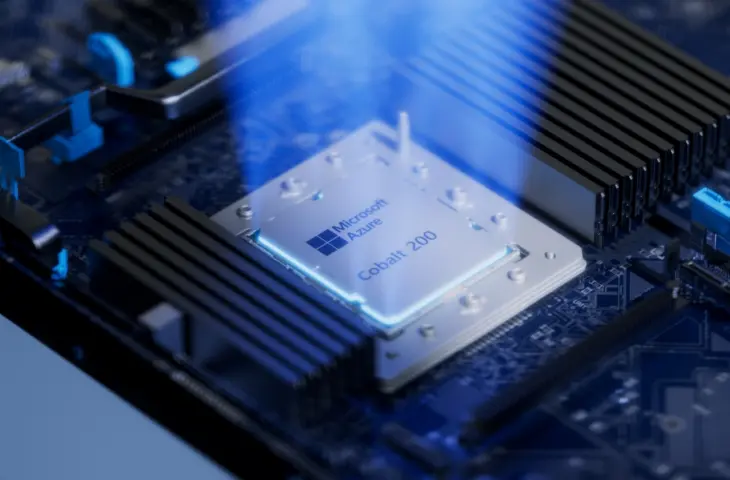
Microsoft showcases the second generation of homegrown Cobalt chips at Ignite. The chips are optimized to run Azure workloads as efficiently as possible.
Microsoft unveils the Azure Cobalt 200: a new generation of Arm processors for cloud-native workloads. Cobalt 200 is the spiritual successor to the first generation that launched in 2023 and was developed by Microsoft for Azure workloads. The chip promises up to 50 percent better performance than its predecessor and focuses on efficiency, security, and support for diverse cloud applications, Microsoft writes in a blog.
More Efficient Cloud Performance
Microsoft presents the Cobalt 200 as the successor to the Cobalt 100, which has been available since 2024 in 32 Azure regions, including West Europe. According to Microsoft, the new chip was designed based on insights from real customer workloads in Azure and was extensively tested with 140 benchmark variants that reflect typical usage of databases, web servers, storage, and network activities.
The Cobalt 200 is based on the Arm Neoverse CSS V3 architecture and contains 132 cores. Each core has 3 MB L2 cache, with a total of 192 MB L3 cache. Microsoft strongly emphasizes energy efficiency: each core can be individually controlled thanks to dynamic voltage and frequency scaling. The chip is manufactured on TSMC’s 3-nanometer process.
A notable design choice is the focus on universal computing tasks such as compression, decompression, and encryption. Microsoft has integrated dedicated hardware accelerators into the SoC architecture for this purpose, which should result in lower CPU load and thus lower costs. For example, Azure SQL would benefit from more efficient use of computing capacity by offloading encryption tasks.
Enhanced Security
Cobalt 200 features a custom memory controller that enables memory encryption by default, without noticeable performance loss. The chip also supports Arm’s confidential computing architecture, which isolates virtual machine memory from the operating system and hypervisor.
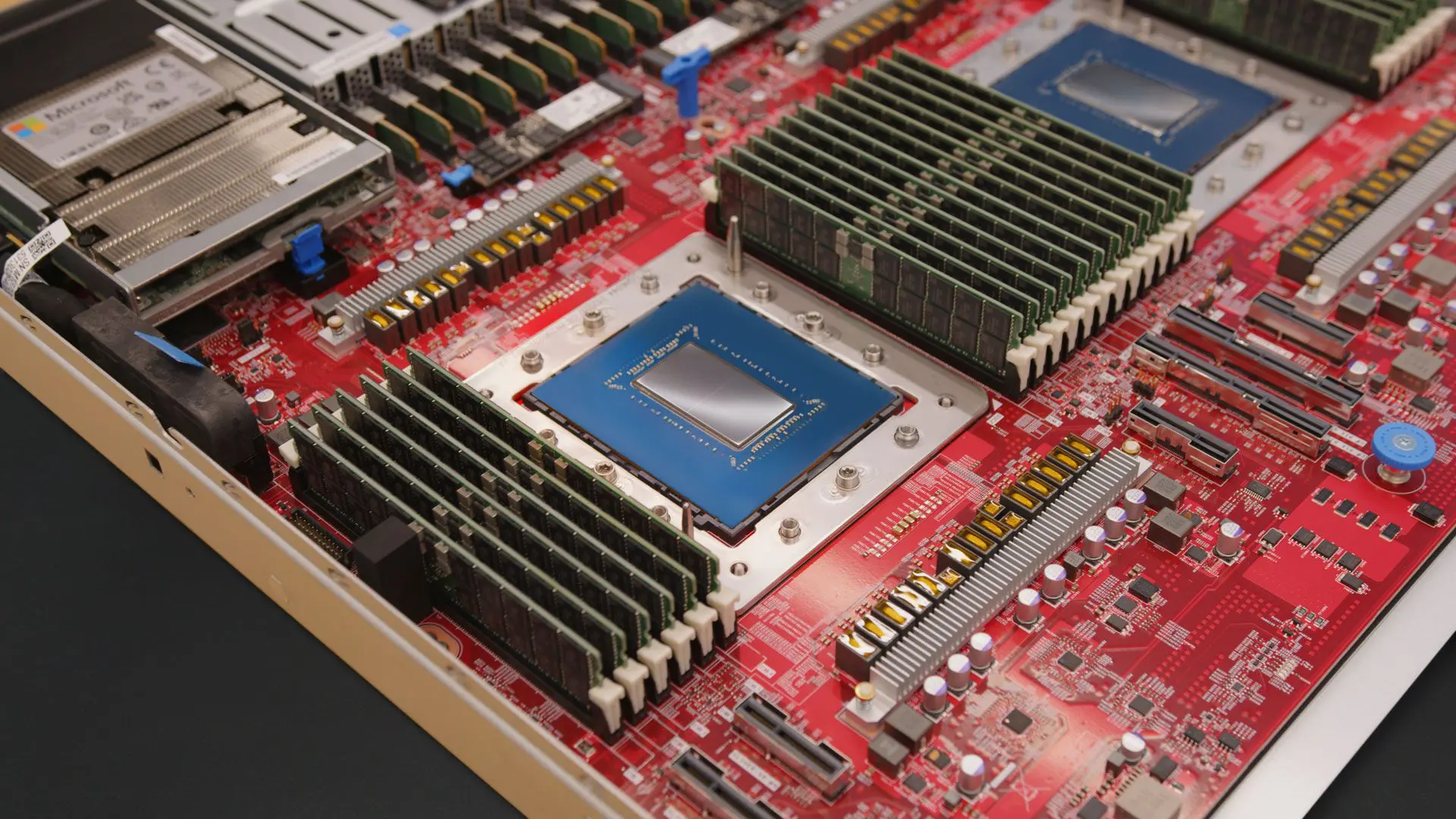
In addition to the CPU itself, Microsoft has also worked on the edge infrastructure. The Cobalt 200 servers are equipped with Azure Boost, which accelerates network and storage traffic by offloading these tasks to custom hardware. An integrated security module works together with Azure Key Vault for managing encryption keys.
The first servers with Cobalt 200 are already running in Microsoft’s data centers for internal use. A broader rollout to customers is planned for 2026. With its own chips, Microsoft aims to reduce its dependence on external suppliers and fully control its Azure data centers.