


Some people can no longer imagine a workday without their headphones or earbuds. But what consequences does this have for your hearing? Audiologist Hannah Keppler (Ghent University and UZ Gent) warns that volume, listening time, and isolation primarily determine whether it remains safe.
Whether you work in an office or spend all day in a factory, headphones have become commonplace in almost every work environment. And yet, we often don’t think enough about the consequences for our ears of enduring (loud) sound all day. We asked Hannah Keppler, professor of audiology at Ghent University, for an explanation.
According to Keppler, headphones are not automatically problematic, but they do require conscious use. “We actually consider anything that can cause damage to the auditory system as noise,” she says. This can include music or hours of conversation via a headset. The damage rarely comes from a single meeting or one workday, but from the cumulative exposure.
Hearing damage: volume and duration
According to Keppler, hearing damage from headphone use depends mainly on two factors: how loudly someone listens and for how long. “It is always a combination of two things: the volume you listen to and the duration,” she says. Additionally, the workday does not stand alone. Those who wear a headset for hours during the day, listen to music with earbuds in the evening, and go to concerts or sporting events on the weekend, add all that sound exposure together.
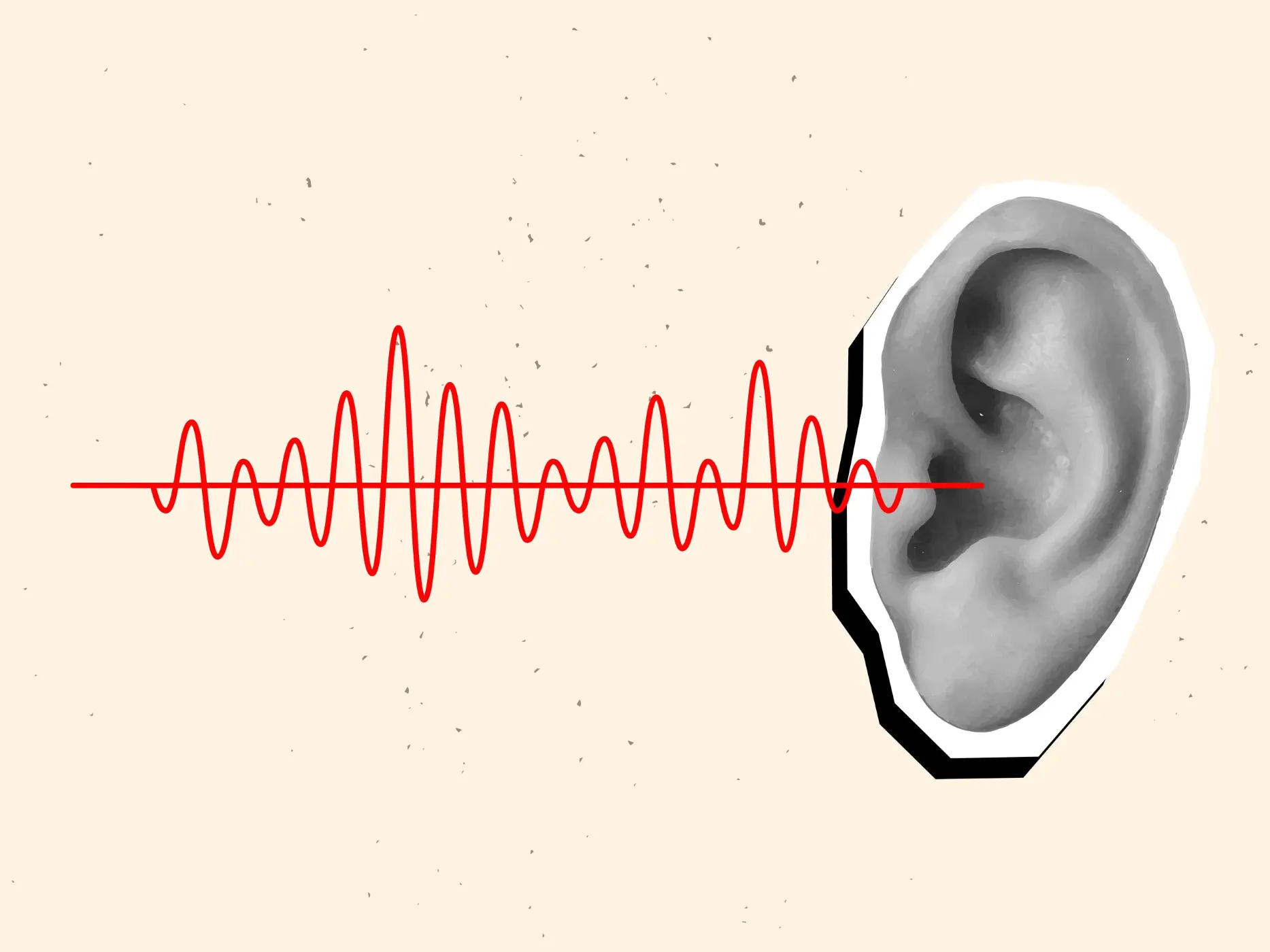
The first signs are not always dramatic. People often first notice that understanding speech becomes more difficult in noisy environments, such as in a restaurant or at a party. “You hear it, but you don’t quite understand it anymore,” says Keppler. This can be accompanied by tinnitus or an increased sensitivity to sounds. With tinnitus, the brain reacts to changes in how sound enters. With sound sensitivity, the internal volume control becomes, as it were, misadjusted.
The 60-60 rule: a simple rule of thumb for safe listening
For employees who work a lot with headphones, the 60-60 rule remains a useful baseline. It states that you listen for sixty minutes at a maximum of sixty percent of the volume setting. After that, it’s best to take a break. “The intention after those sixty minutes is to take at least a short break, leave the ears open for a while, and let other sounds in,” says Keppler. This is especially relevant for people who are in meetings almost all day.
The 60-60 rule states that you should listen for no more than sixty minutes at a maximum of sixty percent of the volume setting.
Many devices now warn when the volume has been (too) high for a long time. That helps, but it doesn’t replace healthy behavior. Keppler emphasizes that the intention is not to remain continuously isolated from morning to night. Regular interruptions give the auditory system rest and limit listening fatigue. This fatigue is often underestimated. “You are, as it were, working twice as hard,” Keppler says of people who have to put in a lot of effort to follow conversations.
Quality and isolation of headphones
Not every headphone has the same effect on listening behavior. According to Keppler, the quality of the system plays a major role. “The better the quality of your headphones, the less loudly you often have to set the volume to listen to music well or follow conversations properly.” A poor-sounding headset more quickly invites you to turn up the volume. Microphone quality also matters, because poor speech in online meetings requires more listening effort from colleagues.
Isolation works both ways. Over-ear headphones often block ambient noise better than earbuds, allowing the volume to remain lower. Earbuds, on the other hand, are closer to the eardrum. Keppler notes that larger headphones can also produce higher sound pressure levels. The type is therefore not the only factor: comfort and use play a role. “It’s quite individual where your preference lies,” she says. Those who choose a system that fits well and provides sufficient isolation are less likely to compensate with extra volume.
Noise cancellation helps (in moderation)
Noise cancellation can be useful in open-plan offices, trains, or other environments with a lot of background noise. Because external sounds are partially eliminated, music or speech doesn’t need to be as loud. For many knowledge workers, this is a practical advantage. Keppler therefore certainly sees a place for noise-canceling headphones, provided they are used for safer and quieter listening. Especially in hybrid work environments, good headphones can improve intelligibility while simultaneously limiting sound exposure.
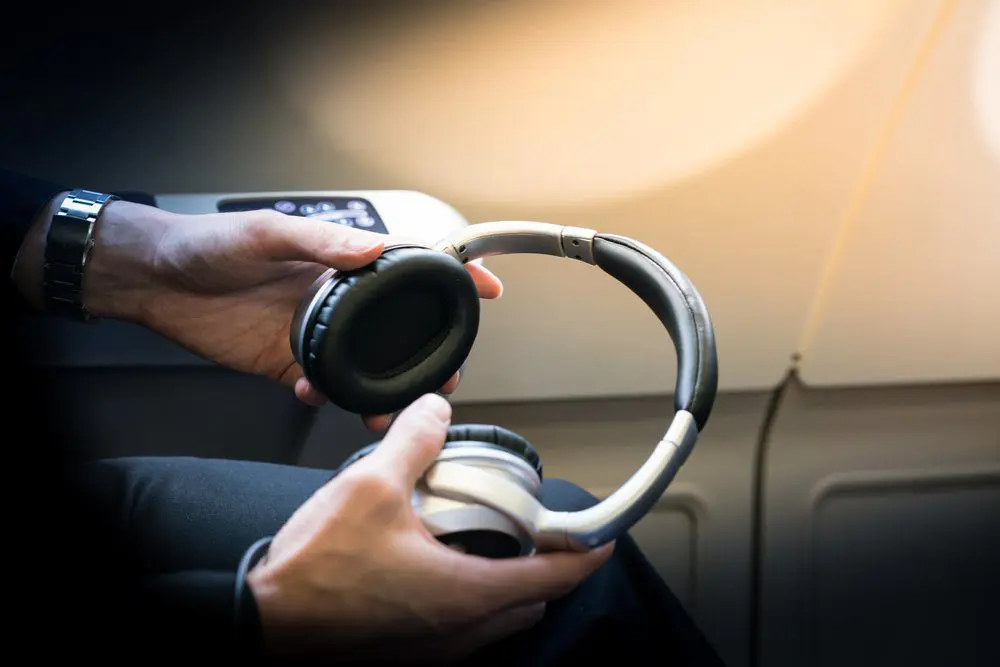
However, Keppler warns against another use: turning on noise cancellation without music or other sound, purely to hear nothing all day. “If you shut yourself off all day from all the sounds present in your environment, you may eventually find it harder to tolerate those sounds,” she says. This can encourage sound sensitivity. The solution is therefore not to constantly shield your hearing, but to handle busy sound environments in a controlled manner.
From research to tinnitus care
Keppler combines research at Ghent University with clinical work at UZ Gent. She researches noise-induced hearing loss, prevention, diagnostics, and ways to better map hearing complaints. At UZ Gent, Keppler mainly sees patients with tinnitus and hyperacusis, or oversensitivity to sound. This guidance takes place in a team with ear, nose, and throat doctors, audiologists, a psychologist, and physiotherapists.
This shows how broadly hearing complaints can have an impact. Listening fatigue is a good example of this. People can sometimes still understand others, but they need more and more concentration. “At the end of the day, I’m actually completely exhausted and I need time to recuperate,” Keppler regularly hears.
The headphones are here to stay, but not without breaks
Headphones have become a necessary tool for many employees. The risk is not in the device itself, but in prolonged use, too high a volume, and too few recovery moments. The 60-60 rule therefore remains a simple guideline: do not listen for longer than sixty minutes at a maximum of sixty percent of the volume without a break. Those who also choose a decent system with good isolation can often work at a lower volume.
Employers also have a responsibility. Good headsets, quiet meeting rooms, and attention to listening fatigue are part of a healthy digital workplace. Keppler does not see a simple cause-and-effect relationship since the rise of working from home, but rather a broader trend in which headphones are used more often and for longer. The message remains down-to-earth: use technology to work better, but regularly give your ears silence and normal ambient sounds.