


Just months after its launch, BirdyChat is already changing its name. According to the creators, the business communication tool is gaining traction, particularly in the Netherlands.
How is Balsio doing? Or perhaps more importantly, before we take stock: what is Balsio? Because although the service has been around for five months now, it likely won’t ring many bells.
BirdyChat: WhatsApp for the professional
Let’s rewind to early May. That was when the European launch of BirdyChat took place. The application, built in Latvia, aims to offer an alternative to WhatsApp communication, designed specifically for business users.
Teams and Slack are most relevant for internal communication. For external messaging, email is a good solution, but email is not a true alternative to the chat messages of those aforementioned services. As a result, professional contacts often message each other via SMS or Meta’s WhatsApp.
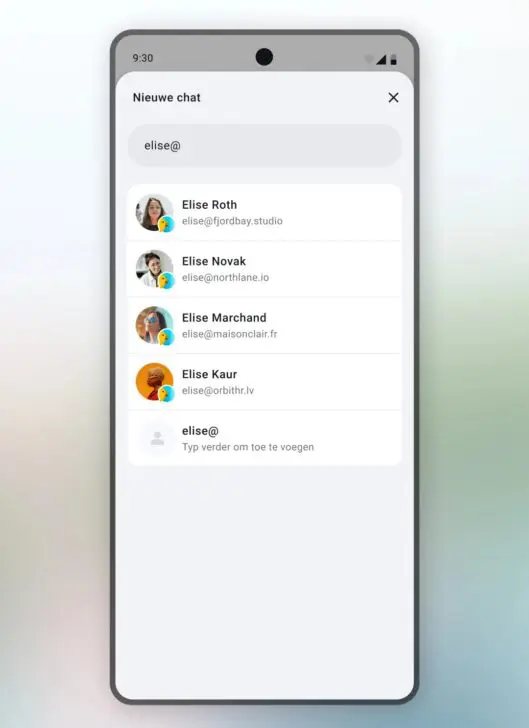
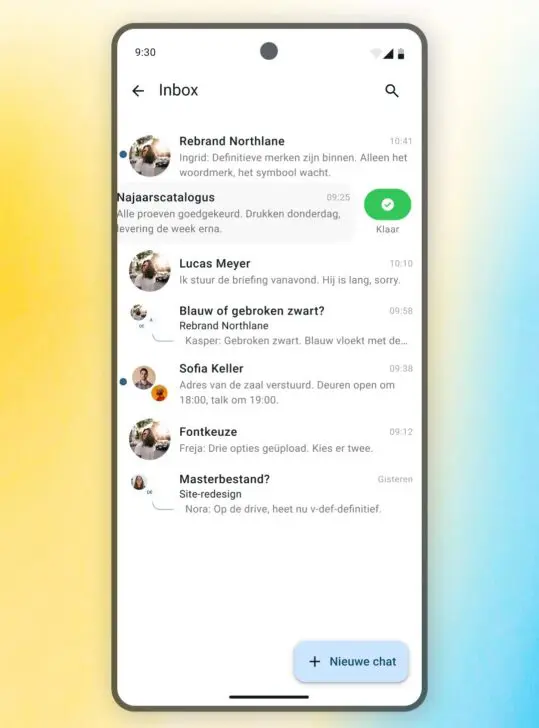
The creators of BirdyChat noted that a service like WhatsApp is not actually suitable for this. “In the absence of alternatives, work has increasingly intruded into the personal chat apps we used to use only for friends and family. BirdyChat offers a dedicated alternative where work-related conversations can take place,” says co-founder Rolands Mesters.
Compatible
That is how BirdyChat was born. The tool maintains the speed and ease of use of chat apps like WhatsApp, with mechanisms relevant for professional use. Think of a business email address as the anchor for the account, rather than a personal phone number. There are also additional ways to group conversations and close subjects. Finally, the app ensures that private conversations are kept separate from business communication.
Because WhatsApp is so popular, and the whole world won’t suddenly switch to an alternative, the app was immediately compatible with WhatsApp at launch. That was a first.
Bye bye birdy
Five months later, the name BirdyChat has disappeared. The app remains the same, as does the logo, but from now on, call it Balsio. Why Balsio? “We realized there are too many ‘bird’ applications, and we wanted something more unique,” Mesters explains.
He indicates he is satisfied with the adoption of what is now called Balsio. In the Netherlands especially, there is significant interest in a business alternative to WhatsApp. Fifteen percent of new users since the May launch came from the Netherlands.
Belgium and the Netherlands in the lead
Percentages, of course, say little about actual usage. Mesters is not inclined to share more detailed user figures. He does mention, however, that the most active users, measured by message volume, come from Belgium and the Netherlands.
We realized there are too many ‘bird’ applications, and we wanted something more unique.
Rolands Mesters, co-founder of Balsio
To get an idea of the actual scale of usage, we can look at the pre-launch waitlist. Just under 60,000 interested parties were on it at the time. On Android, we see more than 10,000 downloads. Apple does not share this data for iOS in its store.
The DMA is doing its job
It is striking that approximately thirty percent of all Balsio messages were sent to WhatsApp contacts. In itself, that is a strong argument for WhatsApp’s interoperability.
As a reminder, that interoperability didn’t happen by chance. Meta was forced into it by the European Union under the Digital Markets Act. For a small new European player like Balsio, that DMA obligation has already had a measurable impact.
Major challenge
Making a dent in established applications remains difficult. Balsio is a rare alternative that concretely takes the fight to WhatsApp. With growing awareness around sovereignty, that is a significant asset.
On the other hand, Balsio not only has to battle stubborn habits, it also has to build brand awareness. The fact that Balsio is a more distinctive name than BirdyChat may be a good thing. Unfortunately, the name change comes so soon after the initial launch, suggesting that perhaps a bit more reflection on the brand strategy was needed back in May.
Balsio has defined an existing problem: professional communication filtering into the private sphere without a professional framework. The solution addresses this in the most important ways, and with WhatsApp compatibility, the barrier to entry is low. Will that be enough to grow into a widely used tool?