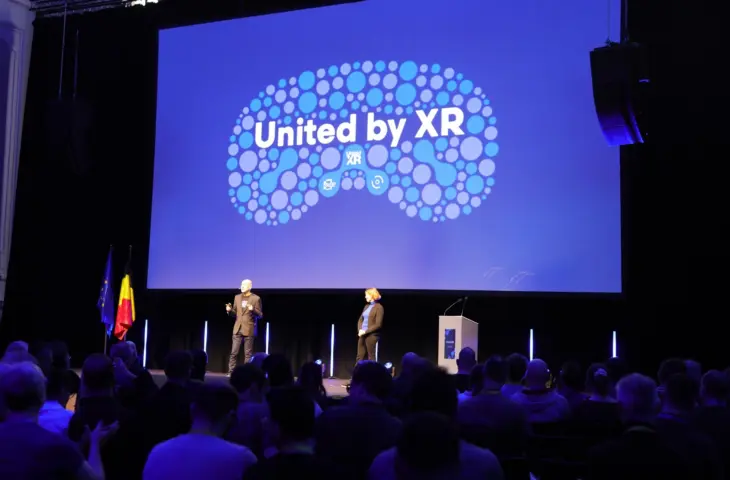
UnitedXR brings companies from various sectors together to get the most out of XR.
At the UnitedXR event in Brussels, you don’t have to believe in the future; you can simply experience it. Something is happening everywhere in the expo hall: people with VR glasses stand among people without them, trying to explain to each other what they have just experienced. “At this edition, we have more exhibitors than ever.” More than two thousand visitors and hundreds of speakers are present.
UnitedXR toont aan dat extended reality (XR), de verzamelnaam voor virtual reality (VR), mixed reality (MR) en augmented reality (AR), nog volop in ontwikkeling is. Deze bedrijven zijn er dagelijks mee bezig om de technologie nuttig in te zetten.
Europe versus the world
In a conversation with Alexandra Gérard, co-founder of UnitedXR, she elaborates on this ambitious idea. “For Europe, accessibility, openness, and human-centricity are essential,” she says. “Technology should not make life more complex.” The US mainly thinks in terms of scale and speed, while Europe focuses on impact and trust through various regulations. “That slows down adoption,” Gérard admits, “but it does ensure the European touch for which we are known.”
read also
When will XR finally go mainstream in Europe?
This European pride runs like a common thread through the event. The focus here is less on entertainment and more on training, healthcare, infrastructure, and education. “XR mainly works where the return on investment is clear,” says Gérard. “Where it saves time or reduces risks.” UnitedXR’s question is therefore not what XR can ultimately become, but when it will become mainstream.
AR as a safety layer
Part of the answer begins with heavy industry. TheiaXR does not present a futuristic interface, but a concrete application. In a real snowplow cabin connected to a virtual environment, augmented overlays appear during a snowstorm. Obstacles that you normally only see when it is too late become visible in advance.
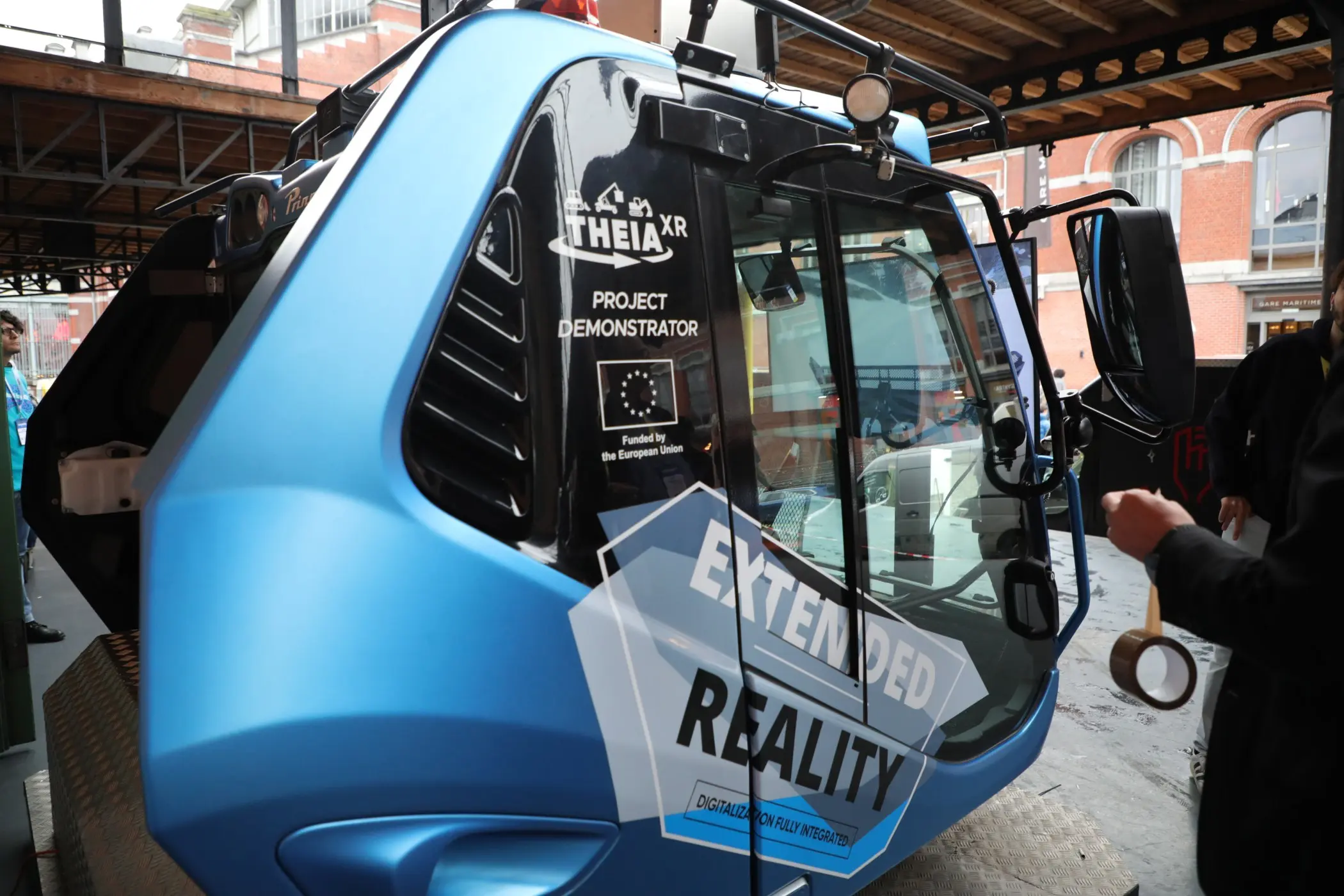
“We wanted to make the invisible visible,” says the project leader. These machines work both at night and in bad weather conditions, and in narrow or dangerous environments. “How do we ensure that an operator can work safely without endangering people, machines, or the environment?” In this demo, XR does not replace anything in terms of work experience, but rather works as an additional security layer.
Where mistakes cost lives
That logic returns in medical applications from Virtualisurg. We see simulations of eye and back surgery. In the VR eye surgery, we move through the eye and see the different layers. A 3D-printed precision instrument awaits us in the VR application to inject a medical fluid into an eyeball. In real time, the effect of the medication becomes clear. The haptic feedback feels eerily realistic because piercing the needle into the eye tissue is not self-evident. “The applications are also available in multiplayer: this way, a teacher can always be present to assess the student.”
“XR only becomes valuable when it replaces something that is scarce, expensive, or dangerous,” says the standholder during the demo. Students learn faster and remember better. They also don’t have to burden real patients. XR therefore serves as a training infrastructure here.
From watching to acting
The focus shifts from already thinking about applying XR to even more haptic technology in a next demo from SenseGlove. With haptic gloves, VR changes from something visual to something physical. We feel resistance, texture, and pressure. “You use the exact same hand movement as in real life,” the developer explains.
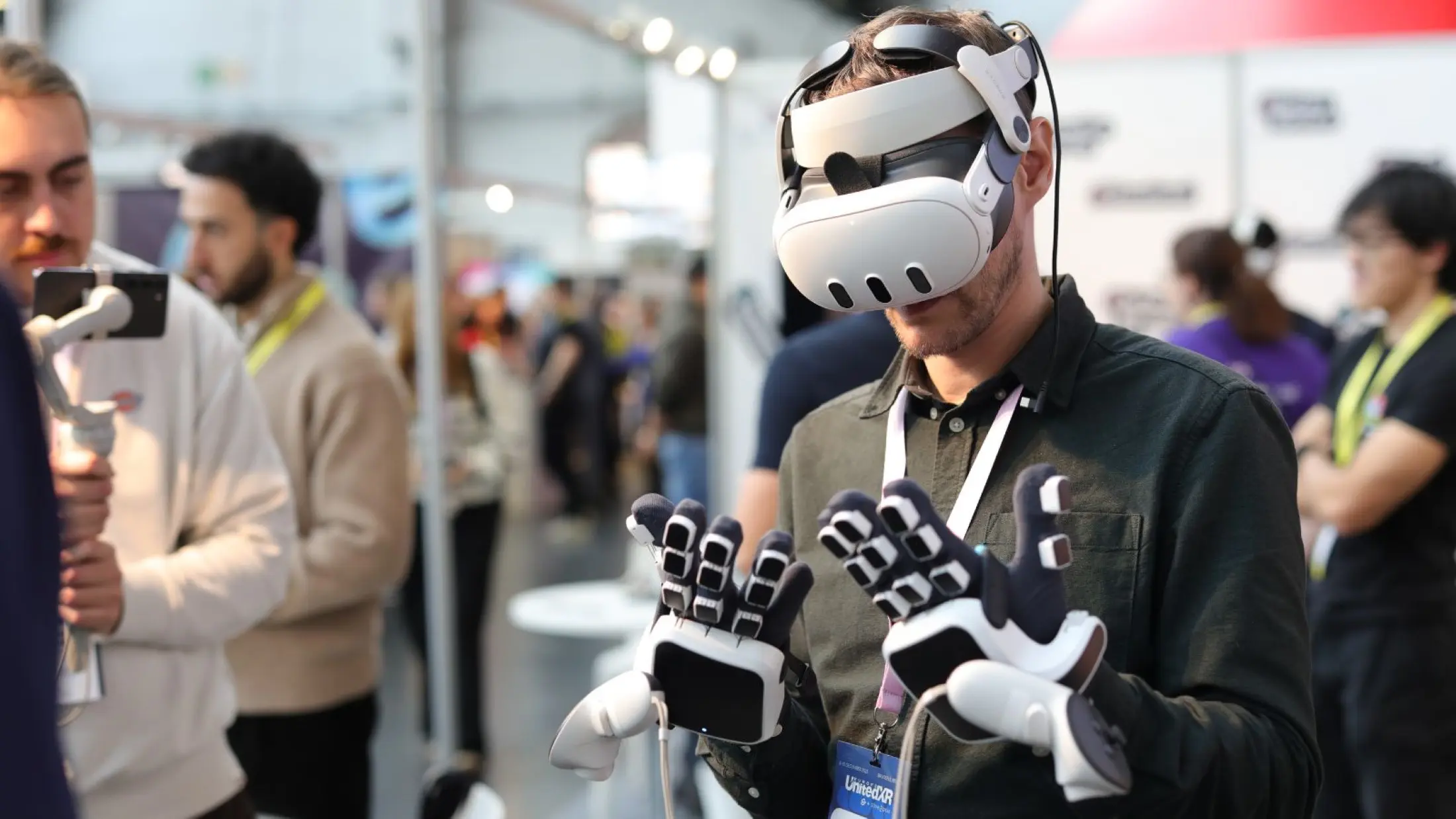
“We use three different types of haptics: when you pick up an object, you feel the weight in your hand. In addition, there is contextual awareness: if you push against a wall, it feels like it is ‘pushing back’. Finally, there is the tactile aspect, so you know, for example, when you are pushing a button.” This combination is paying off. Haptic training provides a better learning experience than working with controllers or hand tracking alone. You don’t simulate actions; you effectively perform them.
Goodbye nausea
At one booth, it becomes clear where XR gets stuck for many users. Neural Balance Innovation is tucked away on the exhibition floor, but it is the one that has stuck with us the most. “Between twenty and sixty percent of VR users experience nausea or disorientation,” says an NBI employee. “That is a stumbling block for XR.”
Neural Balance Innovation does not build content or headsets. They work on the balance system itself. A small Stim Box sends subtle electrodes to the inner ear. “Even without VR, we can evoke this feeling,” says Clarice. During the demo, users stand on a cushion while experiencing a rollercoaster ride, something that can also cause nausea in reality. None of the testers experienced nausea in VR. “We ensure that the body can participate without problems.”
Suddenly everything comes together. The applications can be as advanced as possible; without a pleasant feeling and balance, there are no long sessions. Short sessions with nausea as a result are far from ideal for any application: medical training, industrial applications, and even games. The tipping point of whether or not XR becomes mainstream is not about image quality or resolution, but about user-friendliness.
Augmented reality: without a cocoon
In that light, Snap takes on a different meaning. The Spectacles glasses do not isolate you from the world, but lay a digital layer over reality. Augmented reality, therefore: we see the space, the people around us, and hear murmuring. At the same time, our hands are recognized without controllers while we play a game. However, the glasses quickly feel heavy, and it is sometimes difficult to find where the interface is exactly projected in the space.
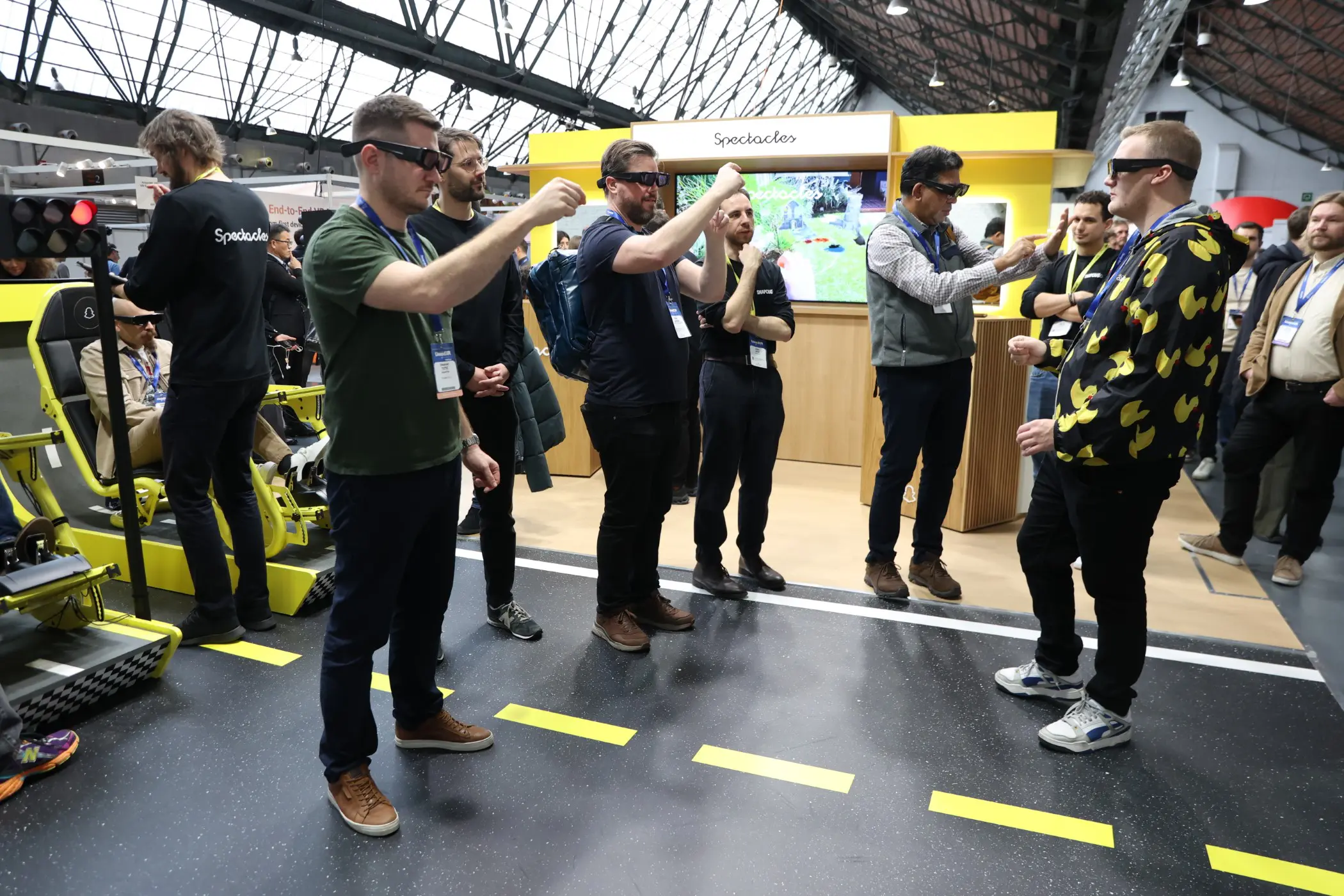
Snap consciously guards the entire stack: hardware, software, and developer tools. “That’s why we can build this AR platform.” Not to create a virtual world, but to understand context. An employee sums it up sharply: “XR is the ultimate interface format because it understands where you are, what you see, and what you do.”
With AR, you are not cut off from the outside world, and it, therefore, demands less from the body. Gérard: “I see people walking around in America with VR headsets in public places, but I don’t think that works in Europe.” Portability is, therefore, also an important aspect for the sector: do you opt for a full headset or AR glasses?
read also
The Metaverse in 2026 – virtually dead or is there still hope?
In full evolution
Ultimately, UnitedXR does not feel like a showcase of the future, but rather as a current state of affairs. We see which applications are being concretely developed, and that many companies still rely on the technology. “XR is not just about headsets,” says Gérard. “It’s about how people learn, work, and make decisions.” That becomes visible here: in a snowplow, in an operating room, in gloves, in a subtle signal to the balance system.
In some places, the technology is clearly no longer a gimmick, but has effectively become indispensable. It is time to roll out that technology broadly to all business layers.