

If your non-rugged laptop from HP or Lenovo can fall off your desk into a puddle and survive, what is the role of a rugged laptop like a Toughbook anymore?
Your business laptop or tablet will likely survive vibrations, a fall from your desk, or a knocked-over glass of water without any issues. That used to be different: barely ten years ago, anyone wanting a robust work device had to turn to so-called rugged devices. Specialists in that market include Getac, Dell Technologies, and Panasonic Connect, with Toughbook.
Entering its thirties
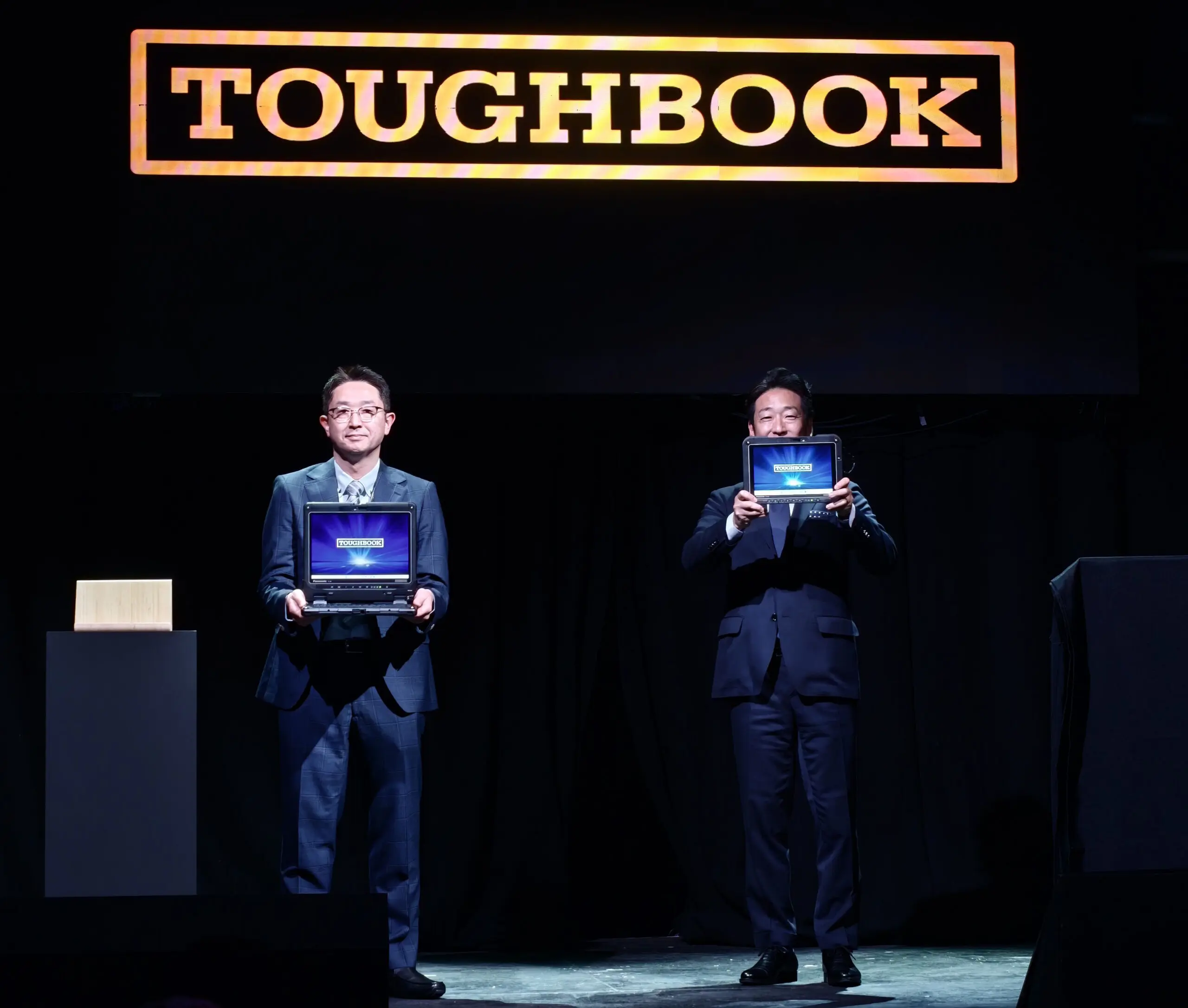
Toughbook is celebrating its thirtieth anniversary. That is not a given, notes Steven Vindevogel, Head of Panasonic Toughbook in Europe, during a festive event in London. “It is exceptional for a brand like Toughbook to remain active in the same market for so long. After all, much has changed in thirty years of technology.”
That is an understatement: in the last ten years alone, a seismic shift has occurred. In 2017, Panasonic still built its Toughbook portfolio on three pillars: fully rugged, semi rugged, and business rugged.
Three variations on one theme
Fully rugged included the most robust models in the laptop lineup. Semi rugged then comprised a mid-segment that could take a hit, but would not necessarily survive a fire, a sea storm, or a trip to Antarctica.
With business rugged, Panasonic targeted more business-oriented laptops for employees who traveled occasionally and wanted a device that could easily survive a business trip.
Fast forward to Panasonic Toughbook’s anniversary celebration today, and there is no longer any mention of that division. The company now only speaks of rugged and fully rugged. Semi and certainly business rugged have completely disappeared.
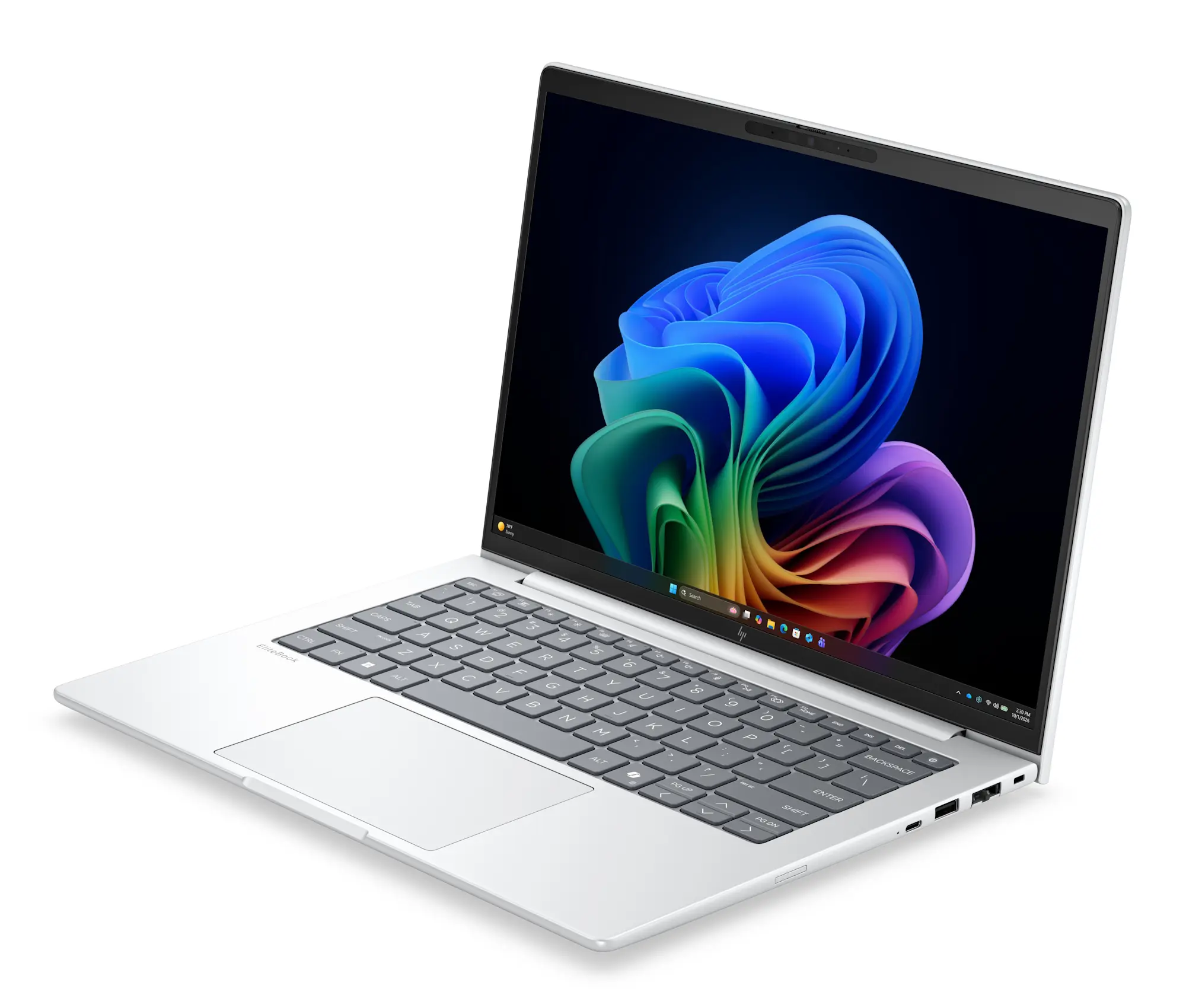
It makes sense: Panasonic can no longer differentiate itself in that market. Business laptops from HP, Dell, Lenovo, and others are all MIL-STD certified. They pass the vibration, temperature, and drop tests that made Toughbooks stand out a decade ago.
Overtaken by technology
Vindevogel acknowledges this. “In the past, we had technology that others did not. Today, that technology is the norm and widely available. It has become more accessible to create a device that reaches a certain threshold.”
This applies not only to the robustness associated with rugged devices. “Batteries in business devices have also become much better. Ten years ago, you had to search for a laptop that could last more than three hours, and Toughbook could make the difference. Today, many devices are more efficient and last a long time.”
The impact of MIL
The increase in quality standards for business devices, on one hand through MIL tests and on the other through better autonomy, has undeniably impacted Toughbook’s positioning. For sectors that previously considered business- or semi-rugged, a more classic tender—perhaps won by HP, Lenovo, or even Samsung—now suffices.
It has become more accessible to create a device that reaches a certain threshold.
Steven Vindevogel, Head of Panasonic Toughbook Europe
This is visible in the market: anyone taking the train today no longer sees a small Toughbook in the hands of the NMBS conductor, but a more classic smartphone.
Vision for the future
Panasonic Connect has therefore had to narrow the focus for Toughbook. Rugged is by no means dead, as we see during the anniversary celebration. On the contrary: Panasonic looks optimistically to the future, focusing primarily on more specialized sectors.
“We are looking even more at mission critical,” confirms Vindevogel. “In critical sectors, details are important. It’s about downtime where it has a major impact.”
Small improvements, big impact
He refers, for example, to the failure rate of Panasonic Connect Toughbooks, which is just over two percent annually. “Increase that to fifteen percent in a sector dealing with emergencies, for instance, and that is a substantial difference.”
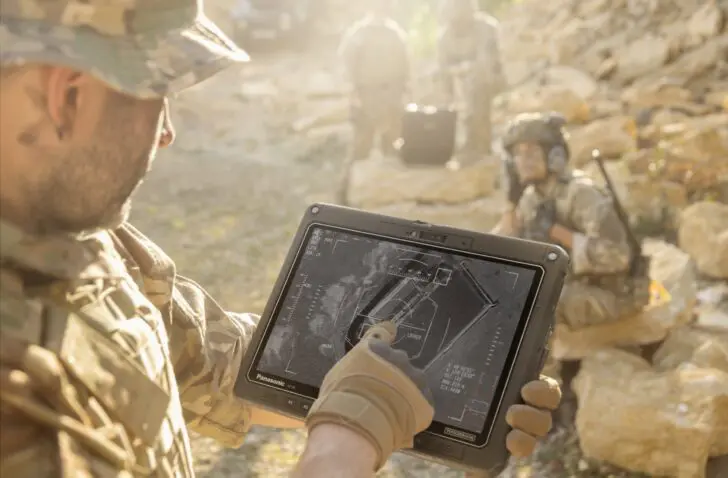
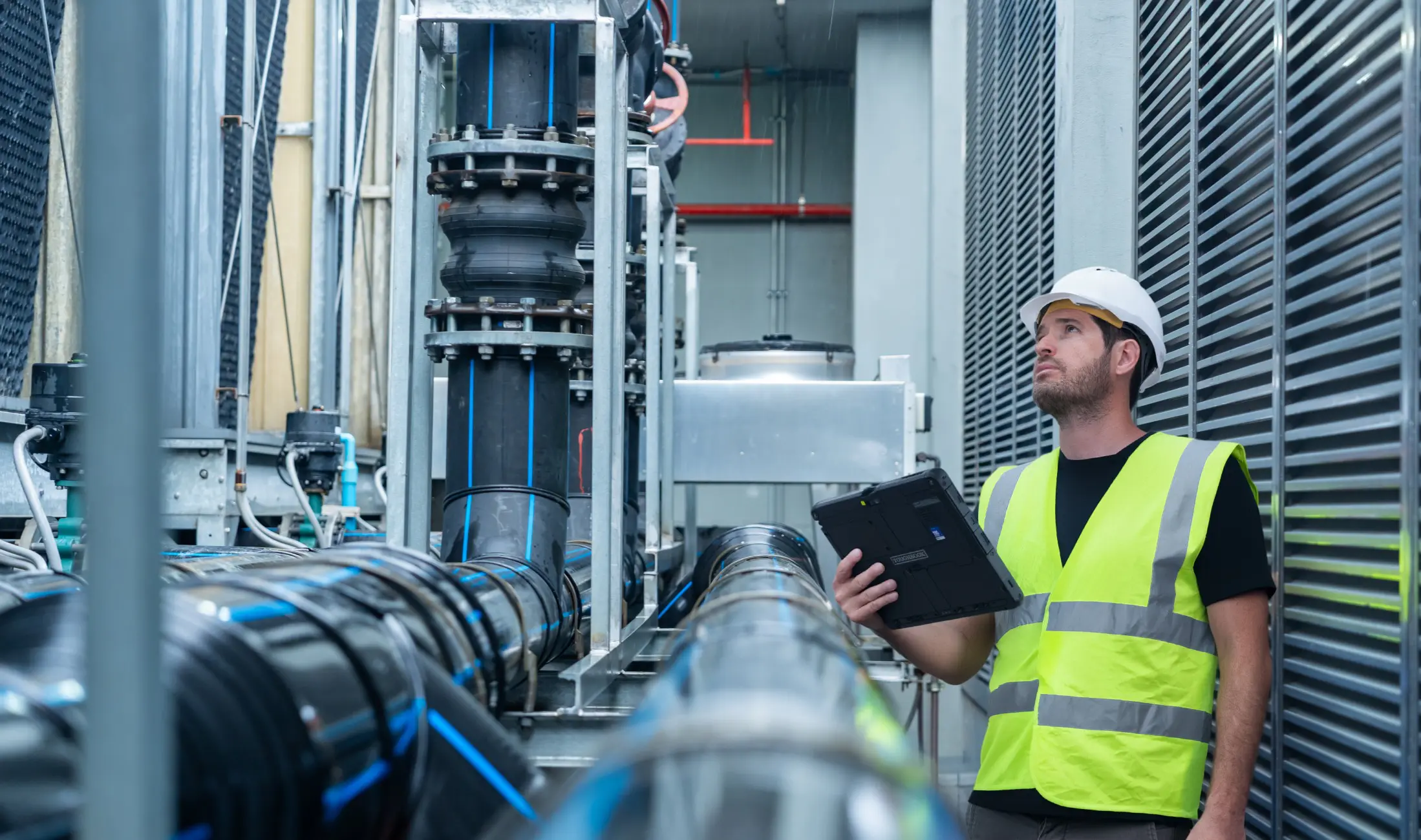
Consequently, Toughbook continues to perform well in classic sectors where work has a truly critical character. Think of defense, law enforcement, fire departments, hospitals, and utilities.
“We also comply with MIL and IP standards, of course,” Vindevogel continues, “but we always go further.” This is achieved through very concrete developments and design choices. For instance, we see fire-resistant partitions intended to prevent escalation in case of a battery cell problem, carefully laid cabling, internal space within the tablet or laptop for shock absorption and deformation, and much more. Panasonic laptops can therefore withstand more abuse and more extreme conditions.
Then there are the sectors where there is no debate about the need for specialized equipment. Factories where there is a risk of explosions, for example, can only operate with devices certified for that purpose, and that is not a market classic manufacturers really engage with.
Always connected
Finally, Vindevogel sees one more point where Panasonic definitely holds a trump card: connectivity. “For Toughbooks, we really think about antenna placement and cable routing to avoid interference. A Toughbook will thus remain connected to a mobile network that is already unreachable for other devices. That is a significant argument for anyone looking for mobile devices, regardless of the sector.”
Regardless, there is no point in hyping the capabilities of truly rugged devices to a customer who actually has enough with a classic business laptop. “Overselling doesn’t work,” Vindevogel knows. “It’s not a problem that the market is evolving; it just means we have to shift our focus.”
More than just a laptop vendor
Furthermore, the way the market has evolved means that ratings and hard specification lists have become less important. “Toughbook has evolved,” says Shawn Aoki, Global Factory Director and VP, on stage. “It’s less about specifications and more about peace of mind and the trust organizations have that their mission will keep running.”

Like other manufacturers, Panasonic Connect no longer positions itself with Toughbook as a hardware manufacturer, but rather as a complete service provider. We hear the same story from HP, Lenovo, and Dell, who claim the mission of relieving customers of the burden of everything related to productivity within the office.
Beyond comfort
At Panasonic, however, that sounds slightly different: “We are your IT partner for all your needs outside the comfortable office,” we read on the presentation slides. That is a meaningful difference from the classic players. A few catchphrases to frame the occasion are a must at the anniversary party. Aoki does the honors: “Customers don’t buy a PC; they trust Panasonic with their mission. What we offer is trust.”
We are your IT partner for all your needs outside the comfortable office
Shawn Aoki, Global Factory Director and VP Panasonic Connect
In the case of Toughbook, the collaboration between customer and laptop supplier can go quite far. For instance, Panasonic’s professional devices are traditionally modular, allowing users to expand functionality to meet their sometimes very specific needs. Joint development plays a larger role here than for an office laptop.
All this means that Panasonic enters its fourth decade in a world that is significantly different from ten, twenty, and thirty years ago, but no less relevant for Toughbook and truly rugged devices.
No more gray area
The explosion of devices with good batteries, MIL certifications, and high IP ratings has wiped out the gray area between rugged and business use. ‘Semi-rugged’ no longer cuts it, and it is fair to say that Panasonic has lost importance in those segments.

On the other hand, the distinction between a Toughbook and, say, a ThinkPad or a ProBook is clearer today than ever. Panasonic knows in which sectors ‘reliable’ is not enough, and where there is room for investment in devices that go a step further.
Stabilization and a lasting role for rugged
Vindevogel does not believe the boundary between classic robust and rugged will shift much further. “In my opinion, the situation has stabilized by now,” he observes.
He illustrates: “We see sectors reconsidering their decision to go for classic hardware over rugged—in the automotive sector, for example. There, organizations thought ordinary devices would suffice, but the impact of downtime from a faulty device for diagnosing a car problem is actually very high. We are therefore seeing that market return toward truly rugged.”
The time when only a Toughbook survived a fall from your laptop bag is therefore definitively over. Today, rugged does not just stand for robust, but for more robust than robust. In a world where MIL-STD is the norm, rugged devices exceed that norm. That is not so relevant in the office, but all the more so outside those offices where IT devices like laptops and tablets sometimes fulfill a critical role.