

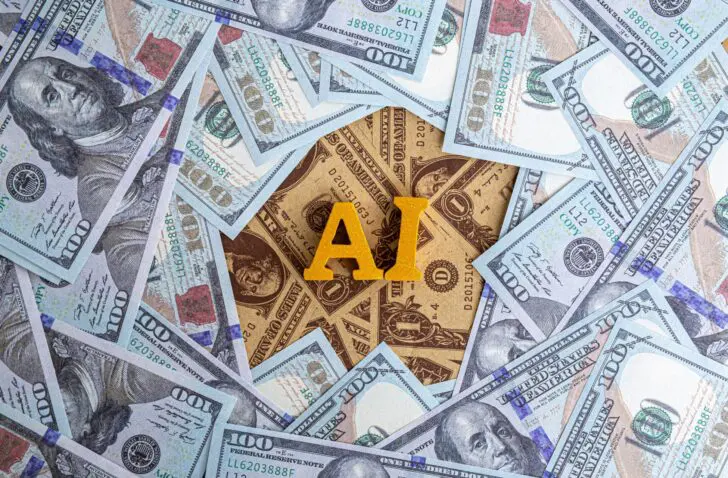
OpenAI is considering granting the U.S. government a shareholding. A five percent stake is intended to serve as a lubricant to clear political obstacles.
OpenAI is considering giving the U.S. government a five percent stake in the company. This was reported by the Financial Times. In a recent valuation, the company was worth 825 billion dollars. The five percent thus represents a gift of approximately 41 billion dollars. The company only wants to pursue this path if competitors grant a similar stake to the government.
CEO Sam Altman describes the potential gift as a way to share the benefits of AI with the American people. Currently, OpenAI is only making losses, but Altman is convinced that massive profits are just around the corner. A stake for the Trump administration in OpenAI’s success would also create political goodwill.
Opaque government role
The latter is especially necessary now that Washington has claimed the right to restrict the rollout of new AI models. Arbitrariness currently prevails: Anthropic’s Fable 5 and Mythos 5, for example, were blocked for a while without a transparent explanation. Subsequently, the models were rolled out to a few American companies, again not selected based on clear criteria.
It previously became clear that money is a factor that makes national security claims melt away. For instance, Nvidia was initially prohibited from exporting powerful AI chips to China in the name of national security. The chips would supposedly enable the country to keep pace with the US in the field of AI.
Bought-off security concerns
The export restrictions remained in force until Nvidia promised to transfer 25 percent of the proceeds from sales to China to the U.S. government. Suddenly the restrictions vanished, and Nvidia was even allowed to place its powerful H200 accelerator on Chinese shelves. Not a word was mentioned about the previous national security concerns.
Intel also faced headwinds from the U.S. government. Those also subsided after the company surrendered 9.9 percent of its shares. This supposedly happened in a sale, but the 11.1 billion dollars the US paid was actually a previously granted and paid subsidy.
Imaginary risk to the supply chain
Trump and his administration have now set their sights on the frontier LLM builders. The government and OpenAI competitor Anthropic were previously at loggerheads. The battle then concerned the right to build autonomous killer robots and develop mass espionage on its own citizens using the AI model Claude. Anthropic refused to cooperate and was labeled a ‘supply chain risk’.
National security was raised once again. Anthropic was treated like a Chinese company with government ties, as that is what the label was created for. No clear justification for the decision was provided, which only fuels speculation about a grudge.
Meanwhile, it is clear that the US does not only have Anthropic in its sights. The government has already announced that it wants to interfere with the rollout of GPT 5.6 by OpenAI. This would reportedly happen through the same opaque process that Anthropic’s Fable 5 and Mythos 5 were confronted with.
Philanthropy
The common thread should be clear by now. Those who oppose Trump and his administration can expect a rough ride. Conversely, those who bring participation and money to the negotiating table see objections quickly disappear.
Those who bring participation and money to the negotiating table see objections quickly disappear.
OpenAI prefers to view the plan through a philanthropic lens. The company previously proposed a fund through which citizens would benefit from the (so far imaginary) economic advantages of AI. This philanthropic approach should be taken with a grain of salt: OpenAI was once a nonprofit, but now pursues profit with a planned trillion-dollar IPO. Sharing AI with the world is very simple: by making models open-source or open-weight. That does not seem to be on the agenda.
Appearance of protection money
Thus, the plan to gift five percent of the company to the government seems, at least partly, strategic in nature. This appearance is certainly there in light of what Intel and Nvidia have already done, and the warning the US broadcast widely with its treatment of the unwilling Anthropic.
This makes the AI situation in the US even more complex than it already was. The Pentagon previously dropped a bombshell on the concept of ethical AI. Subsequently, the US showed a willingness to invoke national security to deny non-Americans access to the latest AI models. Over the past year, it also became clear that these security concerns can be bought off. A comparison with protection money paid for security guarantees from a mafia organization goes far, but it is not entirely far-fetched.
Now that OpenAI is also considering joining this narrative, it becomes all the more clear how dependent frontier AI models are on the government in the US. They are increasingly less developed by independent companies in a transparent playing field. How long can Anthropic and CEO Dario Amodei hold their ground? After all, the company is also eyeing an IPO with a trillion-dollar valuation. Meanwhile, the EU remains on the sidelines, forced to endure whatever is being cooked up on the other side of the Atlantic.