

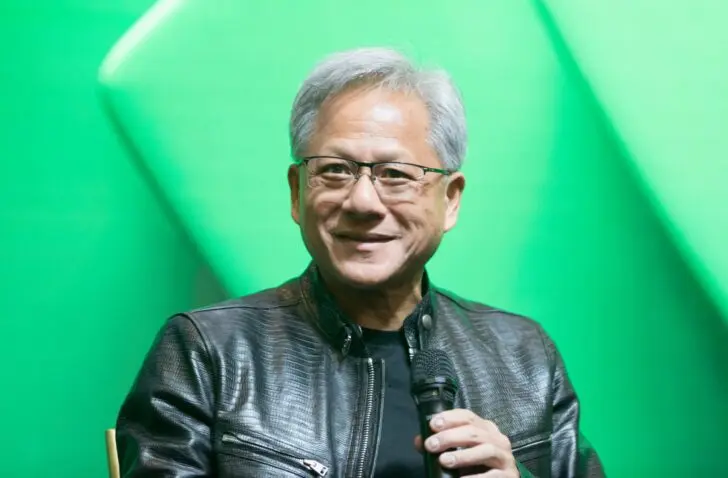
Eleven days after his resignation, Nvidia has put Jensen Huang back at the head of the company, while the investigation into his affair with an alleged Chinese spy is still ongoing. Reports of a humiliating management style are also sliding off him.
Jensen Huang is CEO of Nvidia again, and he is also taking back his seat on the board of directors. Nvidia announced this itself today. The board decided unanimously yesterday to bring the co-founder back, effective immediately. Huang had resigned on 11 November after his position became untenable because of two extramarital affairs.
Colette Kress, who had been interim CEO since Huang’s departure, goes back to being plain chief financial officer. Harvey C. Jones, who became the first chair of the board when Huang left, stays on in that role. Investors can stomach the return of the AI guru: Nvidia’s share price rose 26 percent in pre-market trading.
Unanimous U-turn
After a series of talks with Huang, the board says it is satisfied with his openness and his ability to lead Nvidia. The directors also sought advice from the highest levels of the US government. On that basis, they are convinced that Huang’s return poses no risk to national security. It is no secret that President Trump personally lobbied for Huang’s return.
“The board believes Jensen is the right person to lead Nvidia, and that his return is in the interest of our shareholders, employees, partners and customers,” says Jones. Huang himself “can’t wait to get back to work”.
Six days earlier, the tone was entirely different. “Nvidia’s board of directors has unanimously accepted his resignation and does not intend to reappoint Jensen as CEO,” Jones said during the quarterly call on 17 November. Meanwhile, pressure from outside kept growing, including from the US president.
Eleven days without Jensen Huang
In early November, it emerged that Huang had had an affair with Alice Huang (no relation), a former director of the Singaporean company Megaspeed. The US authorities already suspected that company of funnelling Nvidia GPUs to China. According to the US security services, the woman had been recruited by China as a spy. Shortly afterwards, a second relationship came to light, with Kimberly Powell, vice president of Healthcare at Nvidia, who reported to Huang.
That proved fatal for him, as we wrote earlier. After 33 years at the helm of the company he founded, Huang stepped down as CEO and as a director, and CFO Colette Kress took over as interim CEO. It didn’t stay quiet for long. Huang is said to be plotting a comeback, and an open letter with the message Bring Jensen back quickly gathered more than 170,000 signatures, including from Elon Musk and Epic Games CEO Tim Sweeney.
Meanwhile, Kress presented strong quarterly results: revenue of 115.8 billion dollars, 103 percent more than a year earlier, and a net profit of 65.3 billion dollars. She also announced that Nvidia is no longer shipping H200 chips to China, without saying why. Huang had long lobbied to be allowed to sell those chips there.
Investigations continue
Huang’s return does not close the case. A committee of independent directors, working with outside lawyers, is investigating reports that Huang was the target of a foreign intelligence operation. The board confirms that this investigation will run its full course, and Huang promises to cooperate. In addition, on 16 November the US departments of Commerce and Justice confirmed a criminal investigation into Megaspeed, a customer of Nvidia.
Even setting national security aside, Huang overstepped the mark. A relationship with an employee who reports to him is prohibited under Nvidia’s own code of conduct. The board is building in extra oversight, though. On 17 November, a new national security and export control committee was set up, chaired by director Suzanne Nora Johnson.
Nvidia is also looking for a Chief Compliance Officer, a new position that will report to the nominating and corporate governance committee. If a manager has a relationship with a direct report, that CCO can report it, and the board can then (or may not) set it aside, as is happening now.
A culture of humiliation
Since his departure, another side of Huang has come to light. The New York Times spoke to more than a dozen current and former employees and read court filings and other documents from the past twenty years. Huang allegedly humiliated staff in front of colleagues for decades, with insults, personal attacks and violent threats. According to three sources, he told subordinates they had become so rich that only humiliation could still motivate them.
In the mid-2000s, Nvidia reached at least two settlements with former executives who had complained about his behaviour. Michael Winston, then head of human resources, was fired in 2005 after he confronted Huang about it. In notes the newspaper reviewed, he called it “the most verbally aggressive, threatening and intimidating behaviour” of his career. Nvidia paid him more than a million dollars in a confidential settlement. Huang’s spokesperson John Fisher calls Winston’s accusations fabrications by a dismissed employee.
At the same time, Huang remains hugely popular with many inside Nvidia. Thousands of employees signed a letter calling for his return, some have had the Nvidia logo tattooed, and others praise how he personally supported them in difficult times. Both fans and critics describe the company culture as cult-like, the newspaper says.
A gamble by the board
Huang’s return is a very striking turn of events. The board could also have suspended Huang temporarily until the investigations are completed. That would have been more elegant than a CEO who leaves and returns a week and a half later, while the questions about his role remain unanswered.
The ongoing investigation may yet reveal that Huang did things that are not kosher, such as facilitating GPU deliveries to Megaspeed. Lawsuits would then loom, for him and for Nvidia. The board is therefore taking a gamble, weighing Huang’s popularity and influence more heavily than its own ethical code and the risks that still hang over the company.
For Nvidia and the US technology sector, the situation creates, to put it mildly, an interesting optic. A CEO who violated the company’s own codes of conduct, is being investigated for possible breaches of trade embargoes prompted by a spy, was dismissed and “would not” return, is now returning after all, partly thanks to “guarantees” from the Trump administration. As the AI messiah, Huang is evidently above the rules of his own company: now we wait to see whether he also broke the law, and to what extent immunity is provided for that.