

Digital sovereignty does not have to be a major overhaul, says Geert Rottier of Cegeka. Start with the services that must keep running when politics, an attack or the power grid throws a spanner in the works, and work from there, layer by layer.
Geert Rottier, managing director of Cegeka Belgium, put three questions to the audience at the Sovereignty Experience Day in Hasselt. How long does your company survive without access to the public cloud? Which three critical workloads depend on that cloud? And can you move them to another platform without major damage?
Not many hands went up. According to Rottier, that is no coincidence. “Over the past ten years we have made a lot of decisions, mostly out of convenience. That has left us with dependencies we may now regret.”
Three risks that are no longer theoretical
For a long time, the risks of those dependencies remained abstract. “They were discussed somewhere in a risk committee and nobody lost sleep over them.” That has changed. Rottier sees three:
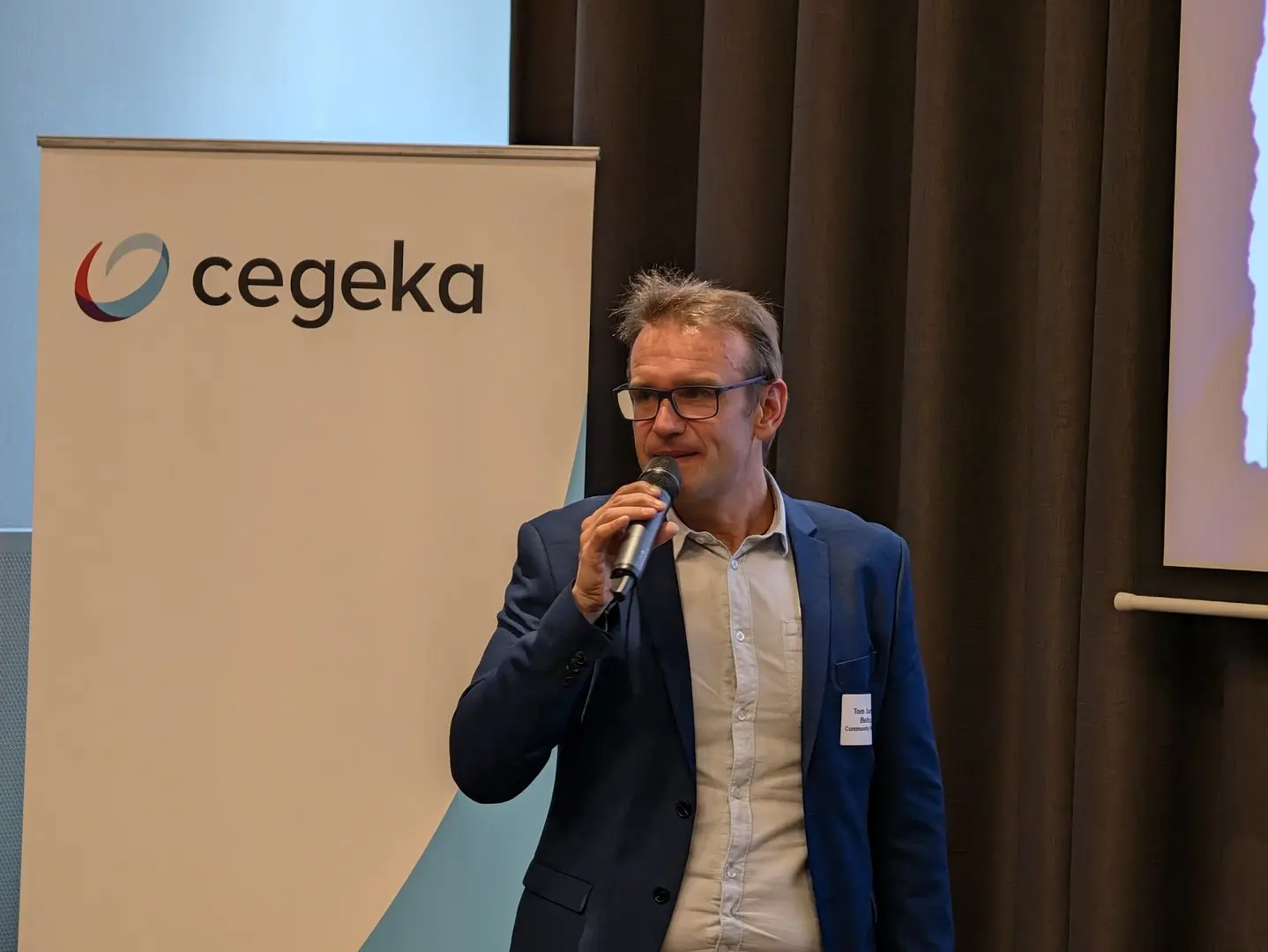
- Political decisions. A government can decide who gets access to digital infrastructure, and a single decision can have a direct impact on your organisation. “It is terrible when individuals start making decisions,” says Rottier, referring to the power of the American president. Tom Samyn, community manager at Beltug (the association of Belgian CIOs and digital leaders), also points to the American Cloud Act and FISA. These give foreign governments access to the data of European organisations. He also quotes the national security strategy: “Belgium is heavily dependent on a limited number of cloud providers. That dependency creates a systemic risk, especially in the event of blockades that may be politically motivated.”
- Physical attacks. In March, drones hit two AWS data centres in the United Arab Emirates. AWS subsequently advised customers with workloads in the Middle East to back up their data and move to other regions.
- Electricity. Rottier advises companies to check whether their infrastructure is protected under the Belgian load-shedding plan.
First the service, then the technology
Cegeka works with customers using a six-step model. It does not start with the technology, but with the services an organisation delivers and the impact if they fail. Rottier gives a societal example: what happens if food retail in Belgium goes down? Then the supply of food to the population is at risk. An operational example is a badge system in the public cloud that becomes unreachable. “Are my doors open or closed, and can the trucks drive in or not?”
Only then come the processes, the applications and a map of the dependencies, from identity management to encryption keys. That map is set against the impact on service delivery, and it determines what needs to be done:
- High dependency, high impact: the dependency must be reduced structurally. This can be done through geographic distribution, a second supplier or an application that can be moved. This applies, for example, to a critical application that runs entirely on a single cloud platform.
- Low dependency, high impact: a fallback is enough.
- Low impact: the risk is monitored or knowingly accepted. Rottier: “What is the chance of Iranian drones hitting [a data centre in Belgium]? Your guess is as good as mine. Probably small, I would say. Then you do nothing.”
Which services count as critical, how much dependency the organisation still finds acceptable and what it is willing to invest in that: according to Rottier, these choices belong on the board of directors. “The result is easy to explain, because it starts from the business.”
That matches what Beltug is hearing. In the Priorities Compass 2026, with 313 participants from 157 organisations, members ask precisely how they can achieve sovereignty down to that level. “I cannot decide for myself how the ship is steered,” Samyn says, summing up their question. “There are too many dependencies to manage alone.”
Sovereignty in layers
“Sovereignty is not an elephant you have to eat in one go,” says Samyn. “You cut it into slices and look at each slice to see whether you are okay with how things are now, and if not, what your options are.”
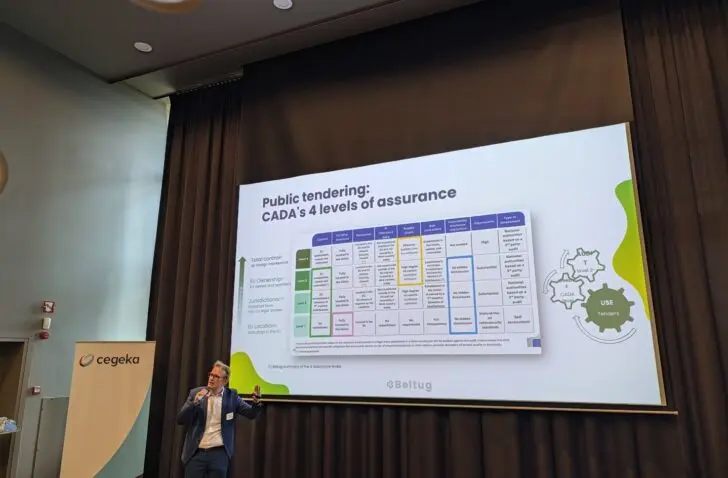
Rottier depicts those slices as a continuum: a continuous scale without sharp boundaries, on which an organisation is not “sovereign” or “not sovereign”, but sits somewhere between two extremes. He loosely maps that scale onto the four levels of the European Cloud and AI Development Act (CADA):
- Public cloud with data in Europe, for example in a data centre region in Belgium.
- Sovereign variants of the hyperscalers, where the customer manages the keys, and national partner clouds such as Bleu in France.
- Private cloud at a local provider such as Cegeka, possibly running on hyperscaler technology. It can remain connected to the hyperscaler’s management platform or be completely disconnected from it.
- Belgian Critical Cloud, which Cegeka offers together with Keyes (formerly NRB) to governments, defence and other operators of critical infrastructure. It runs on open source, without hyperscaler technology.
The higher up that scale, the smaller the volume of workloads and the higher the price. “There is no such thing as: you are sovereign. You have to think about where your workloads really need to sit and how you can move them across the continuum. Control and resilience come with a price tag.”
Make sure you can move
Not every workload has to move tomorrow, but every workload does need a realistic way to move. According to Rottier, that is often where things fall short. Belgian companies are lagging behind with containers in IT: a way of putting an application, with everything it needs, in a single package so that it can move from one platform to another.
Not every workload has to move tomorrow, but every workload does need a realistic way to move.
Geert Rottier, managing director at Cegeka
A backup is not enough either. “Backing up is easy, restoring is harder.” According to him, a board of directors gets a shock when it turns out the recovery has never been tested. And sometimes the dependency lies in unexpected places: Rottier knows retail chains that make calls in their shops via Teams. “If there is no Teams, no calls are made.”
A liberal on protectionism
Paul Van Tigchelt, former Minister of Justice (Open VLD, now Anders) and CEO of the bailiff network Modero since May, closed the afternoon. At Modero too, digital sovereignty is a major challenge, he admits. “It is moving so fast.”
He warns against the combination of authoritarian regimes, big tech and AI. “Social media were an attack on our information position. AI could become an attack on our ability to think.”
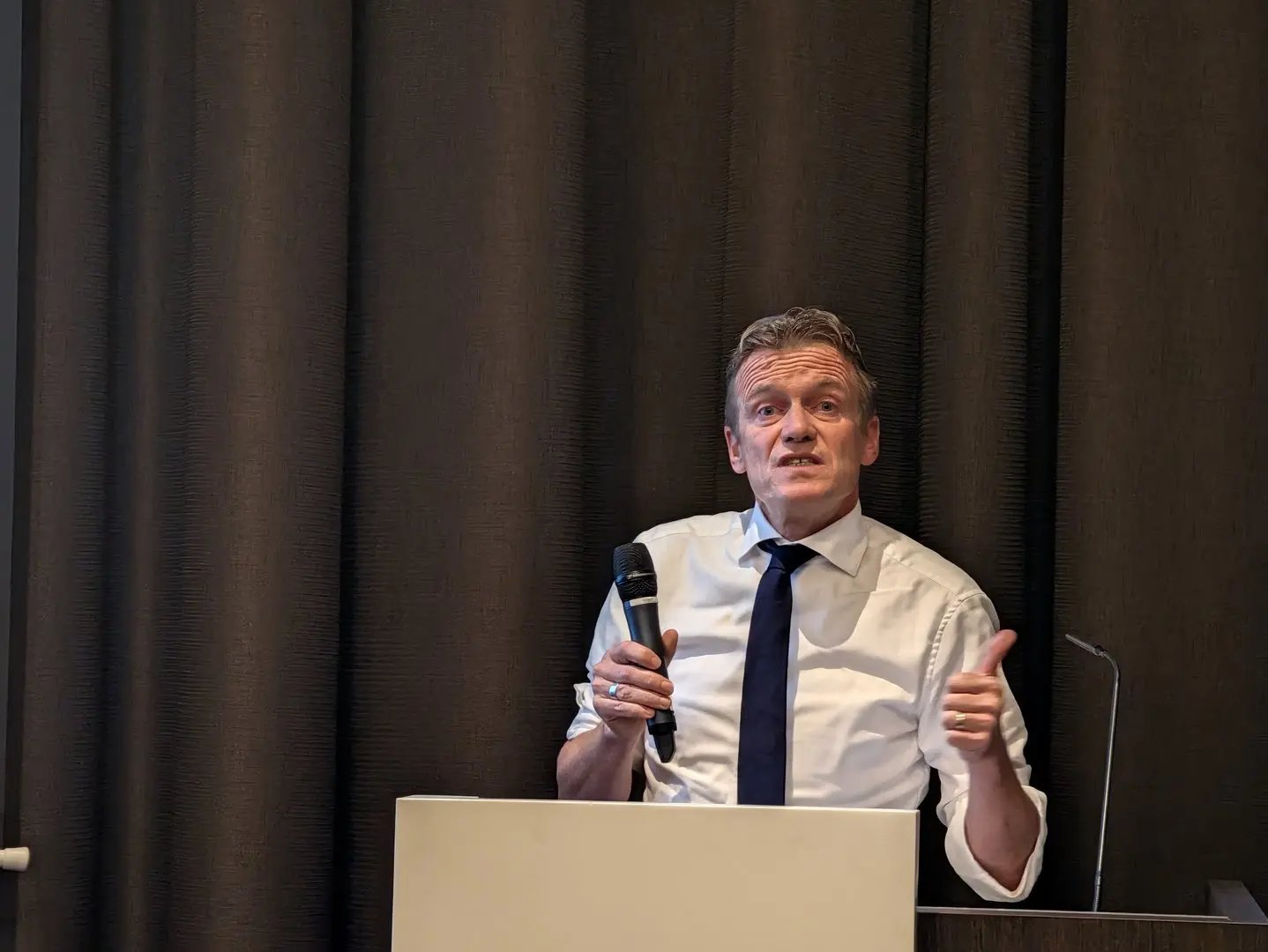
As a liberal, he struggles with protectionism. “Building walls and protectionism are rarely a real solution. But in this case we must not be naïve.” According to him, Europe must invest in digital sovereignty, for economic reasons and for security. He does not think it is a good idea for the 27 member states, “plus one for the United Kingdom”, to each do this separately. “We have to work together, and we are not doing that in an intelligent way today.”
What Europe is going to ask of companies
Whether an organisation wants to arrange its own sovereignty will soon no longer be solely its own choice. Europe is working on rules that officially define the four levels of the continuum, and that will affect companies too.
CADA will take effect in 2027 at the earliest, but there is no need to wait.
Tom Samyn, community manager at Beltug
The European Commission proposed CADA in June. The proposal sets out four assurance levels, from data that stays in the EU to full control without foreign interference. Governments will be required to use them in their tenders. According to Samyn, suppliers will then take that certification to regulated sectors and the private market. Rottier estimates the share of the Belgian public sector at about a quarter of IT spending.
CADA will take effect in 2027 at the earliest, but according to Samyn there is no need to wait. He advises companies to question their providers now using Beltug’s checklist, which has more than 200 questions. Several providers have already published their answers, and Cegeka promised to complete the list in the coming months.