


The OnePlus Pad 3 is the most powerful and perhaps the best tablet we’ve ever handled. That’s an asset, but also a handicap, as the enormous performance doesn’t translate into much better real life capabilities.
The Bugatti Chiron Super Sport 300+ has a verified top speed of 304 mph. That’s impressive, but on most highways, you’re only allowed to drive past 130 kmh, and in practice, you can be happy if you’re moving forward during rush hour at all. That’s not the Bugatti’s fault, but it is the reality: in real life, you don’t get much use out of all those horsepower.
The OnePlus Pad 3 has a Snapdragon 8 Elite on board, with ten computing cores. The tablet is by far the most powerful of its kind and surpasses everything and everyone in benchmark tests. That sounds impressive, but the device runs on Android, and Android doesn’t have an extensive suite of applications that take much advantage of all that computing power. That’s not OnePlus’s fault, but it is the reality: in real life, you don’t get much use out of all those horsepower.
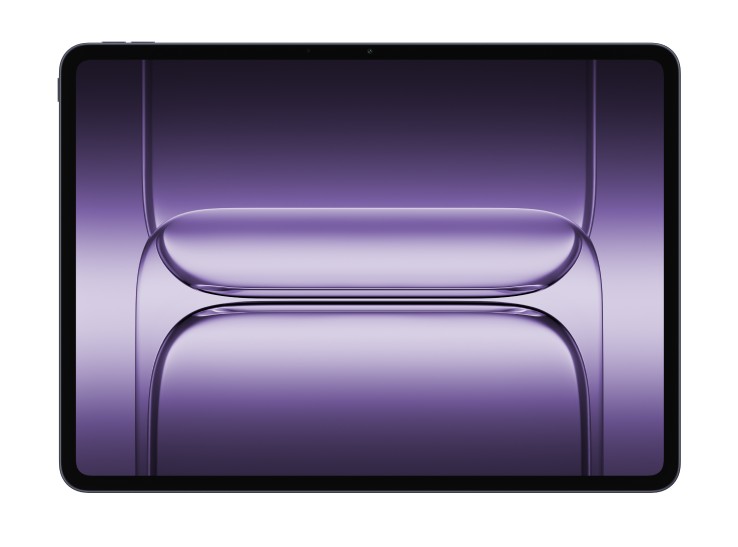

This is an important consideration for those considering the OnePlus Pad 3. The excellently built 13.2-inch tablet costs 699 euros including VAT, partly thanks to its powerful internals. That’s 150 euros more than its equally impressive predecessor at launch: the OnePlus Pad 2.
The tablet that wants to be a laptop
In return, you get a tablet that really wants to be a laptop. The processor inside is also found in ARM-based Windows laptops. The 12 GB RAM supports multitasking, and with 256 GB of storage on board, you have enough space to store files. The battery has an impressive capacity of 12,140 mAh, ensuring the powerful device also lasts very long.
The benchmark tests are clear. With a Snapdragon Elite under the hood, the OnePlus Pad 3 plays in a different league than the rest of the Android tablets.

The high performance applies to both the CPU alone and integrated workloads that combine the CPU and built-in Adreno GPU, although the difference in graphics with the predecessor OnePlus 2 is still somewhat manageable.

Immense battery
Thanks to the immense battery, the powerful processor doesn't noticeably affect autonomy. In fact, this tablet lasts much longer on a single charge than the competition.

On the European energy label, we find a (ridiculous) battery life of 127 hours, which probably refers exclusively to standby time.
That the device then needs a bit longer to charge is inevitable. The OnePlus Pad 3 charges quickly, but the tank is so large that a little patience is in order. To charge the battery halfway, you need to wait 37 minutes, and for 80 percent, you already need an hour of patience.

Since you don't need to charge that often, it's a fair trade-off.
The usefulness of the large battery needs no explanation. You can use this device for a long time and leave it in standby even longer. You really only need to plug it in occasionally with light use.
Want a laptop? Then buy a laptop
The actual usefulness of the performance is, as mentioned, a more complex story. OnePlus likes to position the OnePlus Pad 3 as a kind of tablet and provides the peripherals for this purpose. An (optional) keyboard and kickstand both click on magnetically and provide a laptop-like experience. Both the keyboard and touchpad work well.


The thing looks like a laptop and has the internals of a laptop. Only it's not a laptop. Android 15 is not an optimal operating system for absolute productivity. Of course, Microsoft Office apps are present, and you can open robust spreadsheets. But if you want to buy a device for that purpose, you really should go with Windows. The Office applications on Android are ideal for light use on the go but can't possibly be put on equal footing with the office suite on Windows 11.
Apple can still count on a handful of specialized applications with its iPad series that effectively utilize the tablet's horsepower. Adobe has reworked its suite for the iPad, as well as other creative applications like the video editing program DaVinci Resolve.
The Android ecosystem can't enjoy such niche applications. The Adobe apps are light versions, and an application of the caliber of Blackmagic's DaVinci Resolve is nowhere to be seen.
Cores without work
Consequently, the Oryon cores of the Snapdragon Elite are left hungry, waiting in vain for a heavy workload to sink their teeth into. That workload doesn't exist: at this moment, the Android ecosystem contains no applications that really come into their own on a very powerful Android tablet, and don't run better on another device.
We can easily open large files and browse through pPDFs of hundreds of pages. Multitasking also works well, as does answering emails. However, all these things also work properly on the much less powerful and much cheaper Lenovo Idea Tab Pro (with MediaTek Dimensity processor, 339 euros incl. VAT.)
Multitasking is also possible. Android supports it and is even (too) proactive in opening an app over half the screen. That works well, as long as you don't compare it with Windows or MacOS.
Future-proof
OnePlus, like other smartphone and tablet manufacturers, has to adhere to the new European update rules. These mandate long-term support. Consequently, the OnePlus Pad 3 will receive security updates until June 19, 2031.

That's immediately the biggest reason to invest in the powerful hardware. With the Snapdragon Elite chip, you're probably set until the end of support. The tablet is so much more powerful than other devices in its category that you can be quite sure it will continue to work smoothly. And if Android suddenly gets specialized apps, you can get started with them right away.
Digital A4
In our opinion, the biggest advantage of the OnePlus Pad 3 has nothing to do with the processor. We even think that OnePlus is completely missing the mark by marketing this tablet as a pseudo-laptop, because in doing so, the manufacturer fails to recognize the tablet's greatest asset.
The OnePlus Pad 3, like its predecessor, has a screen ratio that corresponds to the A4 paper format. A PDF file sized for A4 perfectly fills the 2,944 x 1,840 pixels of the device. Consequently, there's no more suitable tablet on the market for reading and reviewing documents.
It's a pleasure to view PDFs and Word documents in portrait mode. The A4 ratio ensures that you get to see so much more on the screen than with, say, the 12.7-inch Lenovo Idea Tab Pro. This is what this tablet is made for, not to horizontally fulfill the role of a laptop.
In that configuration, the downside of the A4 screen becomes very noticeable. The ratio is relevant for documents but not for multimedia. Black bars at the top or sides are therefore unavoidable. It's a trade-off: the OnePlus Pad 3 will mainly appeal to professionals with its screen ratio.
We love reading documents and reports on the couch or on the go, and we also see this tablet as a very suitable alternative to the iPad in the music world, where the screen displays sheet music very readably.
Wrongly marketed
OnePlus would do better to market this tablet based on this unique strength. Instead, the company describes the display as a "13.2-inch, 3.4K screen with 12-bit color depth and 144 Hz". The marketing department further boasts about the integration of "the world's fastest CPU." All these specifications are less relevant than the unique screen ratio and associated possibilities.
This brings us to the verdict. On one hand, the OnePlus Pad 3 (699 incl. VAT) is a brilliant tablet. The thing is more than powerful enough, the battery lasts very long, and the A4 screen ratio is a unique asset for those who need to study and read all kinds of documents.

However, we find it difficult to see the Snapdragon 8 Elite as a plus. That chip drives up the price but doesn't offer much added value. OnePlus itself doesn't seem to fully realize what makes the Pad so good and focuses on the wrong things. Those extreme performances really don't contribute that much within the Android ecosystem.
Less is more
A variant of the OnePlus Pad 3 with the same screen and screen ratio, but a lighter processor and a softer price tag would, in our opinion, be a more interesting device. That tablet exists: at the time of writing, the OnePlus Pad 2 is still available with a hefty discount, at almost half the price of the Pad 3.
In any case, you buy this tablet if you like the A4 screen ratio. If consuming multimedia is the main goal, then you're at the wrong address here and you're investing in black screen bars. If you are a fan of the screen ratio and budget is not an issue: by all means, buy the OnePlus Pad 3. The device will be extremely future-proof and has no real downsides.
However, if you're looking for the best price-quality option for realistic daily use? Then it can all be a bit less as far as we're concerned. The Lenovo Idea Tab Pro is a very competitively priced alternative for an Android tablet with a large screen.
The Bugatti Chiron is ideal for those who want to show off and are happy to have the fastest the market has to offer. Those who have daily use in mind are better off spending their money on a Volkswagen or Skoda.
The OnePlus Pad 3 is available for 699 euros incl. VAT. The manufacturer follows the European rules on update policy and offers support until June 19, 2031.
Pro's
- A4 screen ratio
- Enormous battery
- Screen quality
- Certainly powerful enough
Contra's
- Internals are overkill
- Unnecessarily more expensive than predecessor