

The discussion around workplace productivity often focuses on reducing meetings, with the assumption that fewer meetings automatically lead to greater focus and better output. But this overlooks where the biggest time loss actually occurs: not during the meeting, but after.
For many professionals, the real work only begins once the call ends. When people spend their days in back-to-back meetings, the time to actually execute gets pushed to the margins, creating a bottleneck where progress slows.
The hidden workflow after every call
Once the meeting ends, outcomes still need to be turned into execution: key points written up, actions assigned, context shared, and follow-ups coordinated. In many organisations, that work happens manually and across multiple tools – notes in one place, tasks in another, follow-up in email or chat. The result is a separate, largely invisible workflow that begins after every meeting.
More AI, more noise – unless it drives action
Paradoxically, the first wave of AI tools has often made this harder. Instead of reducing effort, many solutions have created more information to process: transcripts to sift through, additional documents to review, content distributed across even more systems.
Meanwhile, the time spent in digital environments remains substantial. In the Netherlands, employees spend an average of 4 hours and 24 minutes per day working behind a screen. What’s more: employees in the financial services and ICT sectors spent the most time behind a screen: an average of 7.3 hours per day (2025, CBS). Workload is shaped less by the number of meetings and more by everything required to translate conversations into progress.
From conversation to completion
The next phase of modern work goes beyond better communication – it’s about executing faster and more effectively. Meetings will remain essential for alignment, direction, decision-making, and cross-functional coordination. The real gains lie not in eliminating conversations, but in improving what they produce and what happens immediately after. This is where AI can add the most value: as a System of Action that helps move work forward.
Increasingly, AI is being used to turn conversations into usable output – summaries, key points, and action lists – so teams don’t have to start from scratch after every call. But the journey from “conversation to completion” goes one step further: it can initiate the work. If a team discusses setting up a timeline, AI can draft it instantly. If a presentation is needed, it can generate the initial structure. If actions are agreed, it can suggest next steps and let users press “start” to kick them off.
Unlocking value-added work
When execution is initiated automatically, teams spend less time on admin and coordination and more time on value-added work. Focus shifts to applying expertise, solving problems, and creating impact – rather than chasing follow-ups or rebuilding context.
This only works if conversations, context, and actions are connected. Fragmentation forces people to reenter information, reshare updates, and realign repeatedly across tools.
Organisations that keep conversations and follow-through within one workflow reduce that friction significantly. Work doesn’t have to be reconstructed after every meeting – it can continue immediately.
Faster progress, less stagnation
Productivity is determined not only by what teams do, but by what they no longer have to do – no more separate notes to clean up, no more manual tracking of action items, fewer extra syncs just to restore context.
Organisations that reduce the gap between conversation and execution won’t necessarily have fewer meetings, but they will see outcomes progress rather than stagnate.
Modern work hasn’t failed. It has exposed a structural bottleneck: the inefficiency is rarely in the meeting itself, but in the translation afterwards. The organisations that solve that problem won’t just communicate better – they will execute better. And that is where the difference will lie in the next phase of work.
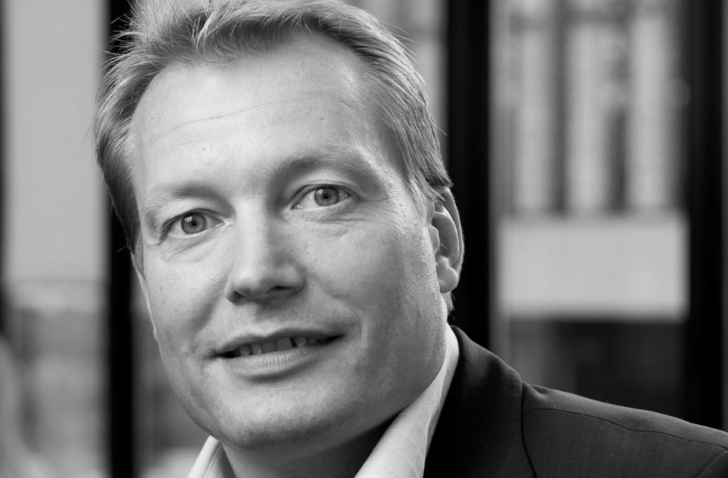
This is a guest post by Ole Mygind, Head of Growth Markets EMEA, Zoom. Click here for more information about the company’s solutions.