

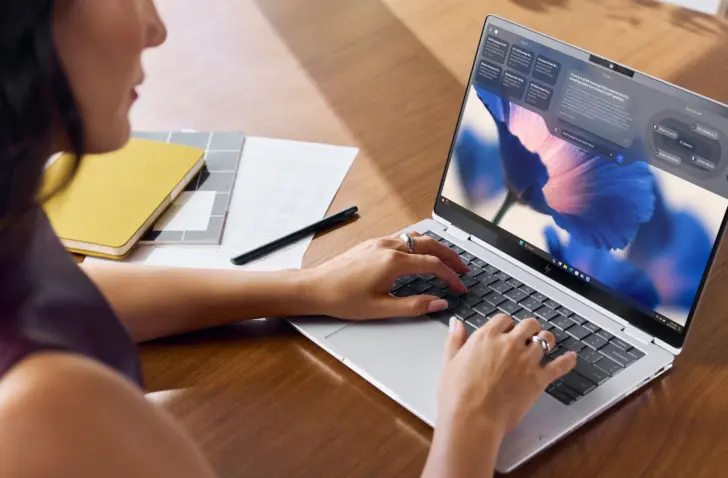
Of all the announcements at HP Imagine 2026, HP IQ is perhaps the most ambitious. It is not a new device or a software update, but a completely new intelligence layer that HP is placing across its ecosystem.
HP IQ is what HP calls a workplace intelligence layer: a software layer that coordinates experiences between HP PCs and other workplace devices. It runs on a local language model with 20 billion parameters, supplemented by specialized tools and an orchestrator that distributes tasks.
The vast majority of processing happens on the device itself. Only when company policy and user rights allow it are specific tasks routed to the cloud. This local-first approach is the core of the story. Data remains on the device.
Visor: the interface for interacting with HP IQ
Users operate HP IQ via Visor, a new software layer on top of the operating system that brings relevant actions and controls to the forefront without needing to switch apps. Visor works with text and voice input and adapts based on context and intent.
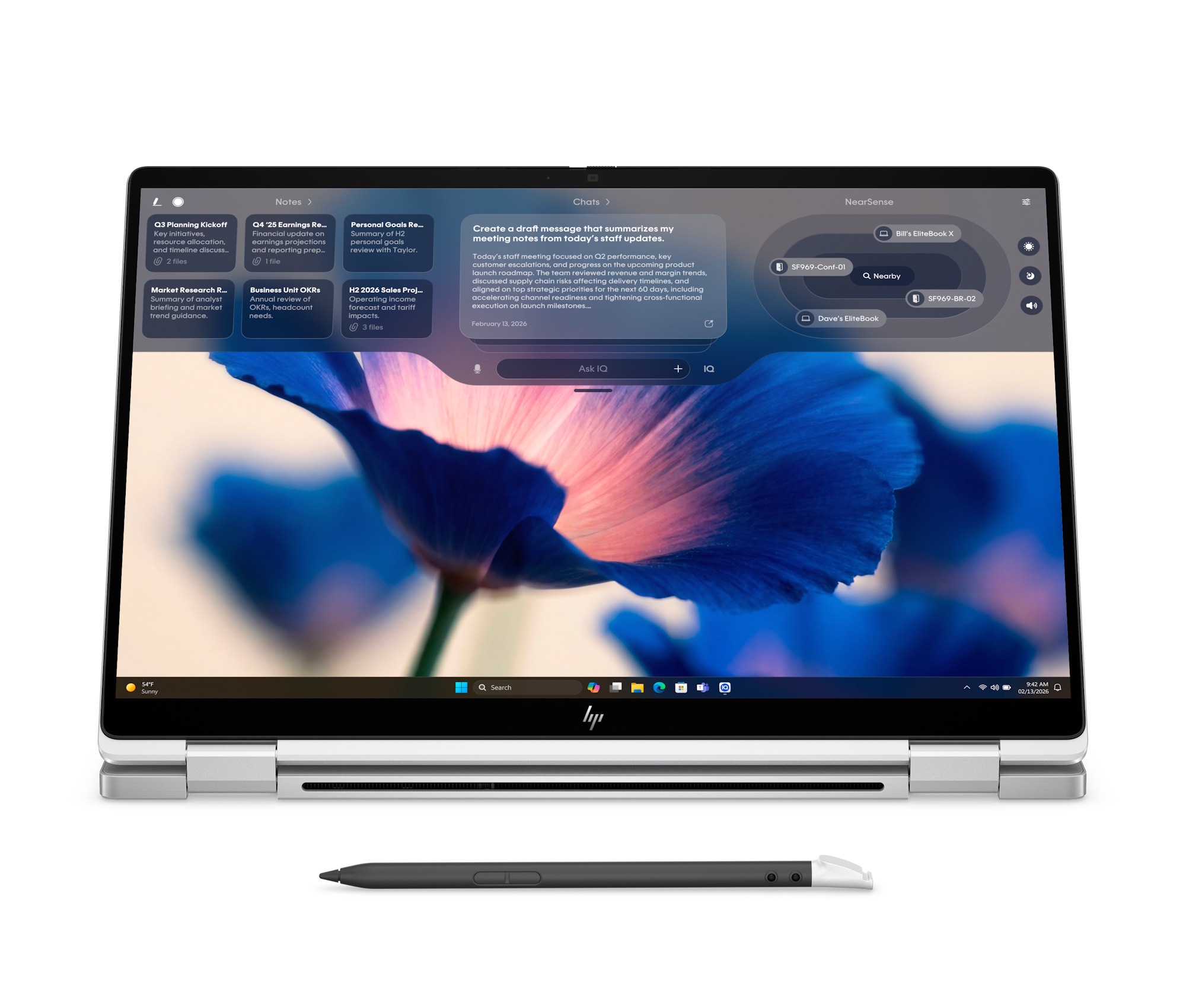
Four core functions are planned for the launch:
- Ask IQ: answers questions via text or voice with contextual responses.
- Analyze: allows users to interact with personal files (PDFs, Word documents, presentations) to get summaries and actionable insights.
- Notes & knowledge: maintains an ongoing overview of interactions, allowing you to return to where you left off.
- Meeting agent: captures ideas and notes during a meeting without having to switch between applications.
HP NearSense: devices that find each other
In addition to the AI functions, HP IQ also introduces HP NearSense, a spatial intelligence technology that allows devices in close proximity to automatically detect, connect, and collaborate with each other.
At launch, you can count on these two specific functions:
- PC-to-PC: file sharing via drag-and-drop to a nearby colleague.
- Single-click join: allows you to join a meeting in a conference room with a single click.
In the long term, NearSense is expected to expand to the broader HP ecosystem: Poly video conferencing systems, printers, desktops, workstations, and peripherals. There is no mention of compatibility with other brands, but it goes without saying that without a general standard, this remains an HP-focused solution.
Built for business
HP explicitly positions IQ as an enterprise product, not a consumer feature. Configuration, policy, updates, security, and compliance can be managed via the Workforce Experience Platform (WXP) or through existing IT tools such as Microsoft Intune.
HP IQ follows a phased rollout. Early access starts in the spring of 2026 on compatible HP PCs. A limited expansion to additional notebooks, desktops, and Poly Studio Video Bars is planned for the summer of 2026. New devices with HP IQ built-in are expected starting in the fall of 2026, with broader availability rolling out across more products in the HP portfolio in the second half of 2026.
Minimum system requirements: 24 GB RAM. The number of TOPS the NPU has doesn’t even matter. We’ll have to wait and see how HP IQ performs when it becomes publicly available later this year.