

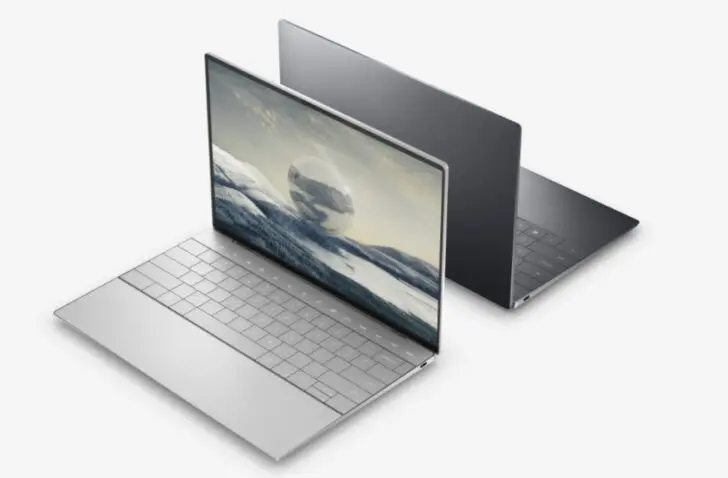
Dell is showing off the XPS 13 Plus at CES. The laptop was completely redesigned compared to the classic Dell XPS 13 and gets a touch bar, among other things. Inside are powerful new Alder Lake chips from Intel.
Dell is going for a drastic revamp of its XPS 13 laptops at CES with the introduction of the Dell XPS 13 Plus. That device puts design first as a priority. Indeed, the inside looks very flat, with wide keys in a keyboard that sits at the same height as the case. The keys would still be 1 mm indentable, just as they were on the XPS 13 last year. The touchpad is now invisibly integrated under the keyboard and indicates with haptic feedback when you click. In other words, you can no longer really click it in.
Touchbar
The function keys at the top give way to a sort of touch bar with capacitive keys. Those touch keys, however, have a fixed function and thus are not customizable like the touch bar Apple introduced at the time. The choice seems to be motivated mainly by design, since there is no obvious practical added value over classic function keys.

The Dell XPS 13 Plus comes with optional OLED display and is configurable with 4K+ resolution. It retains the exceptionally thin display bezels that characterize the XPS series. The whole thing looks very neat, but makes us a little worried. We hope Dell did not choose form over function here. Given the quality of the XPS 13 series so far, we do have some confidence in the implementation of the new features. Then again, the marketing line stating that “the device was inspired by Gen-Z, an up-and-coming generation of talents who know who they are and what they want” brings that confidence down somewhat. Let’s hope the marketers were skillfully kept away from the engineers during the design phase.
28 watt Alder Lake processor
Not only is the exterior interesting, the interior deserves mention. After all, the XPS 13 Plus is designed for Intel’s latest twelfth-generation Core processors. Dell surprisingly chooses the “P” chips from the new Intel range. These are slightly more powerful processors with a base TDP of 28 watts. Given the thin body of the XPS 13 Plus, that choice is surprising. After all, traditionally such ultrabooks come with a 15 watt ‘U’ processor.
The cooling of the XPS 13 Plus should be able to handle the additional heat, it sounds. We’re curious to see how the laptop and chip behave in practice: does the beautiful device really extract extra horsepower from the ‘P’ processor, or does thermal throttling provide limited added value? Despite the announcement of the interesting-looking AMD Ryzen 6000 Mobile processors, an AMD option is missing.
The base model of the laptop comes with a Core i5 chip, 8 GB of LPDDR5 RAM, an SSD with 256 GB of storage capacity and a 16:10 display with 1,920 x 1,200 pixels. The top model has 4K resolution with touch screen, Intel Core i7 and 1 TB of storage. The laptop should become available worldwide in the spring of this year with a starting price of $1,199.99. A euro price Dell did not yet communicate.