Chinese engineers have built a working prototype of an EUV machine. Such highly advanced machines are essential for the production of modern microchips and are manufactured worldwide only by ASML in the Netherlands.
The Dutch company ASML is in danger of losing its monopoly on advanced lithography machines for chip production. Chinese engineers have succeeded in building their own working prototype of an EUV machine. China is thus taking a huge step towards truly independent chip production at the highest level, free from Western pressure or sanctions.
Litho-what now?
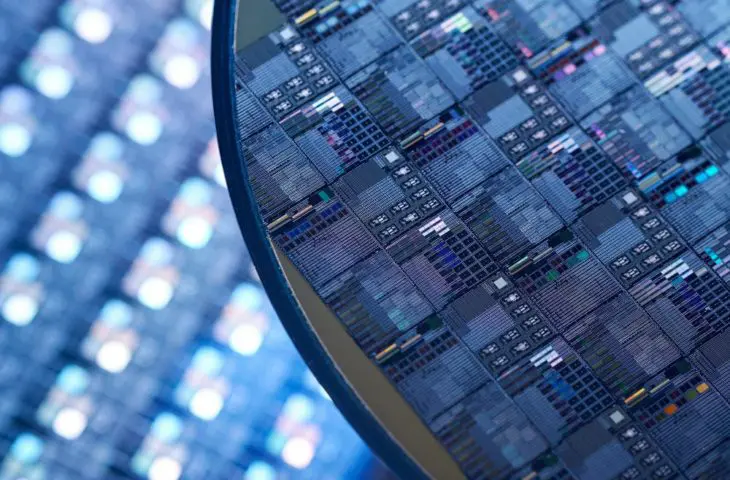
Lithography machines are the heart of chip production. The devices use light to etch the circuits and transistors of microchips onto a wafer. This is particularly complex: today, the components of chips are so small that the wavelength of visible light is far too large to correctly etch the chip designs. Try coloring in a detailed drawing with a paint roller.
ASML builds Extreme UV lithography machines. These are enormous and, above all, enormously complex devices that use lasers and complex mirrors to generate and direct invisible light with a very small wavelength, in order to apply the designs for the most modern CPUs and GPUs to a wafer. The development of the machines is so difficult and specific that ASML has a monopoly on it. A single device costs around $250 million.
To then put the devices into use, competitors such as Samsung, TSMC, and Intel work diligently with Leuven-based Imec to learn how to effectively use the complex devices to achieve the intended result. The knowledge of ASML and the ecosystem around it is one of the greatest assets of Western chip production.
Fate in own hands
The fact that China has now pieced together an EUV machine itself threatens to shift the balance of power in the technology war between East and West. If China is no longer dependent on AMSL, it essentially has its own fate in its hands with regard to chip production and can set up factories independently of Europe and the US to, for example, bake 5 nm and 3 nm chips.
The breakthrough did not come about by accident. According to Reuters, the Chinese put the EUV prototype together in early 2025 and it is currently undergoing tests. The machine was built by a team of engineers who previously worked at ASML. They made the machine through reverse engineering of an ASML device.
Christophe Fouquet, CEO of ASML, previously said that China would need many years to develop EUV technology. That prediction now appears to be not so accurate.
Years of further development
Yet ASML’s monopoly has not yet been broken. Building a working machine is only a first step. The device generates EUV light as planned, but with that fact alone, you don’t build a working production line. The step between prototype and production takes years with us, and it will be no different in China.
The Chinese themselves hope to effectively build chips with the device in 2028, according to sources at Reuters. Other sources close to the project, in turn, indicate that 2030 is a more realistic deadline. However, even that deadline is years ahead of what analysts had expected.
read also
Jensen Huang: “China Will Win the AI Race”
Furthermore, China’s prototype is a lot larger than ASML’s machine, which already weighs 180 tons and is the size of a line bus. This is partly because the necessary components for the EUV machines cannot simply come from anywhere. To direct the EUV light, very special mirrors and lenses are needed, which are made for ASML by Carl Zeiss. EUV light is even absorbed by the most transparent materials, so the requirements for those optical components are very high. To commercialize the prototype, there are still some challenges.
Manhattan Project
China has a clear goal of eventually making advanced chips on completely Chinese equipment. That is an incredible feat of engineering, as the chip industry today encompasses a global supply chain. The plan is compared in scale and complexity to the American Manhattan Project, in which the atomic bomb was developed during the Second World War.
As with the Manhattan Project, secrecy was important to China. Many developments towards its own chips did happen publicly, but what was happening in a lab in Shenzhen was not for prying eyes.
The ex-employees of ASML were recruited in complete silence. China went looking for retired experts, as they are monitored less closely. It goes without saying that employees are bound by contractual obligations that prohibit the stealing of IP. The researchers therefore started working under pseudonyms. Whether ASML has taken legal action against those involved is unclear.